Cloud VoIP Systems: Complete Guide to Benefits & Costs

نظام اتصالات سحابي

What is Cloud Computing?

Let’s start with a simple definition of cloud computing.
The term Cloud Computing refers to: A collection of computing services provided by a service provider to one or more clients over the internet, allowing them to use the provider’s high computing capabilities without the need to purchase expensive hardware or infrastructure.
In short, cloud computing means:

Using hardware and software resources delivered to you as a service via the internet.

What Is a Cloud Phone System or Cloud VOIP Phone system?

A Cloud Phone System is a complete communication platform that exists entirely online rather than being physically located in your office or company, and you simply subscribe to the service on a monthly or annual basis.

How Does It Work?

Cloud Computing

Cloud Computing

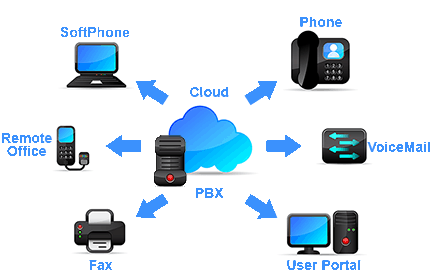
Cloud-based VoIP relies primarily on a stable internet connection and high bandwidth. The Cloud PBX (Private Branch Exchange) connects directly to your IP address and can be accessed from your office using either VoIP desk IP phones or softphone applications.
This means you can make or receive calls from anywhere in the world as long as you have internet access, usually verified with your password.
Your service provider manages system setup, storage, and complete management for a monthly subscription fee. They also provide all necessary backups in case of data loss.

Concerns About Cloud Computing

Traditional concerns about servers, security, downtime, and high equipment costs are no longer your responsibility. Your main focus becomes managing your company’s connected phones or computers to this cloud PBX.

Key Benefits of Cloud-Based Communication Systems

1. Reduced Costs

The biggest advantage of cloud-based systems is lower setup and operational costs.

To illustrate, let’s use email as an example. If you want to create and use an email system, you have two choices:

First option: The traditional approach — buy a domain, purchase a server, buy an operating system, purchase an email server license, buy storage units, and hire an IT team capable of managing all these tools, plus the time needed to build and test this system before deployment.

Second option: Choose and use a cloud-based email service provider, like Gmail or Yahoo, for a simple monthly subscription.

2. Higher Security

Believe it or not, VoIP systems are among the most targeted by hackers worldwide. If proper security measures aren’t taken, breaches are inevitable!
Cloud service providers typically implement strong security protocols and protection measures to safeguard your system.

3. Ease of Use

Cloud providers design simple, user-friendly management portals for system configuration and monitoring. They handle complex system settings on your behalf, ensuring easy administration and no need for professional IT staff to maintain the system.

4. Flexibility and Remote Work Support

Cloud-based phone systems offer unlimited scalability and support remote work. Employees can register their phones from anywhere. For example, in the United States today, over 4 million people work remotely on a daily basis throughout the country, without any significant additional costs.

How to Choose the Right Service Provider

Choosing a cloud PBX service provider depends on the size of your work environment, your company or organization, your budget, and your needs. You should also consider selecting a provider with a long-standing reputation and experience, as well as after-sales support and warranty services.

XonTel is one of the leading providers of cloud-based PBX services, offering all the solutions and features needed to operate your communication system on the cloud. For more details click here

Follow us on LinkedIn

Frequently Asked Questions (FAQ)

What is meant by cloud computing and how does it work in the field of communications?

Cloud computing means using software resources and hardware capabilities over the internet as a service provided by a certified provider. In the field of communications, it means hosting the entire PBX in the cloud (Cloud PBX) instead of having large equipment inside the company’s premises, in exchange for a periodic subscription.

What is meant by VoIP technology on cloud computing?

VoIP technology on cloud computing is a communications system that is hosted and operated on the service provider’s servers over the internet. Users can connect to the system through IP phones or softphone applications without the need to install a physical PBX inside the company.

How does VoIP technology work on cloud computing?

The IP phone or communication application connects to the cloud PBX over the internet using secure registration credentials. The PBX handles call management, transfers, recording, and the application of communication policies without the need for a server to be located inside the company’s premises.

Does the cloud phone system support remote work?

Yes, the system allows employees to use the company’s number and call transfers through an IP phone or an application on a computer or mobile phone, helping ensure business continuity outside the company’s premises.

What happens to the cloud VoIP system when the internet goes down?

The phones and applications connected from the location that lost internet access may be affected. The impact can be reduced by using a backup connection or forwarding calls to mobile phones or alternative numbers.

What are the key benefits of VoIP technology on cloud computing?

The benefits include reduced equipment and maintenance costs, fast deployment, ease of management, support for remote work, branch connectivity, easy addition of users, and access to advanced communication features.

How do communication systems based on cloud VoIP technology contribute to reducing costs?

Cloud VoIP technology saves the costs of purchasing servers, complex licenses, and storage units, and hiring specialized maintenance teams, as the service provider takes care of managing the system and providing backup and protection in exchange for a simple monthly or annual subscription cost.

How do I choose a cloud VoIP service provider?

The provider’s experience, service stability, security level, quality of technical support, backup options, available integrations, reporting, scalability, and pricing and service terms should all be evaluated.

call2action-En

For more information about XonTel products and services, leave your data and one of our specialists will contact you