After explaining the components of modern corporate communication systems in previous articles—including VoIP technology, modern PBX systems, IP Phones, and call center systems—it’s now time to show how to integrate all these technologies into a modern, unified IP-based communication system.
Your company deserves to embrace the full potential of modern communication technology.
Here’s a simplified overview of a unified communication network:


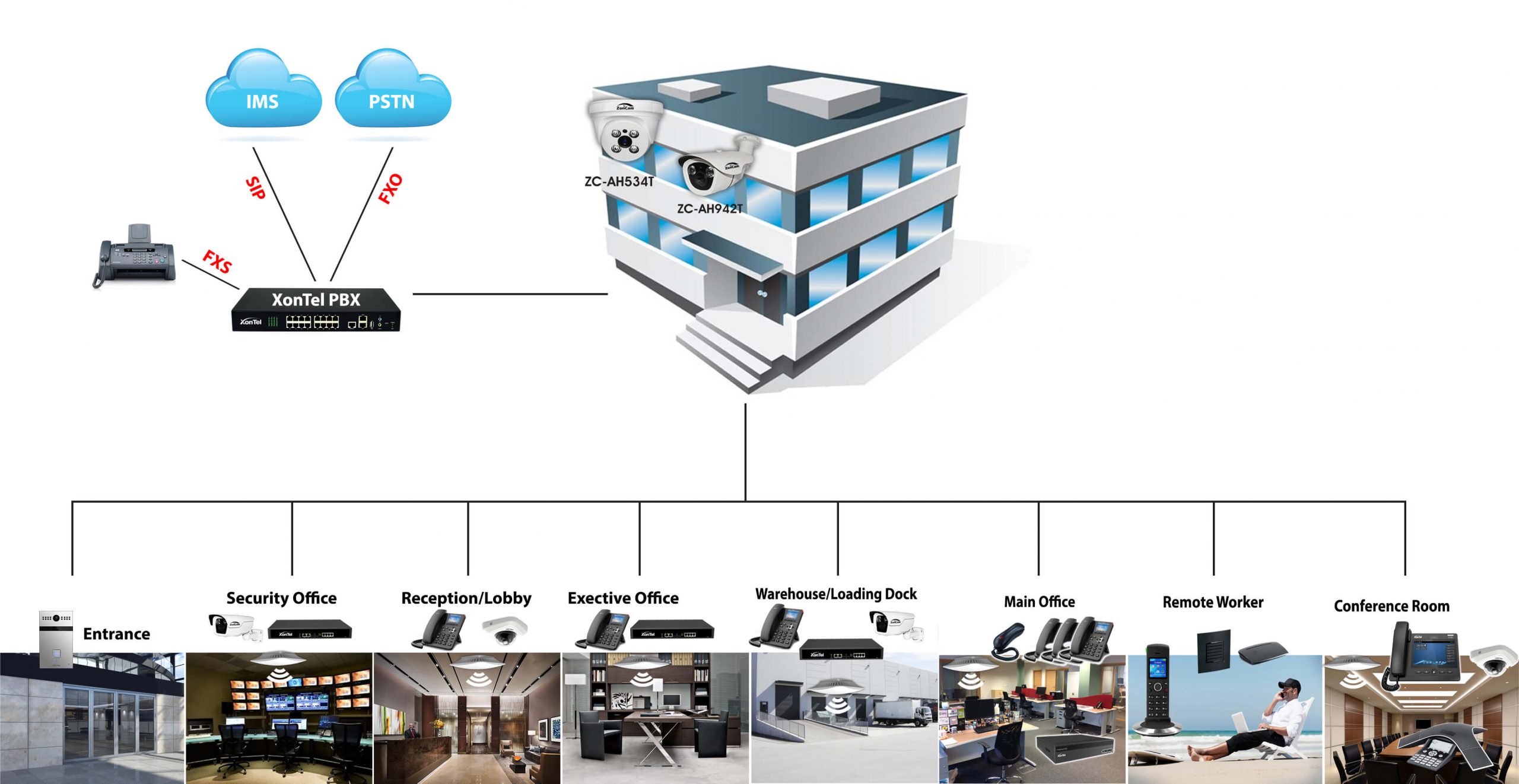
As shown in the diagram above, building a communication system consists of 5 key stages:
1. Install a Modern IP-PBX (Central Switchboard)
The PBX (Private Branch Exchange) is the cornerstone of any unified communication system. XonTel provides the latest IP-PBX system, the S2400, which requires no licensing fees or installation costs. It is suitable for companies of all sizes.
Using a unified communication system, you can connect and manage all IP-based devices—including:
- Analog phones or IP Phones
- Audio and video conference devices
- Wireless phones
- Security systems
- Fax machines and intercoms
Essentially, this PBX can manage any modern IP device securely and efficiently, completing about 50% of the setup for your communication system.
2. Choose IP Phones (Internet Voice Phones)
Selecting the right phone for your work environment is critical. Key considerations include:
- Phone features and specifications
- Compatibility with your PBX (some brands work only with the same brand PBX)
- Warranty and update policies
XonTel offers a wide range of IP Phones suitable for any company size, featuring:
- High-quality voice and video calls
- Full compatibility with any PBX
- Power over Ethernet (PoE), eliminating the need for separate power sources
- Touchscreen options, conference phones, and ceiling speakers
3. Use ATA Devices to Convert Analog Phones to VoIP
For small or medium-sized companies, purchasing new IP phones may not be financially feasible. Analog Telephone Adapters (ATA) convert traditional analog phones into VoIP phones, allowing you to upgrade your system without replacing all devices.
XonTel offers a variety of ATA devices suitable for different environments.
4. Set Up Conferencing Systems
Modern communication allows remote meetings without physical presence. You can hold audio or video conferences with all branches worldwide, making conferencing systems a core component of any unified communication setup.
XonTel provides a range of devices and software for remote meetings, including audio and video solutions.
5. Integrate Security Systems
The final component, equally important, is security integration. You can connect:
- Surveillance cameras
- Intercom systems
- Attendance and access control devices
XonTel offers a wide range of IP-based security solutions, including PBX-compatible intercoms, cameras, smart home systems, and biometric attendance devices.
Now that we’ve explained the 5 key components, you can build a unified and integrated communication system consisting of a smart IP-PBX, IP Phones, ATA devices, remote conferencing systems, and security systems—all using the latest global technologies.
Follow us on LinkedIn
Frequently Asked Questions (FAQ)
What is an integrated IP-based communications system?
It is a unified system that connects all means of communication within a company (such as voice calls, video, meetings, surveillance cameras, and attendance devices) over the internet network using a smart PBX (IP-PBX), instead of complex traditional lines.
How do I set up an integrated communications system for my company?
The process begins by determining the number of users, calls, and branches, then selecting the appropriate PBX, specifying the types of phones, preparing the internal network, connecting the communication lines, adding meeting, recording, and security systems, and finally testing the system before full deployment.
What is the difference between a traditional and an IP-based communications systems?
A traditional system typically relies on separate telephone lines and wires, while an IP system uses the data network to transmit voice and manage communications. An IP system offers greater flexibility in adding users, connecting branches, enabling remote work, and integrating with company systems.
What is the role of the IP-PBX in a communications system?
The IP-PBX is the central component responsible for managing incoming and outgoing call transfers, auto-attendant (IVR), ring groups, call queues, permissions, recording, and connecting users and branches.
What is the benefit of PoE technology in a communications system?
PoE technology allows electrical power and data to be delivered to an IP phone through the same network cable. This reduces the need for a separate power adapter next to each phone and helps streamline the installation and management process.
How can costs be saved when setting up a communications system for small businesses?
This can be achieved by using Analog Telephone Adapters (ATA), which allow old traditional phones to be repurposed and connected to the modern PBX without the need to purchase expensive new IP phones.
What are the network requirements for running an IP communications system?
The system requires a stable internal network, suitable switches, good distribution of network addresses, QoS (Quality of Service) settings for voice priority, in addition to a stable internet connection when using lines or cloud-based services.
What is the cost of setting up an internal communications system?
The cost depends on the number of users, phones, and branches, the type of PBX, communication lines, recording, applications, integrations, and networking and installation work. Therefore, requirements should be defined before requesting a price quote.