You may have noticed the rapid evolution of communication technology around the world and the emergence of VoIP technology, which is described by experts as a revolutionary technology that will completely reshape the entire global communications system.
In this article, we will explain what VoIP is and how your business can benefit from this technology.




What is VoIP?
The term VoIP stands for Voice over Internet Protocol.
This simply means the ability to transmit voice over the Internet or internal networks instead of being transmitted via traditional landline networks.
Consequently, any number of people connected together through the Internet or an internal network can communicate by phone using this technology.
How VoIP Technology Works?
- Converting analog signals into digital signals.
- Efficiently compressing voice packets to prevent audio delays.
- Transmitting the voice packet over the Internet Protocol (IP).
- At the receiver’s end, the packet is analyzed, the data is extracted, and the digital signals are converted back into audio and sent to the phone.
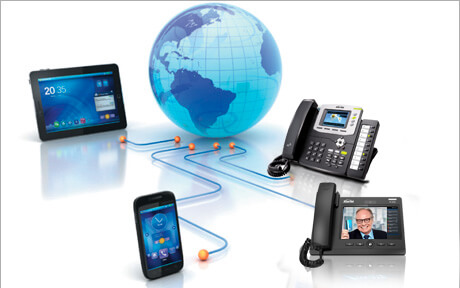
Benefits and advantages of Voice over Internet Protocol technology
- Cost savings: Using VoIP significantly reduces communication costs, and international calls using this technology are cheaper than any other communication method.
- You can also use mobile calling apps instead of traditional desk phones, reducing hardware expenses.
- Flexibility: VoIP service can be used from anywhere in the world, either via mobile apps or your IP phone, using your internal extension numbers.
- Ease of scalability: You can easily expand and add new lines or devices effortlessly.
- Additional services: Includes traditional phone services as well as other features such as: The ability to hold conference calls, voicemail, customizable ringtones, and the option to save and add caller details, etc.
- Ease of Use: The VoIP phone system allows you to set up and manage your phone system easily thanks to a graphical user interface (GUI).
Or via the Internet, making it easy to install, manage the system, and view reports.
- The ability to integrate voice, video, and data technologies simultaneously:
The use of VoIP technology allows users to access all Internet-based applications, such as software programs or email, while simultaneously handling voice, video, and data over the same network.
XonTel Technology is the first Arab company to pioneer the development and manufacture of high-quality VoIP communication devices.
XonTel manufactures high-quality, affordable phones and PBXs for homes, companies, and various government agencies. To learn more about XonTel’s services and products, click here.
Sources (Wikipedia)
Follow us on LinkedIn
Frequently Asked Questions (FAQ)
What is VoIP technology?
VoIP stands for Voice over Internet Protocol, and it refers to transmitting voice calls over the internet or data networks instead of relying on traditional landline telephone systems.
Is VoIP the same as a PBX?
No. VoIP is the technology or protocol used to transmit voice over the internet, while a PBX (or switchboard) is the device or system that manages these calls and distributes them among employees. In other words, VoIP is the “method,” while the PBX is the “device” that uses it.
What equipment is needed to run a VoIP system?
A VoIP system can be operated using IP phones, or calling applications on computers and mobile devices, along with a stable internet connection and a cloud-based or on-premises IP PBX system.
How much does it cost to set up a VoIP system for businesses?
The cost of a VoIP system varies depending on the number of users, the number of simultaneous calls, the type of PBX, the required equipment, and features such as call recording, reporting, and auto-attendant. It is therefore advisable to request a technical assessment and a quote based on the company’s specific needs.
Are VoIP calls secure?
VoIP calls can be secure when using encryption, strong passwords, firewalls, and regularly updated systems. It is therefore important to choose a provider that enforces clear policies to protect accounts and calls.
Does a cloud-based PBX rely on VoIP technology?
Yes, a cloud-based PBX typically operates using VoIP technology, with calls, users, and services managed through a cloud-hosted platform instead of installing a central PBX unit on the company’s premises.
Can a VoIP system be integrated with a CRM or call center system?
Yes, some VoIP systems can be integrated with Customer Relationship Management (CRM) systems and call center platforms, helping employees view customer data, manage calls, and monitor performance from a unified platform.
What happens to VoIP service when the internet goes down?
The core service depends on internet availability; however, backup solutions can be set up, such as forwarding calls to mobile phone numbers or using a secondary internet connection, to ensure continuity in receiving calls.