What is an intercom device? (Interphone)

Posted on: October 14th, 2022 by xontel_admin

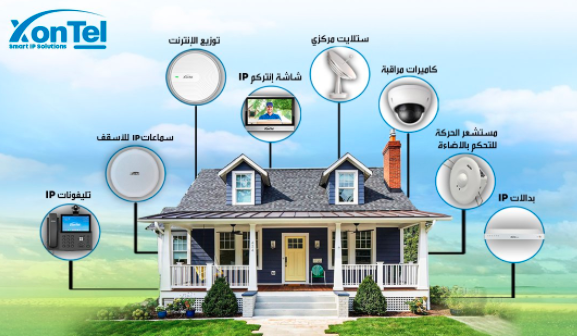
Dear reader, if you think that the only function of the intercom or IP intercoms is to know who is at the door only, let me correct this information for you, as the intercom is now considered an integrated security system.
Today, these devices are considered a safety and security factor for individuals, especially as they are used to protect homes, villas and companies from strangers, thieves and intruders. Unfortunately, many people are ignorant of these devices, what their importance is and how they are used.

What is an intercom device?

It is a device that is installed on the doors of houses, companies, or villas, and it is a form of communication systems between individuals.

Modern intercom devices are works with advanced IP technology and are installed by connecting them to some modern communication system.

Recently, home intercom devices have begun to spread in residential buildings, villas, companies of all kinds, and in small and large institutions.

What are the Intercom components?

Indoor device:

LCD monitor that lets you see and talk to visitors when you are physically at your home or from anywhere, thanks for the ability to link your mobile phone to the IP intercom device.

The outdoor panel:

It is located outside the property and has a HD camera, a mic, and calling buttons.

Network wires:

It connects the device to the network, and there are modern Models that work without wires (wireless).

Power supply:

Ordinary devices need a power supply, but newer devices get their energy needs through the network.

  • Indoor device:

    LCD monitor that lets you see and talk to visitors when you are physically at your home or from anywhere, thanks for the ability to link your mobile phone to the IP intercom device.

  • The outdoor panel:

    It is located outside the property and has a HD camera, a mic, and calling buttons.

  • Network wires:

    It connects the device to the network, and there are modern Models that work without wires (wireless).

  • Power supply:

    Ordinary devices need a power supply, but newer devices get their energy needs through the network.

The advantages of modern IP intercom devices:

– The possibility of connecting to the modern PBXs that are already inside the company or inside your home in the case of a home intercom system.

– Possibility to record calls with the visitor.

– If you are not at home, you can transfer the visitor’s call to your mobile phone.

– Video intercom devices have the ability to capture the visitor with video in high quality.

– Control the opening and closing of the door through your mobile phone.

– The possibility of following the dates of exit and entry of children in homes or employees in companies.

– Video intercom devices have the feature of supporting night vision.

– Possibility to work without power supply and in different weather conditions.

XonTel is the leading Arab company in the development and production of IP intercoms of all kinds and forms.

To know more information about XonTel IP Intercom systems, Click here.

call2action-En

For more information about XonTel products and services, leave your data and one of our specialists will contact you

What are FXS and FXO ports

Posted on: October 11th, 2022 by xontel_admin

What are FXS and FXO ports? What are they used for?

What is an FXS port?

FXS stands for foreign exchange subscriber. An FXS port is an interface that connects station devices such as your phones or PBX to a VoIP adapter.

FXS is an RJ11 port that connects internally to an analog office phone or fax machine.  Think of the S as meaning a station or a cubicle. Any FXS port is going to connect to an analog DEVICE and the cable from the port to the device will never leave the building.

Now, on to the FXO ports…

What is an FXO port?

FXO stands for foreign exchange office. An FXO port is an interface that connects your Plain Old Telephone Service (POTS) line to a VoIP adapter.

It designates a telephone signaling interface that receives POTS (plain old telephone service). Um… ok. Let’s put it this way, FXO is a port that will connect a device to an outside telephone line.  Think “O” for “Outside”. Picture an RJ11 wall jack that connects to a box in your basement which is connected to the line from your house to the nearest telephone pole on your street. Any RJ11 port on a device that is headed towards that wall jack is an FXO port. It connects your device to the “outside” world or your local area telephone “office”.

FXS and FXO Ports With VoIP Phone System

FXS Gateway

An FXS gateway is used to connect one or more lines of a traditional PBX to a VoIP phone system or provider. Alternatively, you can use it to connect analog phones to it and re-use your analog phones with a VoIP phone system. You need an FXS gateway because you want to connect the FXO ports (which normally are connected to the telephone company) to the Internet or a VoIP system.

XonTel offers cost-effective Series S3200 FXS VoIP Gateway for small and medium enterprises to ensure an effortless and smooth transition to VoIP. By integrating traditional phone systems into IP-based systems, you can provide employees with a robust IP telephony feature set and will not have to allocate huge investment on new VoIP phones but, instead, continue using the existing analog phones as extensions of the IP-PBX.

FXO Gateway

An FXO gateway is used when you want to connect a VoIP system with analog lines and translate analog lines to establish a VoIP call.

XonTel  XT-400 FXO VoIP Gateway provides an affordable and reliable solution that can connect analog lines and PABX extension interface to SIP trunks, enabling making calls over the Internet.

When connected to a headquarter IP PBX system, FXO gateways can use the local landlines of your remote sites to avoid long distance rates. Besides, in the event of a network crash and SIP trunking to IP-PBX fails, FXO Gateway can offer a failover or fallback solution by connecting your PBX to an outside telephone line.

E1 Gateway:

SIP/E1 Media Gateway – Digital VoIP gateway is used in different options of conjugation of VoIP and TDM/PSTN networks for minimization of expenses and reduction of operational costs. Support for all types of signaling used in the PSTN network allows the use of Terratel VoIP gateway for the reconstruction and modernization of various telecommunications equipment. SIP/E1 Media Gateway supports call routing in any order TDM-to-SIP,  SIP-to-TDM,  TDM-to-TDM, and SIP-to-SIP.

call2action-En

For more information about XonTel products and services, leave your data and one of our specialists will contact you

IP Speakers & Bluetooth Speakers

Posted on: October 10th, 2022 by xontel_admin
Speakers Next Generation, Intelligent IP Speaker

When installing a new VoIP System in your office, institution, or plant, it makes sense to extend the system to include mass notification.

In today’s world, a mass notification system is necessary, especially in schools, malls, airports, and large campuses. If you don’t already have an analog speaker system in place, extend your VoIP System that last mile to include IP Speakers or Bluetooth speaker as SIP endpoints. XonTel offers IP speakers and Bluetooth speakers which connect to your VoIP system as if they were another VoIP Phone or through the zone, controllers to give you control over where your message is extended to.

To extend your reach, it can be connected to less expensive analog ceiling speakers allowing you to use your VoIP system to communicate while saving costs on speaker hardware.

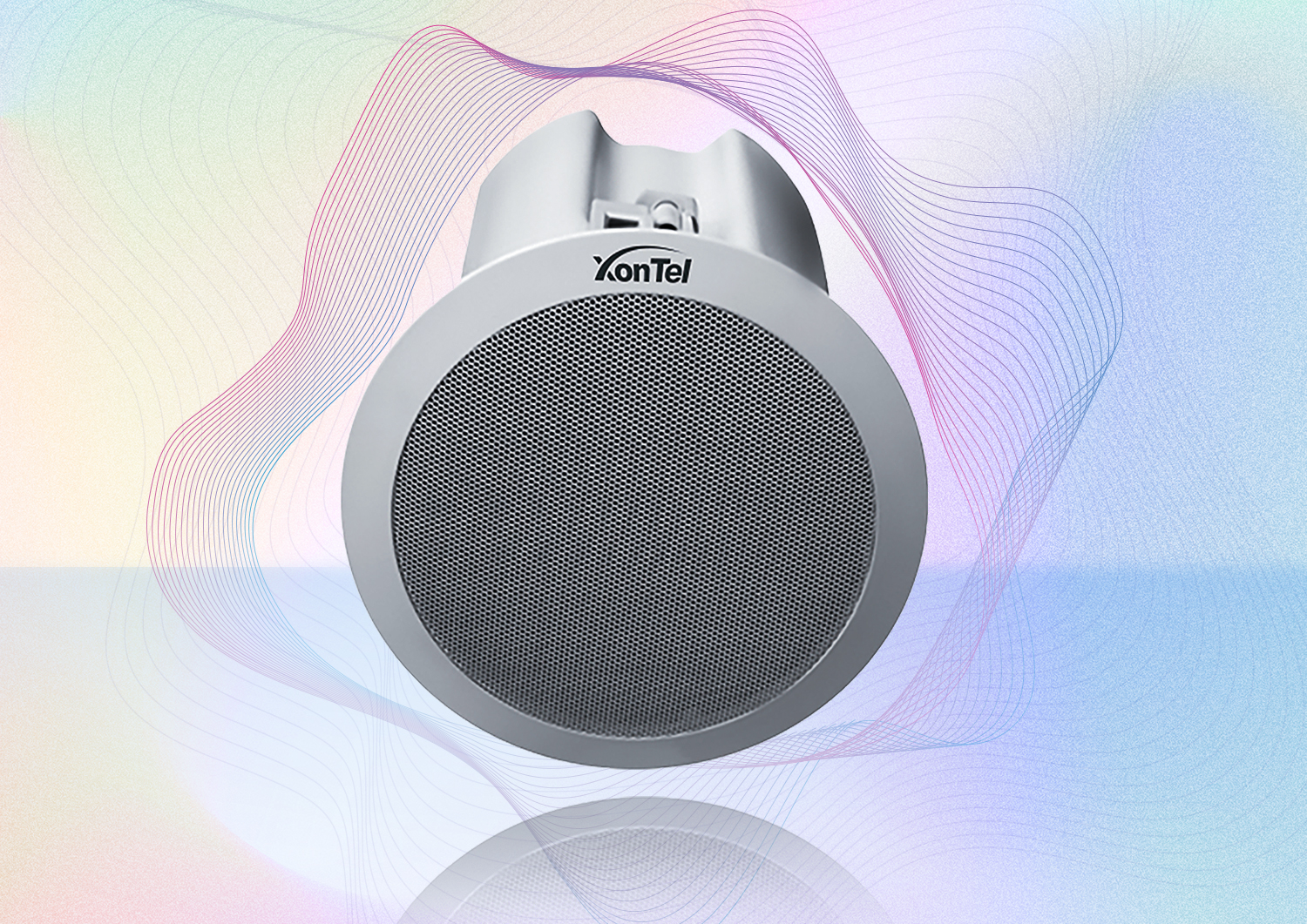
XonTel offers a wide variety of IP ceiling and Bluetooth speakers including industry standard 8in round ceiling speakers, as well as a wall-mounted speaker and intercom systems. Unify your messaging by combining your IP speaker system with a network clock or an IP digital message board.

XonTel’s IP-based speakers are SIP-compliant, multicast-capable devices that can integrate seamlessly with most leading Unified Communication, Collaboration, Mass Notification, and VoIP telephone systems. All XonTel IP speakers are PoE or PoE+ powered for ease of connectivity and include wideband audio and G.722 voice codec for HD voice quality output.

Bluetooth Speaker

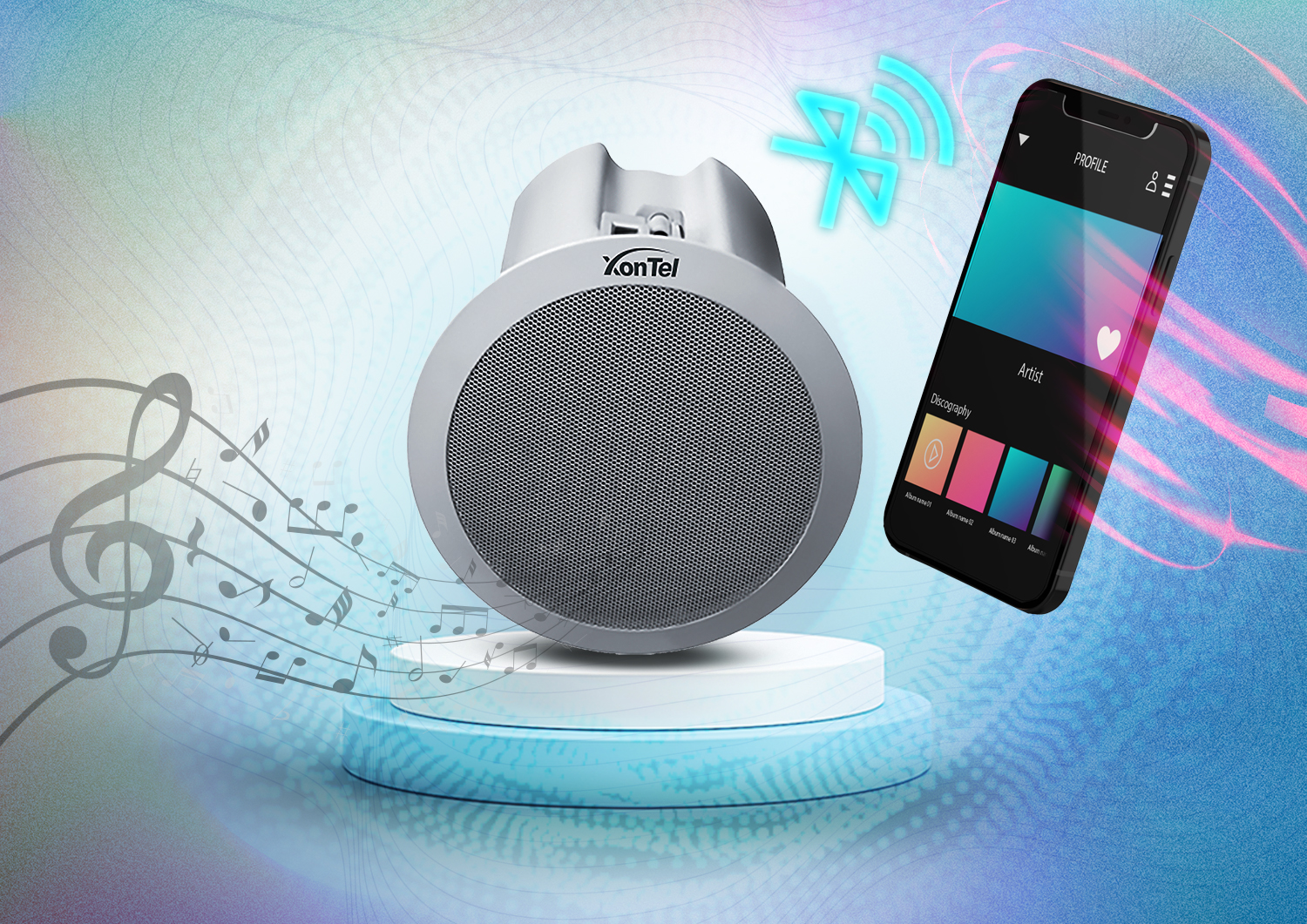
Bluetooth Speaker provides a convenient and easy way to play your music or radio in your home, office or company from handheld devices where your favorite apps and streaming services are installed.

This is a collection of quality wireless speakers, including some ceiling Bluetooth speaker models, that can receive an audio stream via a Bluetooth signal from a connected device such as a smartphone or tablet. All-in ceiling-mounted Bluetooth speakers include a built-in amplifier and require a connection to mains power.

If you want to know more about ceiling Bluetooth speakers and UHF wireless microphones, check out our products where we explain XonTel Bluetooth Speaker and UHF wireless microphone range in detail.

call2action-En

For more information about XonTel products and services, leave your data and one of our specialists will contact you

What is IVR (Interactive Voice Response)?

Posted on: June 4th, 2022 by xontel_admin

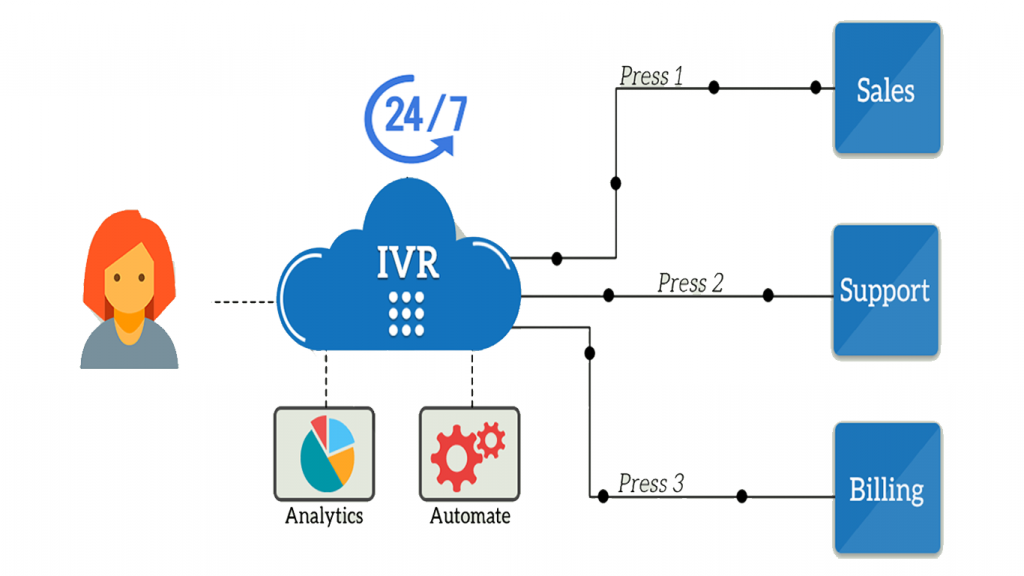
Interactive Voice Response (IVR) is an automated phone system technology that allows incoming callers to access information via a voice response system of pre recorded messages without having to speak to an agent, as well as to utilize menu options via touch tone keypad selection or speech recognition to have their call routed to specific departments or specialists.

IVR Interactive Voice Response

A well designed IVR software system can help increase customer satisfaction and improve contact center operations and KPIs. Particularly during times of high call volume, an effective interactive voice response system can help avoid hold time by helping customers find answers and perform simple tasks themselves. In cases where a customer needs or requests to speak with a person, ivr  Interactive Voice Response technology can help route calls quickly and seamlessly to the best call center agent to address their inquiry.

How Does IVR Work?

There are two primary components of IVRs that enable the computer to understand and process the caller’s requests. One is voice recognition technology, and the other is called Dual-Tone Multi-Frequency signaling (or DTMF).

DTMF signaling occurs between the phone and the computer when callers use the keypad on their phone to select menu options. This touch-tone technology allows intelligent call routing to take place without a human operator.


IVR platforms with voice recognition capabilities enable what’s called Directed Dialogue, which means callers can give verbal responses instead of using the keypad to navigate the menu. For example, an IVR menu might say, “For billing, press three or say ‘billing.’”

Benefits of IVR Systems

Below is a list of the advantages you get when adopting IVR capabilities in your call center workflows:

Reduced Call Numbers

IVR software is a technology that allows customers to save time and resolve their problems faster than before. The less time they spend on the call, the more people your company can serve. Before a customer called a regular infoline and reached a general reception line, IVR now replaces it by introducing call routing. The customer call is instantly answered and directed to the requested department. Even if there is no suitable option for the customer to choose from the IVR menu, the caller can select to talk to agents.

Better Customer Service:

No business can thrive without customers. Therefore, having a good customer experience is imperative. Several studies report that 48% of customers prefer using the phone to resolve their issues.

Interactive Voice Response systems also make clients feel like they’re better attended to. IVR systems ensure that any usual question a customer might have already has a quick response readily available. A good IVR flow provides informative and time-efficient responses, guiding customers through an intuitive menu right to the department that can best resolve their needs.

Ultimately, this means answering a call on the first ring, thereby reducing customer wait time and cutting call volume, and saving time for both the client and company. And because they’re talking to the person who can solve their problems, there’s a much better chance of fixing the problem on the first call.

Offering a Callback

During a high volume of incoming calls, IVR technology has a useful feature that offers callers a callback at a later time to avoid long waiting periods and to prevent worsening the customer service experience. The company agents will have less stress and will be able to fully assist the clients later. IVR software sends the callers’ phone number and possibly preferred date and hour for a callback to agents to dial at a less busy time.

Unlimited Customer Access:

While office hours, holidays, and breaks dictate and limit employee availability, IVR systems are always at the customer’s disposal. They can call your contact center and interact with your IVR systems at any time, even outside your business hours.

This means a customer can receive customer service whenever they need it. While the option of having a live representative is still essential for more complex support requests, an IVR system gives unlimited access to a basic level of customer service.

Create a Better Company Image

If you’re a smaller company, you may not necessarily have the call volume that requires IVR technology, but it can still be a beneficial tool to have. An IVR creates the idea that your company is huge, as one receptionist couldn’t possibly manage your call volume.

For bigger companies, these systems foster a professional image by maintaining consistency in customer service and call volume.

Reduce operational costs.

IVR systems will replace a receptionist or a customer service agent who answers calls and directs calls to agents. They are also very affordable, will increase efficiency and will reduce operational costs, so the ROI is huge.

Increased Productivity

Routing callers to the specific departments or staff members to address their specific needs means less time spent conferring with colleagues to find the right answer or transferring the caller until they get what they need. Time spent on hold or being routed from department to department is a major driver in customer dissatisfaction, and you want to avoid this as much as possible.

Call routing also enables contact center agents to prioritize the most urgent calls, increasing overall efficiency and first-call resolution rates.

With an IVR system, your company will be able to attend to a high volume of calls without long call wait times or stressed receptionists.

Error-Free

High call volumes tend to be a mental strain on call center agents, which can result in misrouted users in addition to long waiting times. This can severely impact your customer service experience. With the IVR system’s automated routing, you greatly reduce the risk of mistakes in directing a customer to where they need to go
When your clients have a good customer experience, all good things will follow for your business. XonTel offers you very powerfull call center system with modern IVR technology. You can tailor your XonTel call center IVR system to your specific needs, use multi-level menus for more in-depth customer choice, and even customize routing behavior and how calls are sent to various groups in your contact center
To find out more information about XonTel call center system and IVR Systems, do not hesitate to contact us.

call2action-En

For more information about XonTel products and services, leave your data and one of our specialists will contact you

Reasons and Benefits Of Cloud Call Center

Posted on: June 3rd, 2022 by xontel_admin
Reasons-and-Benefits-Of-Cloud-Call-Center

Cloud call center Solution is a fantastic innovation that allows small and big businesses to enjoy the benefits of a call center, but with the cost and convenience of working from home. Today, many businesses are moving their call center to the cloud to stay ahead of the competition, meet and exceed customer expectations, and deliver a distinctive customer experience.
Unlike the traditional call centers that are heavy on hardware, with limitations to customer communication channels, cloud provide flexibility, cost optimization, and scalability on demand – eliminating the need for physical infrastructure.

A Definition of Cloud Call Centers

Hosted in the cloud by a business server, a cloud call center is the hub of an enterprise that handles all customer communications. Because this center is in the cloud, it makes interacting with customers, including all inbound and outbound communication via voice, email, social media, and the internet, accessible from anywhere. Cloud-based call centers require users to have internet access with enough bandwidth to accommodate them. Companies choose to modernize their call centers by choosing those in the cloud because customers increasingly use digital channels to contact businesses.

Benefits of cloud call center:

Fast Deployment:
Fast-Deployment

Cloud call centers provide fast and effective results.

While the installation processes in traditional call centers can take months – set-up teams must provision computing and storage resources, install viable applications, and apply necessary configurations, not to mention test the new installation.

Choosing to move your call center to a cloud-based solution, you receive a ready-to-go product.
Easy to Use:
Easy-to-Use

The use of cloud-based call centers allows users to seamlessly access systems with the help of an internet connection, and deliver high-level customer experiences anywhere anytime.

Cost:

It costs more to maintain traditional call centers.

These costs include but are not limited to, licenses, hardware, installation, maintenance, and technical support.

With the cloud call center, you only need an internet connection, a computer, and a headset.

This spares your business the high costs of traditional set-ups while increasing the efficiency of your company with flexible cloud solutions.

cloud call centers do not have a large upfront hardware or infrastructure cost as long as your organization has a strong internet connection with sufficient bandwidth. Ongoing costs include a monthly subscription.

Integrations:

It is difficult but possible to integrate an on-premise call center with other services, mainly because of licensing and installation. XonTel Call Center features a public API that allows quick and easy integration with business applications such as CRM, ERP, SMS Gateways, Point of Sales Systems (POS), Hotel Management Systems, and Social Media Platforms.

XonTel Call Center is built and hosted within Amazon AWS infrastructure, and as such, our users can easily communicate natively with related tools.

Reporting and analytics:

With the right cloud call center software, you can keep track of incoming and outgoing calls, measure the value of marketing spend, and compile information about call times and agent performance.

Reduce Technical Staff:

Cloud systems provide all the necessary support built into the software.

Accessibility:

Connect to your call center from anywhere in the world with a computer connected to the Internet.
Reach your customers anytime, anywhere from the office or home. Establishing a remote agent the program offers the opportunity to expand your hiring range to the entire country or even globally instead of merely looking for candidates within your office location.

XonTel is one of the pioneers in developing and manufacturing best Cloud call center and Cloud Contact Center solutions, services and various communication products which are used in local networks or via IP Technology (VOIP) in the Middle East, because of its long history in the world of communications in the Arab world.

To find out more information about XonTel call center system and benefits of best cloud call center or request a suitable solution for your company, do not hesitate to contact us.

call2action-En

For more information about XonTel products and services, leave your data and one of our specialists will contact you

The Call Center System

Posted on: April 19th, 2022 by xontel_admin

By Internet, telecommunication technology development, and the great need to call center system, call center solution , data transmission speeds development, the emergence of giant multinational companies, and even companies with branches in different countries, the communication systems within these companies have become one of the main pillars in customer service, dealing with them and the link between the company and its customers, which lead to increased reliance on call center systems and call center solution, so let’s explain in detail what is a call center system and call center solution ?

call center solution

What is a call center system ?

The call center software or call center solution is a system that allows companies to manage all communication channels with customers such as phone calls, e-mail, live chat, SMS and social media. 

The call center software can be used as part of customer service and help employees respond to customer inquiries and solve their problems.

Call center systems or call center solution has many shapes and functions, such as:

Call-Details

Call Details & Call Analysis

Custom-dashboard

Billing system

automatic dialing software

Custom dashboards

Computer telephony integration

Automatic Call Distributor

Welcome messages (IVR)

For this reasone, you should Know the importance and understand the call center system and call center solution features before deciding to invest in it.

So, to help you get a better idea of ​​the suitable call system for your business, We will discuss all the information you might need to know in this article.

Thanks to the development of Voice over Internet Protocol (VoIP) and Cloud Computing, the hosted call center system or cloud call center requires only the basic components like a computer, a browser and an IP phone.

Using a call center system, you can now easily set up your own contact center, which can monitor the quality of the service provided to the customer, record calls via call recording system, analyze the content of conversations, manage queues, online calling back and social media support.

1- What are the types of call center or call center systems?

The purpose of the call center systems is helping companies to manage customer communications from any available channel with the company.

The call center program can be categorized into the following:

  • What are call center types?

    Company premises call center systems:

    Usually, it is sold with a license to use on time where the company employee operates, installs and maintains the call center.

    It requires installing the devices in all branches of your company and connecting them with each others

    It is the most professional type of call center, although it is also the most expensive.

  • 1- ما هي أنواع أنظمة الكول سنتر أو مركز الاتصال؟

    Cloud Computing Call Center Systems:

    Its idea is to have a call center system on the cloud

    It could be accessed from anywhere without the need to download or install any program

2- What do call centers provide?

To answer this question, we have to understand the main purpose and function of a call center.

  • The system allows companies to provide support, fully communicate with customers and respond to their inquiries.
  • It is the easiest way for better customer communication with your company, to allow them to interact with you and your products or services.
  • Communication with customers is carried out through the call center system in two directions,  from the customer to your company or from  your company to the customer, for purposes such as Marketing, offers, surveys, deals, discounts, etc.

To do all of the above and more, the call center system was designed with functionality to facilitate this two-way communication.

You can benefit from features like voicemail, email, support ticket, chat, conference and more.

For comprehensive information about clients, Call center systems provide integration and compatibility capabilities with CRMs, e-commerce or marketing platforms, and chating systems.

For example, the call center system can show you the following:

  • Caller’s previous purchase history, voicemails, notes, cases, phone calls with the company, Chat, support tickets, and more.
  • It allows you to provide better service, streamline workflow, and eliminate redundant information.

How does Call Center System operates?

Usually, call center software facilitates the following steps:

  • The system recognizes customers by checking their data in the database.

If the caller is not in the database, it will usually register the new caller client in the company’s databases to identify him in the future.

  • If the customer is already registered in the database, the system will show to the call center agent all his previous logs by receiving the call, and provide the agent with sufficient information about the client, including the client’s previous logs on the system, before dealing with him.
  • When the caller responds to the IVR, it will direct the call to the correct preset queue.
  • When the call enters the queue, all agents who are assigned to the queue can pick up the call manually. Or it automatically assigned based on an automated call forwarding system.
  • When the call is received and the customer answered, the call center agent can assist the customer, and answer all his inquiries or solve all his problems
  • If the call center agent cannot solve the customer’s problem during the call, The system allows him to save what has been accessed with the client, To reuse it later to follow up solving the customer’s problem.
  • Based on the customer’s response. The agent can indicate the status of the ticket as open, closed, resolved, or requires follow-up.
  • When the ticket status is marked as “Closed”, an automated survey call or email is sent to the customer for his feedback. The company can use its results for marketing strategies or other purposes.

As you can see from the previous steps, the call center system has simplified communication with the customer.

It makes the mission of a call center agent easier and less complex, ensuring efficiency and productivity, and enhancing quality and prompt customer support.

3- What are the call center system features?

IVR
IVR Welcome Voice Messages:

Which helps you direct the caller to the relevant department or the required service.

working-hours
Call scheduling system:

It allows you to set the working hours in which you receive your customers’ calls, and outside working hours you can record a voice message to the customer by leaving his inquiry and he will be answered later.

2-way-communication-call-center-solution
Call forwarding feature:

You can transfer calls to the relevant department to deal and communicate with the customer well.

unified-number
Unified number

The possibility of linking between short commercial numbers, landlines and internal lines for employees.

follow-up
Comprehensive and accurate calls reports:

system allows you via call recording system to record all customers’ data, requests or complaints with high accuracy. It helps in evaluating the importance of each case individually and the priority of responding to it (high, medium or low).

Recording
Call recording system:

Call recording system is allowing you to recored all incoming and outgoing calls are recorded to ensure the quality of service and its development

Certificate
Agent evaluation system:

An automated agent performance evaluation system after the end of each call.

By redirecting the client to this evaluation to test the employee’s level according to the clients opinion.

unified-number
Unified Communication Channel (OMNI Channel):

You can view all your client’s history and monitor the number of calls and complaints and requests submitted by him on all communication channels.

Certificate
Social media integration:

You can link  the company’s accounts in social media platforms (WhatsApp – Instagram – Facebook – Messenger or Twitter)

Certificate
Public Portal

Enable your customers to register and follow up on their complaints or inquiries through the public ticketing portal.

XonTel is the pioneer of companies in the Arab world that provide call center solutions and call center software for the business sector of all sizes.

To find out more information about XonTel call center system call center software or request a suitable one for your company, do not hesitate to contact us. 

call2action-En

For more information about XonTel products and services, leave your data and one of our specialists will contact you

Call Center Terminology – part 2

Posted on: April 14th, 2022 by xontel_admin

In the previous article, we reviewed the first part of the most important call center terminology, and in this article we continue to simplify and explain the second part of the most important call center terminology ( CRM – IVR – ACD – Call Recording ):

Explanation of Call Center Terminology

call2action-En

For more information about XonTel products and services, leave your data and one of our specialists will contact you

Call Center Terminology – Part 1

Posted on: April 10th, 2022 by xontel_admin

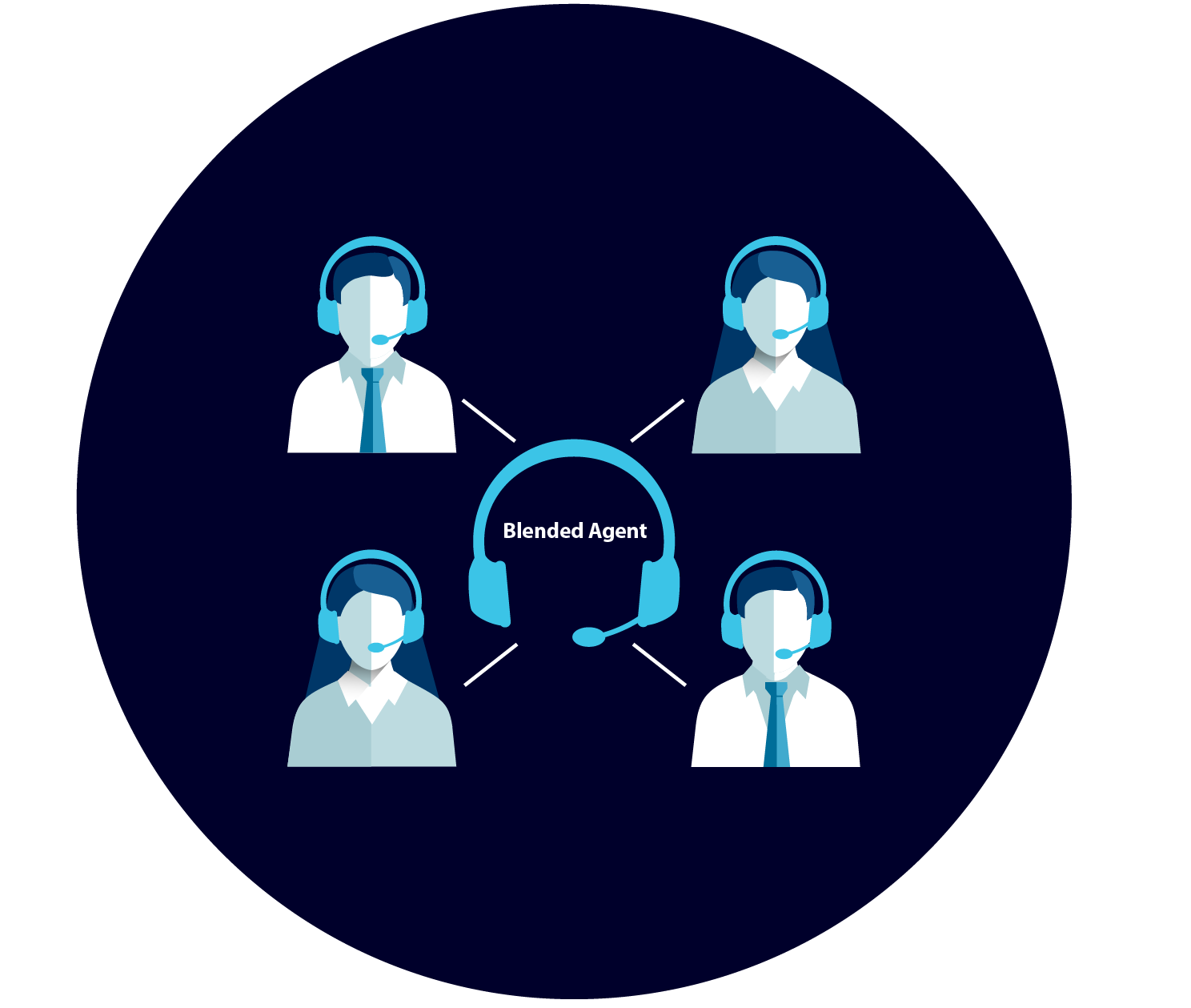
By the development and spread of call center systems and call center terminology, these systems have become an integral part of all companies, regardless of their size, and are highly relied on in managing customer relations, so it was necessary for every employee or business owner to understand the most important terminology of Call center , like Abandoned Call – Agent Status – Agent – Call Ccenter Queue – Call Center Manager – Blended Agent – Call Routing .

In the following article, we try to simplify some of call center terminology in order to provide a comprehensive understanding of the call center environment and provide appropriate definitions about common call center terms and some of the names that are usually used in the call center industry and its work environment.

Explanation of Call Center Terminology

call2action-En

For more information about XonTel products and services, leave your data and one of our specialists will contact you

XonTel Call Center system

Posted on: March 11th, 2022 by xontel_admin

Unlimited Communication Techniques

The call center system or call center software is considered the link between the company or organization employees and its customers, that’s why we provide you XonTel Call Center Solution .

The main objective of any call center system and call center software is to manage the process of sending and receiving requests or inquiries and communicating through all channels with customers.

XonTel is one of the pioneers in developing and manufacturing call center solution and call center software, services and various communication products which are used in local networks or via IP Technology (VOIP) in the Middle East, because of its long history in the world of communications in the Arab world.

Why XonTel Call Center System?

XonTel contributed to the establishment of a call center system which is supported by professional and smart solutions for communication systems and services.

This call center solution is up to date with Telecommunication latest technology and the latest methods of communication with customers, including smart solutions for business development to various sectors.

XonTel call center system was built on a combination of understanding the needs of the customers, practical and software experiences, and flexibility towards modern market changes.

XonTel Call Center’s target is to increase the operational efficiency of its customers, and increase the value of their brand name, to become an important partner of clients’ success.

XonTel Call Center Advantages and solutions:

The call center solution will help you to achive:

  • Simplify and facilitate communication between companies and their clients.
  • Upgrading and improving customer service.
  • Facilitating the employee’s tasks.
  • Achieving customer satisfaction.
  • Gain the trust and loyalty of customers.
  • Improving the quality of communication with customers.
  • Integrate a correct database for the company’s clients.
  • Facilitate communication and cooperation within the company and their employees.
  • Facilitating work from different places and the availability of remote work.
  • Attract potential customers and identify the new opportunity, which leads to sales increment.
  • Save time, cost and reduce effort.
  • Enhance the company’s image and maximize the brand’s value.

XonTel Call Center Solutions

Welcome Messages (IVR)

Which helps you to direct the caller to the relevant department or the required service, which helps in saving time of the customer and the employee.

Determine working hours and off days

By using the call center system, you can set the time of receiving calls according to working hours, as well as you can schedule customer calls on holidays and out of working hours.

Call recording

The Call Center system allows you to follow up and record all incoming and outgoing calls between your agent and your customers, which helps in evaluating and improving performance

Waiting and transferring calls

You can put the customer on hold and play a specific advertising message, or transfer calls to the relevant department to handle the customer.

Unified number

XonTel Call Center system allows you to configure your landline or mobile number with your unified number, which makes the connection easier.

  • Welcome Messages (IVR)

    Which helps you to direct the caller to the relevant department or the required service, which helps in saving time of the customer and the employee.

  • Determine working hours and off days

    By using the call center system, you can set the time of receiving calls according to working hours, as well as you can schedule customer calls on holidays and out of working hours.

  • Call recording

    The Call Center system allows you to follow up and record all incoming and outgoing calls between your agent and your customers, which helps in evaluating and improving performance

  • Waiting and transferring calls

    You can put the customer on hold and play a specific advertising message, or transfer calls to the relevant department to handle the customer.

  • Unified number

    XonTel Call Center system allows you to configure your landline or mobile number with your unified number, which makes the connection easier.

XonTel Call center Solutions

XonTel Call Center system aims to increase efficiency

operating for its customers and increasing the value of their brands,

To become an important partner for the success of its clients.

Supervision and follow-up:

Survey
Survey and customer feedback:

The system allows you to survey the customer's opinion of the provided service by making a quick questionnaire over the phone to measure his satisfaction with the service and take his comments in consecration.

2-way-communication-call-center-solution
Supervising calls:

You can set a specific time for the call, and in case it is exceeded, it sends an alert to supervisors. Or specify preset words if the client uses them, the system alerts the supervisors, etc.

follow-up
Monitor call records:

You can monitor call recording of some calls to evaluate the quality of the agents, and follow up their level in customer service to improve their performance.

Comprehensive Reports

Call Details
Call details:

View the details of incoming and outgoing calls, starting from time, source, transferring, and who solved the customer's inquiry.

Custom-dashboard
Advanced Reports:

Software add-ons which allows you to add more details and important information in all of your customers' communication channels.

Reports
Call-History
Customer history:

The system allows you to view the history of customers' call details or by a specific customer at a certain time or according to a specific situation.

analytics-and-reporting
Performance reports:

Professional reports which monitor the performance of each agent, it helps in evaluating and improving the performance of your staff.

To find out more information about XonTel call center system or request a suitable one for your company, do not hesitate to contact us.

XonTel provides the latest technologies to compete with its global counterparts at competitive prices.

It also provides a professional and highly qualified technical support team to know and meet the needs of all customers with accuracy and high efficiency.

call2action-En

For more information about XonTel products and services, leave your data and one of our specialists will contact you


XonTel and Smart Home Technology

Posted on: December 17th, 2021 by xontel_admin

Over a decade , Xontel has been one of the pioneers of communications technology in the Arab world. As a result of this leading role in the field of telecommunications, it was necessary for Xontel to take the lead and contribute effectively to enter the era of smart homes – with all its expertise and achievements in communications systems and smart home technologies across the Arab world in general and the Gulf region in particular.

In a previous blog post, we discussed in detail what a smart home is, what the features of a smart home are as well as the features and components of the smart home.

Xontel contributes to smart home technology through its most important and latest products, which are carefully designed according to the most advanced global technological innovations. In this post, we’ll review the most important Xontel devices for smart homes.

المنزل الذكي

Smart IP PBX:

The cornerstone of any smart system for achieving a smart home is communications. With the remarkable advancement in communications technologies and the emergence of IP-based communications technology, IP PBX systems have appeared, these systems offer dozens of features that traditional PBX systems do not, such as call recording, voicemail, personal directories, integration with cameras and door intercoms, the ability to make calls via a mobile app, and the capability to connect with any other PBX system anywhere in the world.
Xontel is a pioneer in the PBX industry in the Arab world (you can find out more about Xontel PBX from here)

Smart Lighting Systems:

Xontel has developed and produced motion sensors for lighting. Motion light sensors are one of the most essential tools and components for any smart home, as they provide protection and security in the smart home. Through the motion light sensor, any movement of people or even animals will be detected and monitored thanks to infrared technology. When any movement is detected, an alarm will trigger automatically. The motion light sensor can also be used to save and optimize energy consumption and reduce electricity bills.
(you can learn more about XonTel lighting sensors from here).

Door Intercoms and Smart Lock Systems:

Today, intercom devices are considered a key element for individuals’ safety and security, especially as they are used to protect homes, villas and businesses. Modern intercoms are equipped with cameras and speakers and can be connected to the On-Premises PBX system via advanced IP technology.
Xontel’s Intercom provides a comprehensive security system for your home, allowing you to respond to visitors via your mobile phone, communicate with them via voice and video, and unlock the door for them.

Smart Security Cameras:

One of the main components for transforming your home into a desired smart home today is surveillance cameras, these security cameras allow you to monitor your home and its surroundings while you are away or on vacation. When integrated with smart motion sensors, they can detect movement inside the home. With the advancement of communications and the internet, security cameras that operate with CCTV IP internet protocols have appeared, offering many features, including:

  • Higher video quality, wider field of view, and better zoom capabilities without losing image quality.
  • Relying on digital signals allows for highly accurate facial recognition.
  • Smart Digital Cameras provide resolution up to 20 times higher than Analog CCTV.
  • Enabling stronger encryption, compression, and protection of transmitted data.
  • Traditional models rely on cables, while digital cameras transfer files wirelessly, which is faster and better for long distances without concerns about quality loss.
  • Managed remotely, transmitted footage can be distributed to different recipients, with each receiving pre-defined data.

Xontel provides the latest technologies for achieving a smart home, competing with its global counterparts at competitive prices. It also provides a professional and highly efficient support team to accurately and efficiently identify and meet the needs of all its customers, making it the best choice.

For more information about Xontel’s Smart Home products, contact us now.

call2action-En

For more information about XonTel products and services, leave your data and one of our specialists will contact you

The new generation of home Internet Access Point

Posted on: November 22nd, 2021 by xontel_admin

XonTel Technology seeks to provide the best and the latest 5G solutions in the field of communications, and the distribution of the Internet through Wi-Fi 6 high-speed Access Point devices, for indoor buildings, such as company’s offices, homes and government agencies.

In this article, we offer you the latest technologies, it’s (Wi-Fi 6).

Where the Access Point system allows you to obtain Internet speeds by downloading, up to (1000Mbps) and more, depending on the type of Access Point device (AP) you use, and according to the speeds you get from the service provider, whether through fiber networks (Optical Ground Wire “OPGW”), or through the 5th generation network of mobile phone companies (5G) router.

How do you get high speeds of the Internet?

To get these high speeds using the XonTel Access Point (XT-3000AX), which supports this technology (Wi-Fi 6), and at speeds up to (3000Mbps).

You must ensure that the appropriate infrastructure is available in your home, to withstand these high speeds, according to the following explanation and notes:

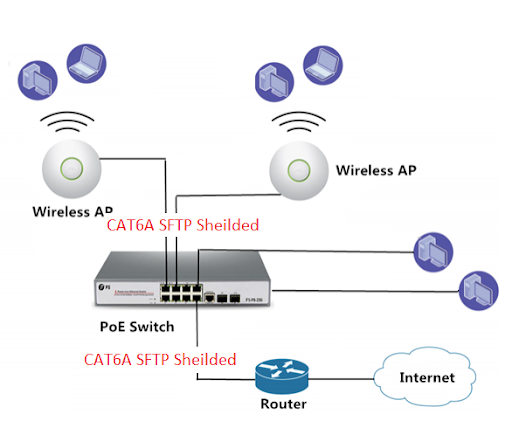
1- It is recommended to use good quality cables (CAT6A or higher), and these cables must be (Shielded SFTP) which prevents the loss of data transmission speed over long distances of more than 20 meters.

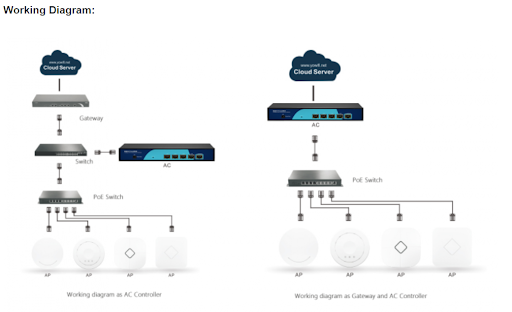
2- These cables (CAT6A or higher) must be used between the Access Point device (XT-1800AX and the POE Switch), and between the router and the POE Switch as follows:

3- The device of the network POE Switch must support Gigabyte speeds.

4- When using the Internet, you must make sure that your computer or phone supports Wi-Fi 6 technology.

5- You must be at a distance do not exceed (6 meters) from the Access Point device (XT-1800AX), and without barriers between you and the aforementioned internet 5G router.

6 – You must make sure of the location of the 5G router in your home and the service provider, that they are actually able to provide you with this speed exceeding 500Mbps as a download on a regular and stable basis.

7 – Think carefully about using the XonTel Controller, which is able to connect more than one 5G Router at the same time, and combine their speeds to get a speed exceeding (800Mbps) as a download speed.

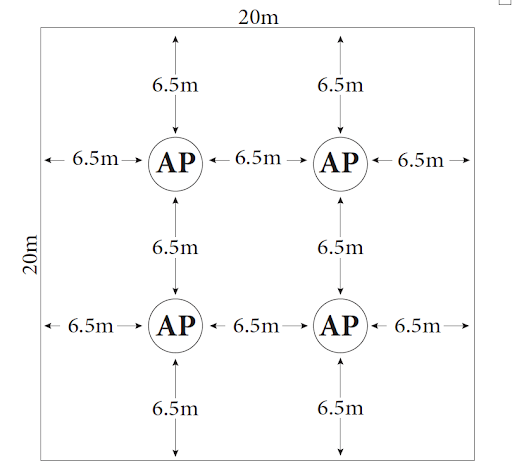
8- It is preferable to use (4) Access Point devices (XT-1800AX) in each floor, to obtain high speeds with (WIFI 6) technology, and this design below is based on a house area (400 square meters).

The number of devices can be reduced according to the customer’s desire in places that are not currently desired to be covered, but it is recommended to extend cables for these four devices in the decoration, so that additional devices can be installed in the future easily.

call2action-En

For more information about XonTel products and services, leave your data and one of our specialists will contact you

Types of IP phones & how to choose the most suitable one

Posted on: October 18th, 2021 by xontel_admin

Types of IP or VoIP (Network) Phones

IP phones or VoIP phones are devices that use Voice over Internet Protocol (VoIP) technology, which enables making calls over the Internet instead of using traditional landline systems that rely on analog switched telephone networks.

With technological advances and the wide range of features offered by these phones, most companies now rely on IP or VoIP phones through their managed private networks or the internet.

How to choose a VoIP phone

Today, most companies use a combination of smartphones and mobile apps alongside VoIP phones, as this gives them greater flexibility in creating an internal communication system. Xontel recommends using both types, as smartphones and mobile apps are free.

When deciding whether a desk phone is necessary, it’s important to consider whether employees are more comfortable using an IP phone and whether it’s more suitable for their job. Call centre agents may prefer to have a desk phone, but they will most likely use a headset – so choose an IP phone with built-in Bluetooth or USB ports to allow them to easily connect their devices.

Several points should be taken into consideration before setting up the communication system, such as:

  • Is the phone model and its operating system compatible with your internal communications system?
  • What features are needed in a phone for each employee? Most employees can efficiently perform their duties using a standard IP phone equipped with basic features and offered at a reasonable cost. However, the requirements for senior staff, executives, and managers may differ. For these roles, there is a need for a more advanced VoIP phone with more additional features and capabilities, which would allow them to save time and communicate more efficiently using a single device.
  • Is the VoIP phone you have chosen compatible with future updates? Make sure it is of the latest generation and is likely to continue receiving software updates for a long time to come.
  • Do you need communications solutions for meeting rooms? There are also many phones designed specifically for this purpose.

Types of VoIP phones

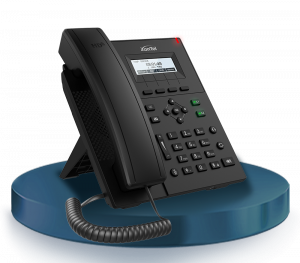
Desktop VoIP Phones

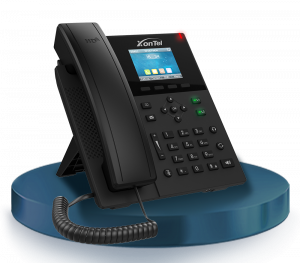
A VoIP phone with basic features, suitable for employees with traditional, routine tasks that do not require advanced phone features. It connects to the VoIP phone system or service provider via the company’s internal network and comes with all the basic features you would expect from a standard phone.

USB Phones

The USB phone connects directly to your computer via a USB port. You can use the USB phone simultaneously with a phone application, for example, you can use it with a program such as Skype.

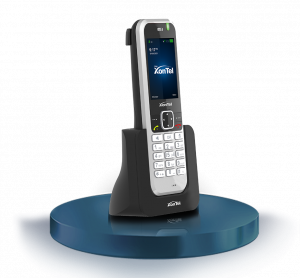
Wireless IP Phones

Wireless IP Phone is an IP phone equipped with a Wi-Fi transceiver that connects to an access point or base station. This phone allows you to move freely throughout your company, home, or office while on a call.

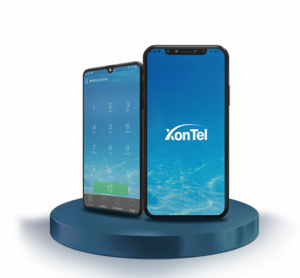
Smartphone Application (Softphones)

A smartphone application is a software program that is installed on your desktop computer, laptop, or mobile phone and eliminates the need for using an IP phone.

which allows you to complete phone calls from your computer or mobile phone. Smartphones are an excellent option for road workers, mobile professionals, and even call centers because they are cost-effective.

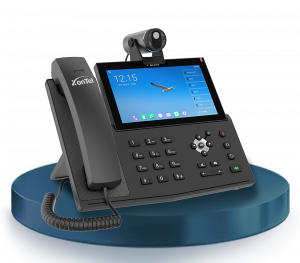
Video Phones

A video phone is an IP phone with the added capability of making video calls using a small camera connected to the phone. Video phones are an excellent alternative to face-to-face meetings, providing a low-cost way to connect and meet with anyone from anywhere in the world.

Conference IP Phones

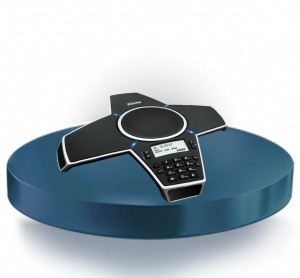
These are specially designed IP phones with built-in external speakers to support meetings and conferences, allowing several people in the same location to listen to a single phone through its external speaker. Conference IP phones are typically used in large offices and meeting rooms, where they also enable multi-party phone calls.

Xontel provides the latest technology that rivals its global counterparts at competitive prices. It also provides a professional and highly skilled support team dedicated to understanding and meeting the needs of all its customers with precision and efficiency, making it the best choice.

For more information, contact us now.

call2action-En

For more information about XonTel products and services, leave your data and one of our specialists will contact you