Why Firmware Updates Matter Keep Your Communication Systems Secure

Posted on: June 7th, 2021 by xontel_admin

Updating communication systems has become a necessity due to the technological evolution that has taken place over the past decades. In the past century, business phones were extremely limited in functionality. They consisted of a few lighted buttons for different lines, allowing users only to identify which line was active and manually transfer calls to internal employees.
These phones lacked features such as memory, screens, call log management, reporting tools, voicemail, call recording, or any form of automated control,
making them very basic and inefficient by today’s standards. Due to technological advancements, you must update your communication systems.
With the start of the new century, business communication devices advanced dramatically. Internet-based communication systems and internal networks emerged, along with PBX systems that operated both locally and over the Internet.
As companies began adopting IP communication technologies, it became natural for these devices to offer dozens of new features and services that were simply impossible in older systems. To fully benefit from them, regular communication system updates became essential.

Today, business phones have evolved into innovative, modern devices with designs and capabilities comparable to those of the smartphones we carry in our pockets. Therefore, it has become critical to keep your company’s communication systems regularly updated, just as you do with your smartphones, to ensure optimal performance, security, and access to the latest features.

New Features, Bug Fixes, and Security Updates:

Most modern business phones and PBX systems available today routinely check for firmware updates. When a new update is available, the device downloads and installs it automatically, then requires a restart to activate the latest version. These updates are usually performed through the internal network or via the internet.
Companies release regular updates to introduce new features, fix system bugs that have been discovered, or address discovered security vulnerabilities. Each update is designed to improve performance, stability, and protection by resolving issues and closing any security gaps that could expose the system to risks (similar to smartphone updates, whether on Android or iPhone, which are issued periodically to enhance features, fix errors, and strengthen device security).

How Firmware Updates Improve Device Performance:

Sometimes, firmware updates are not just about adding new features, fixing issues, or addressing security vulnerabilities. In other cases, they can also improve the overall efficiency of your phone hardware.
For example, some companies release updates that can enhance the phone’s processor performance, thereby increasing overall device efficiency.
Additionally, updates to the communication system may improve memory efficiency, resulting in faster phone performance.
XonTel continuously works with its partners to update all its products regularly, staying in line with the latest technologies and delivering them to customers to meet their expectations and needs.
All XonTel devices support automatic updates, or you can manually update them via the XonTel website from here.
You can download the update for your product and follow the necessary steps to activate it on your phone or PBX system.
XonTel provides cutting-edge communication technologies that compete with global brands at competitive prices, along with a highly skilled and professional support team dedicated to meeting all customer needs efficiently and accurately, making it the best choice.
For more information, contact us now — click here

call2action-En

For more information about XonTel products and services, leave your data and one of our specialists will contact you

6 Simple Ways to Improve VoIP Call Quality Today

Posted on: June 7th, 2021 by xontel_admin

VoIP service providers usually aim to offer full support to clients and ensure the highest voice quality in VoIP systems through guidance, proper installation, regular product updates, necessary configurations tailored to each client, and comprehensive after-sales services.
However, one of the most common issues faced by VoIP providers is problems related to voice quality in VoIP systems.
In this article, we highlight some simple methods that can significantly improve sound quality.

جودة-الصوت-في-انظمة-الفويب

Simple Ways to Fix Voice Quality Issues in Your VoIP or Internet-Based Communication Systems

1. Check Security Software:

To achieve the best sound quality in VoIP systems, ensure that your security software or firewall does not block the ports used for voice transmission on your internal network. Ensure these ports are open and functioning properly. Also, verify that these ports are not subjected to inspection or filtration.

2. Verify Firewall Settings:

To achieve the best sound quality in VoIP systems, ensure that your firewall does not block the ports used for voice transmission over your internal network. Make sure these ports are open and working properly. Also, verify that these ports are not subjected to inspection or filtration.

3. Review Codec Settings:

The term Codec is a combination of the words “Compressor-Decompressor” or “Coder-Decoder.” A codec is an algorithm that converts audio from one format to another for several reasons, the most important being to make files smaller so they can be easily distributed over the Internet or internal communication networks while enjoying the best voice quality in VoIP systems. You should always ensure you’re using the appropriate codec. Most VoIP service providers prefer using the G.711 codec.
Using the wrong codec can cause slowdowns or poor audio transmission quality.
When selecting a new codec, ensure that all devices in your network support it.
If some devices do not support it, voice transmission will not work.

4. Check Internal Network Quality:

Any internal network issues, such as data loss on the network or problems with internal network devices or cables, will certainly affect voice quality in VoIP systems.

5. Verify Internet Speed:

When transmitting voice or connecting your company’s branches over the Internet, you should choose a reliable Internet service provider with appropriate speed for voice transmission.
For example, the G.711 A-law codec uses 87.2 kbps (8.7 KBps).
You should also verify that Internet users or employees within the network are not using the Internet for personal purposes such as downloading music and movies, as this will certainly affect voice quality in VoIP systems.
You must also ensure that the Internet speed matches the number of users.

6. Test Internet Quality:

When using the Internet to connect different branches of your company, you should test packet loss rates and data transfer speed between branches.
Of course, the higher the packet loss rate between branches, the worse the call quality will be.

7. Use a Dedicated Router for Voice Traffic:

Do not use cheap or basic routers to connect your company’s branches or communication networks. You should purchase a router that prioritizes voice packets (Prioritizes VoIP Traffic).
These routers are not expensive, with prices starting from $100.
You should also ensure the router supports the SIP protocol, which helps deliver data reliably between client and server in the shortest possible time.

XonTel is one of the most important companies that focuses on the quality of phones and PBX systems, continuously updating them with the latest technologies and codecs to provide the best and most advanced technologies to its customers.
XonTel offers cutting-edge technologies that compete with global counterparts at competitive prices, along with a professional, highly skilled support team dedicated to understanding and meeting all customer needs with high accuracy and efficiency, making it the best choice.
For more information, contact us now click here.

call2action-En

For more information about XonTel products and services, leave your data and one of our specialists will contact you

Why Companies Go Bankrupt: The Cost of Ignoring Technology

Posted on: June 7th, 2021 by xontel_admin

Technological Evolution

In 1988, Kodak employed over 170,000 people and sold 85% of all photographic paper in the world. Yet, within a few short years, the company went bankrupt — their business model completely disappeared.

What happened to Kodak will happen to many other industries over the next decade. Most people are still unaware of the massive changes on the horizon that will transform global markets.

Some technologies begin quietly, underestimated, and then suddenly disrupt entire industries — taking over and destroying everything beneath them. We’re seeing this in artificial intelligence (AI), healthcare, driverless cars, 3D printing, agriculture, and education — this is the Fourth Industrial Revolution.

Software will reshape and even destroy many industries in the coming years. A few examples:

Uber is the world’s largest taxi company, yet it doesn’t own a single vehicle. Airbnb is the world’s largest accommodation provider, yet it doesn’t own any properties.

Artificial Intelligence (AI) will transform even more sectors. IBM’s Watson can already provide legal consultations in seconds — faster and more accurately than humans. If you’re studying law today, that career may look very different soon. The number of lawyers will drop significantly, leaving only specialists. AI will even help nurses make medical diagnoses more accurately than doctors.

By 2030, computers will become smarter than humans. By 2018, we already saw the first self-driving cars, and by 2020, this technology became disruptive. Soon, you won’t need to own a car — you’ll simply request one from your phone. The car will arrive, take you where you need to go, and leave. You won’t need parking, and you’ll pay only for the distance traveled.

Our children will not need driver’s licenses or even to buy cars. Cities will transform, and parking lots will turn into parks.

Traffic deaths will drop from 1.2 million to about 200,000 per year because driverless cars reduce accidents from one every 100,000 km to one every 10 million km. Cars from Tesla, Google, and Apple will dominate the market. Traditional carmakers are terrified of this shift — when wheels are connected to computers, Apple and Google take the lead.

Insurance companies will also suffer — fewer accidents mean less need for car insurance or compensation. Vehicle insurance will become extremely cheap or even obsolete, threatening the existence of many insurance companies unless they diversify their services.

Soon, satellite receivers will disappear — replaced by Android TVs connected to high-speed internet, offering all global channels without the need for a rooftop satellite dish. Electric cars will dominate — quiet, clean, and efficient. Real estate will also change — people will seek peaceful, remote places to work as most jobs move to remote setups.

In healthcare, medical devices will connect to your smartphone. Using technologies like Tricorder X, you’ll be able to get X-rays, blood tests, and body analyses instantly — and soon, most lab tests may even become free.

With 3D printing, you’ll print shoes, airplane parts, and much more. In the near future, smartphones will include 3D scanning, allowing you to scan your foot and print a perfectly fitting shoe!

In China, they have already 3D printed a six-story building, and by 2027, about 10% of all products around us will be 3D printed.

Within 20 years, about 70% of current jobs will disappear — replaced by new, specialized roles. Education will transform too — with smartphones costing just $10, everyone on the planet will have access to smart learning tools. Human lifespans will increase, and many people will live well past 100 years. If your future business idea isn’t connected to smartphones, forget it — most ideas that worked in the 20th century will fail in the 21st.

Now, with 5G technology, mobile networks will achieve incredible speeds — transforming industries, businesses, and the entire customer experience. 5G will redefine most existing applications and create new kinds of businesses that never existed before. We are on the verge of massive change.

But the real question is: Are we ready?

XonTel Technology provides the latest and most advanced communication technologies at competitive prices. With a highly skilled and professional support team, XonTel ensures all clients receive precise and efficient solutions tailored to their business needs — making it the best choice for modern communication systems.

call2action-En

For more information about XonTel products and services, leave your data and one of our specialists will contact you

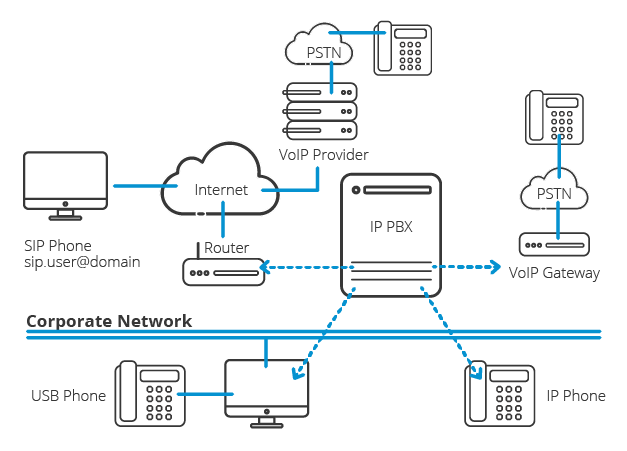
PBX system in Kuwait

Posted on: July 15th, 2020 by xontel_admin

A Private Branch Exchange (PBX) system is just one type of private telephone network that companies can use for their communications. A PBX can come in many shapes and sizes, so it’s perfectly fine if you feel overwhelmed by all the information you find about it.

PBX system
What is a PBX system?

A PBX phone system is a type of private business telephone network that can be used for internal and external phone communications. PBX systems allow voice calling plus additional features like call recording, interactive dialing menus, voicemail, call transfer, queuing, and more.


Depending on the type of PBX system, these connect users either through an analog phone line using plain old telephone service (POTS) or a digital phone line via the internet using Voice over Internet Protocol (VoIP) technology.

Features of PBX systems:
  • Cost Savings: While older phone systems have fewer features, they tend to cost more both in maintenance and in monthly phone bills.
  • Easier to Maintain: Dedicated wiring and hardware requires specialized service. Because a modern phone system uses an internet connection, they can use existing LAN infrastructure. System maintenance is mostly over a computer interface. Users can add a second phone line, for example, in minutes.
    Connect Over the Internet: Besides easier maintenance, using an internet connection means businesses can access their phone system from anywhere. This makes it easier to bridge multiple offices.
  • Mobility and Remote Work: Even if users are not in any office, they can still use a web browser or cell phone to manage their communications. On a web or mobile app, users can call a colleague’s extension, answer incoming calls or call external numbers. They can also see caller ID, transfer calls and set up call forwarding. In addition, some office phone systems integrate video and business texting.
  • Easy Expansion: An IP phone system is also easier to expand. Adding a new extension can be as easy as setting up a user online, then plugging in a phone.
  • Call Center Features: Systems no longer rely on manual switchboards. But online switchboard options, auto attendants, call forwarding rules and advanced queue strategies allow businesses to manage phone calls more efficiently. Modern systems allow supervisors to record calls, listen in to calls or take over for training and better customer service.
  • Modern Business Communications: Simple phone calls are still common. But many professionals and customers now prefer alternatives. These include video calls, web conferencing, instant messaging and social media. Business telephone systems have expanded to include tools for all channels.
  • Integration with Other Software: Business software is moving towards cloud computing. An IP PBX can integrate with CRMs, for example. This would allow businesses to sync contacts and manage information in a single location.
  • Low Pricing: XonTel offers flat rate annual pricing. When compared to monthly plans that charge per user, this can save businesses up to 80% on monthly phone costs.
  • Flexible Licensing: Pricing is also based on simultaneous calls. If a business has 50 users, most phone system providers charge for all 50 lines. Even if they use only 10 lines at a time.
  • Complete communication system: XonTel offers video conferencing and live chat included in the cost. It also integrates with the most common CRMs, Facebook business messages and instant messaging.
  • Flexibility: With XonTel, businesses choose their own SIP trunk and VoIP phones. Since XonTel is an open platform, it integrates with most common service providers and hardware. This means savings on hardware, toll-free numbers, long-distance calling and more.
  • Mobility: XonTel offers full-featured apps for web browsers as well as iOS and Android devices.
  • Easy Scalability: As a business grows, XonTel’s software scales easily. Flexible licensing likewise makes it easy to increase, or reduce, phone service.

XonTel IP PBX Products

XonTel offers many varieties of pbx system in Kuwait, and it is one of the biggest manufacture of pbx system in Kuwait, PBX Kuwait

call2action-En

For more information about XonTel products and services, leave your data and one of our specialists will contact you

VoIP Solutions & Providers in Kuwait

Posted on: July 14th, 2019 by xontel_admin
voip provider
What is VoIP?

VoIP (Voice over Internet Protocol) is a digital telecommunications technology that lets users make/receive voice calls over the Internet instead of the standard landline telephone network (the PSTN.)

It works on devices with Internet access, meaning analog phones, (desk phones or hard phones connected to the VoIP system) smartphones, tablets, desktop computers, and laptops can all be used for VoIP calling.

In addition to greater mobility, VoIP offers more advanced features, a higher level of customization, and significant cost savings compared to traditional phone lines. it also referred to as IP telephony, virtual telephony, or Voice over IP calling.

Benefits of Using VoIP Services

In addition to the above-mentioned cost savings, VoIP offers numerous benefits to SMBs and Enterprise-level companies alike.

Top Business VoIP benefits include:

  • It’s easy to set up, manage and maintain
  • Lower Costs, Cost-Effective Hardware and Software
  • It increases flexibility and mobility for users
  • Can be scaled to meet demand
  • Improved team productivity and a more balanced workload
  • Comes with a wide range of call features
  • Increased customer satisfaction and decreased employee turnover
  • Detailed insight into agent, department, and overall call center activity via analytics
  • Higher levels of customization and personalization

XonTel is the right pick if you’re new to VoIP technology and need a VoIP service or VoIP Provider in Kuwait that’s user friendly without compromising on quality—just ask any of the  businesses that use XonTel already.

XonTel is a great all-rounder for businesses, regardless of industry. It also offers cloud-based PBX platform that includes all the features that modern organizations have come to expect from their VoIP solution.

the ease of setup is another bonus of the XonTel VoIP solution, with users simply selecting their service level and choosing their numbers before the service is ready to go. There’s also a desktop, iOS, and Android app for easy management of XonTel’s features.

DID Provider in Kuwait

Direct inward dialing (DID) is a method organizations use to route incoming calls to specific private branch exchange (PBX) systems without an operator.

Organizations purchase DID numbers from a telephone company or service provider and assign them to individual extensions within the organization. When callers dial a DID number, they are automatically connected to the extension that is associated with that number.

XonTel Provide Kuwait DID

To find out more information about XonTel products and services in Kuwait, VoIP provider in Kuwait or request a suitable one for your company, do not hesitate to contact us.

call2action-En

For more information about XonTel products and services, leave your data and one of our specialists will contact you

VoIP and CRM Integration: Boost Sales and Customer Service

Posted on: September 21st, 2017 by xontel_admin

With the rapid advancement of technology and the communications revolution, a new system emerged known as Voice over Internet Protocol (VoIP) — a technology that enables making calls through internal networks and the internet. This innovation has significantly reduced call costs while providing much greater flexibility than traditional telephony systems.
Many organizations have since integrated their communication systems with Customer Relationship Management (CRM) systems, creating powerful platforms that enhance sales, improve productivity, and accelerate business growth.
Integrating CRM with VoIP Systems

What is a CRM System?

Customer Relationship Management (CRM) is an approach used to manage a company’s interactions and relationships with current and potential customers. It focuses on analyzing customer data and history with the company to improve business relationships, increase customer retention, and ultimately drive sales growth.
A CRM system provides a centralized database containing all customer information and communication history.
It helps guide sales and marketing teams through optimized workflows, using alerts, reports, and data-driven insights to evaluate customer behavior.
It assists in evaluating the customer base to increase relationship quality and value, based on organizational strategies and goals.

Modern CRM systems may also integrate with social media and other communication tools to attract and engage potential customers more effectively.

Benefits of Integrating VoIP and CRM Systems

  1. Attracting and Engaging Customers xontel-crm-voip

CRM software collects and analyzes customer data from various sources, storing it in a unified platform.
Businesses then use this data to generate accurate insights and detailed reports about their customers.
Studies show that 53% of high-performing multinational companies invest in integrating their communication systems with CRM platforms to boost sales performance and strengthen customer engagement.
By combining VoIP with CRM, companies can gain accurate, real-time insights into customer behavior and communication history. This allows marketing teams to guide prospects through the sales cycle more efficiently and generate higher conversion rates.

2. Data Collection and Analysis

Businesses rely on call data to forecast future trends and make better customer-related decisions.
Integrating VoIP and CRM systems enables automatic capture and logging of key customer data — such as phone numbers, call times, call duration, communication history, and customer preferences — providing valuable information for predictive analytics and strategic decision-making.

3. Improved Customer Service

When VoIP and CRM systems work together, employees can instantly access call histories and add notes to customer profiles in real time — even while on a call.
This integration allows service agents to identify callers immediately, with all relevant customer data displayed on-screen as soon as the call begins. This leads to faster, more personalized, and more efficient issue resolution.

4. Enhanced Marketing Performance

Integrating VoIP with CRM also offers major benefits in marketing. Companies can segment customers into targeted groups and design specific marketing campaigns for each segment using CRM software. Most CRM software automates this process.
Research shows that CRM tools can increase sales by up to 29% and yield an ROI of $5.60 for every $1 spent.
Once segmentation is complete, marketing teams can use VoIP systems to contact potential customers directly, encouraging them to explore or purchase products and services.
The integration between VoIP and CRM systems makes it easier for organizations to access customer insights and meet their needs from a single platform.
As you can see, by using these two technologies together, companies can attract customers, collect valuable data, improve customer service, and strengthen marketing efforts.

XonTel is one of the leading companies in the region pioneering the integration of VoIP communication systems and CRM platforms.
As both a VoIP solutions provider and CRM system developer, XonTel ensures complete compatibility between the two systems, allowing businesses to maximize performance, efficiency, and customer satisfaction.
For more details about XonTel’s products and services, click here

Some sources 2 1

Follow us on LinkedIn

call2action-En

For more information about XonTel products and services, leave your data and one of our specialists will contact you

VoIP Security Best Practices: Keep Your Calls Safe and Private

Posted on: September 12th, 2017 by xontel_admin

VoIP Security and Protection

Internet-based communication systems have become increasingly popular across businesses and organizations due to their numerous advantages.

However, VoIP (Voice over Internet Protocol) systems also carry significant security risks if not properly protected, potentially exposing your entire communication network.

This is where VoIP Security becomes critical. Common security problems facing companies include eavesdropping, hacking attempts, and denial-of-service attacks that can disrupt or disable the network. If hackers successfully breach your internal network, it can cause significant damage to both your infrastructure and your company’s reputation.

In this article, we’ll explain VoIP Security principles, the types of threats you face, and how to protect your company’s communication systems.

Types of Threats to Internet-Based Communication Networks

1. Service Disruption or Denial:

Using Denial of Service (DoS) attacks targeting IP Phones, Routers, and communication endpoints such as SIP and Gateways. The attacker sends massive fake requests to communication devices, forcing the communication controller to reject them to the point where it cannot fulfill legitimate subscription requests, resulting in service disruption.

2. Call Eavesdropping:

Attackers use network scanning software to discover internet communication gateways such as SIP ports and monitor them to identify caller and recipient numbers, device types, and media stream ports to capture audio. These programs also allow attackers to impersonate others, using known phone numbers and organization names to deceive those being called.

3. Control of Your Communications:

Used to make international or external calls. The attacker monitors an organization’s communication devices to learn user numbers and passwords, then uses them to make external calls through your communication devices.

4. Spam or Fake Voice Messages:

This type of attack is very similar to email spam. Just as email inboxes fill with promotional messages from unknown sources, numerous automated voice messages can be sent to users’ voicemail.

Protection Methods and Measures:

1. Change Default Settings

Never use internet communication devices with their default factory settings, as passwords and ports are easy to crack and discover, making them easy to hack. You must change the settings to your company’s specific configurations.

2. Network Separation

You should virtually separate your company’s data networks from voice networks using VLAN technology. This provides voice protection and prevents attackers from discovering voice networks.

3. Communication Encryption

All modern communication devices allow you to encrypt calls. Using encryption makes it very difficult for hackers to decode, enabling you to protect your communications and data.

4. Use a Powerful Firewall

All communication devices in your company that work directly on the internet should be placed behind a firewall. The firewall will only open the ports you use and can identify users, their locations, etc., allowing you to protect the network effectively.

5. Set Up a Good Monitoring System

To properly protect your communication network, you need to set up a good monitoring system for any suspicious activities on your internal network. For example, you can configure the monitoring system to alert you when someone attempts to hack a specific port or change a specific password. You can also get early warning by inspecting all your communication traffic, scanning, analyzing, and classifying data packets so they can be managed securely and controlling packets containing anonymous or malicious code.

6. Follow Manufacturer Updates

Update your company’s VoIP products regularly and follow the manufacturer’s periodic bulletins in case new vulnerabilities appear. Manufacturers periodically release updates to patch discovered vulnerabilities and improve device efficiency.

XonTel is a leader in internet communication security. Its products are among the best devices with strong protection measures and the ability to encrypt all communications between all types of phones available from XonTel. It develops the latest firewall systems to provide maximum possible protection for all users and customers.

For more information about XonTel’s services and products click here

Sources 1

Follow us on LinkedIn

call2action-En

For more information about XonTel products and services, leave your data and one of our specialists will contact you

How to Choose the Best VoIP Strategy for Your Business

Posted on: August 9th, 2017 by xontel_admin

With the rapid advancement of VoIP (Voice over Internet Protocol) technology, many companies today face an important question:
The first step you should consider when building a modern VoIP communication system for your company or organization is:
Should we purchase and host our own on-premise VoIP system, or should we subscribe to a cloud-based VoIP service?
If you’re not deeply familiar with VoIP systems, choosing between the two can seem confusing. However, consulting with a VoIP technology expert can make the decision much easier and simpler without complications.
Nevertheless, it’s better to have some basic understanding of VoIP technology before consulting experts.
After reading this article, you will have a clear picture of which VoIP solution best fits your business environment.
Before reading this article, you may want to review our previous article titled VoIP on Cloud Computing to learn how cloud-based communication systems work and their key advantages.

1. Cloud-Hosted VoIP Systems

A cloud-hosted VoIP service is an ideal choice for small businesses, startups, and organizations with limited budgets. That’s because everything is handled by a third-party provider.
One of the main advantages of hosting is that there’s no need for expensive equipment or a specialized technical team. This solution is suitable for small companies with limited budgets.

Key Benefits of Cloud VoIP:

  1. Low setup costs: You don’t need to buy equipment, servers, or pay for licenses, etc.
  2. No need for an in-house IT team: The VoIP hosting provider is responsible for everything, saving time and money.
  3. Management flexibility: Easy system control, flexible expansion or downsizing, and easy management from anywhere.

2. On-Premise VoIP Systems

An on-premise VoIP system means you will build your communication system from A to Z, starting with purchasing servers, equipment, licenses, and phones, taking backups, and ending with providing a highly skilled team to manage the entire system.An on-premise VoIP system is more suitable for medium and large enterprises, which often require specific settings and features customized to fit the organization.

Key Benefits of On-Premise VoIP:

Complete Control and Flexibility:

Since the entire communication system is within your company, this means you have complete control over the system with the ability to install it or integrate it with other systems in your company, such as integrating it with a CRM (Customer Relationship Management) system, for example.

Dedicated Technical Team:

Since all equipment and the entire system are in your company, it’s preferable to have a dedicated team to manage this system and solve recurring problems.

Higher Setup Costs with Lower Monthly Expenses:

Despite the relatively high cost of setup requirements or building the system (phones, servers, switches), it’s a good long-term investment. Monthly expenses will decrease, allowing you to save on operational costs.

What’s Next?

Now that we’ve reviewed some differences between cloud-hosted and on-premise systems, whether you’ve made a decision or are still looking for the best solution for your company, you should consult with a communication solutions expert and service provider to discuss your ideas and needs to determine the best solution that fits your company’s nature and business.

XonTel is one of the leading VoIP service providers and a major developer of VoIP technology. Whether you’ve decided to build your system on-premise or on the cloud, you can request consultation and benefit from their expertise in this field.

Some sources.

For more information, contact us now click here

call2action-En

For more information about XonTel products and services, leave your data and one of our specialists will contact you

Cloud VoIP Systems: Complete Guide to Benefits & Costs

Posted on: August 7th, 2017 by xontel_admin

What is Cloud Computing?

Let’s start with a simple definition of cloud computing.
The term Cloud Computing refers to: A collection of computing services provided by a service provider to one or more clients over the internet, allowing them to use the provider’s high computing capabilities without the need to purchase expensive hardware or infrastructure.

In short, cloud computing means:

Using hardware and software resources delivered to you as a service via the internet.

What Is a Cloud Phone System or Cloud VOIP Phone system?

A Cloud Phone System is a complete communication platform that exists entirely online rather than being physically located in your office or company, and you simply subscribe to the service on a monthly or annual basis.

How Does It Work?

Cloud Computing

Cloud Computing

Cloud-based VoIP relies primarily on a stable internet connection and high bandwidth. The Cloud PBX (Private Branch Exchange) connects directly to your IP address and can be accessed from your office using either VoIP desk IP phones or softphone applications.
This means you can make or receive calls from anywhere in the world as long as you have internet access, usually verified with your password.
Your service provider manages system setup, storage, and complete management for a monthly subscription fee. They also provide all necessary backups in case of data loss.

Concerns About Cloud Computing

Traditional concerns about servers, security, downtime, and high equipment costs are no longer your responsibility. Your main focus becomes managing your company’s connected phones or computers to this cloud PBX.

Key Benefits of Cloud-Based Communication Systems

1. Reduced Costs

The biggest advantage of cloud-based systems is lower setup and operational costs.

To illustrate, let’s use email as an example. If you want to create and use an email system, you have two choices:

First option: The traditional approach — buy a domain, purchase a server, buy an operating system, purchase an email server license, buy storage units, and hire an IT team capable of managing all these tools, plus the time needed to build and test this system before deployment.

Second option: Choose and use a cloud-based email service provider, like Gmail or Yahoo, for a simple monthly subscription.

2. Higher Security

Believe it or not, VoIP systems are among the most targeted by hackers worldwide. If proper security measures aren’t taken, breaches are inevitable!
Cloud service providers typically implement strong security protocols and protection measures to safeguard your system.

3. Ease of Use

Cloud providers design simple, user-friendly management portals for system configuration and monitoring. They handle complex system settings on your behalf, ensuring easy administration and no need for professional IT staff to maintain the system.

4. Flexibility and Remote Work Support

Cloud-based phone systems offer unlimited scalability and support remote work. Employees can register their phones from anywhere. For example, in the United States today, over 4 million people work remotely on a daily basis throughout the country, without any significant additional costs.

How to Choose the Right Service Provider

Choosing a cloud PBX service provider depends on the size of your work environment, your company or organization, your budget, and your needs. You should also consider selecting a provider with a long-standing reputation and experience, as well as after-sales support and warranty services.

XonTel is one of the leading providers of cloud-based PBX services, offering all the solutions and features needed to operate your communication system on the cloud. For more details click here

Follow us on LinkedIn

call2action-En

For more information about XonTel products and services, leave your data and one of our specialists will contact you

What Is Unified Communications? Key Benefits for Your Business

Posted on: July 1st, 2017 by xontel_admin

Unified Communications (UC) is a new technological approach or method for achieving integration and coordination of communication channels. It combines communication tools to enable companies and organizations to manage all their communications as a single entity, while still allowing each to be managed independently.

What is Unified Communications (UC) and How Does It Work?

As previously defined, Unified Communications integrates multiple communication methods. UC works by synchronizing real-time communication services—such as phone calls, instant messaging or chat, presence information, call management, and video conferencing—with non-real-time communication tools, such as voicemail, email, SMS, and fax.

UC allows a user to send a message on one platform and have it appear on another. For example, a voicemail can be accessed through email or a mobile phone, and the user can immediately respond via text chat or video call.

Unified Communications System

Advantages of Unified Communications

Most UC advantages focus on increasing employee productivity, providing fast and seamless communication, and completing tasks more efficiently. Large organizations also gain additional benefits by integrating communications into their administrative processes.

Key advantages include:

1. Device Flexibility

Employees can receive voice and video calls inside or outside the office on any device (computer or smartphone).

2. Faster Communication

Quick access to the right person at the right time through presence information and real-time status updates.

3. Integration with Enterprise Applications

UC can be integrated with systems like Customer Relationship Management (CRM), Customer Service Management (CSM), or Enterprise Resource Planning (ERP).

4. Cost Reduction

Lower communication costs and enhanced Internet Protocol (IP)-based communications.

5. Future Scalability

UC is the ideal solution for future expansion, enabling businesses to scale easily and quickly.

6. Competitive Advantage

Small and medium enterprises can operate and compete with large global companies using the same communication capabilities.

7. Centralized Management

All company communications can be created, unified, and managed from a single location or under one roof.

From the above, it’s clear that Unified Communications bridges the gap between VoIP and other computer-based communication technologies.

Sahab Technology is the first leading Arab company in the field of unified communications, offering its products through XonTel.

For more information about XonTel products and services click here

Follow us on LinkedIn

call2action-En

For more information about XonTel products and services, leave your data and one of our specialists will contact you

What Are VoIP Phones? A Complete Guide to Internet-Based Calling

Posted on: April 25th, 2017 by xontel_admin
VoIP Phone – IP Phones

What is an IP Phone or VoIP Phone?

A VoIP phone (or IP Phone) is a telephone that uses Voice over Internet Protocol (VoIP) technology, which allows phone calls to be made over the Internet instead of the traditional Public Switched Telephone Network (PSTN).
Most companies today use VoIP phones to transmit voice over their private managed networks or via the public Internet.
Private networks provide higher security and better quality of service than public networks or the Internet.
On the other hand, IP Phone systems allow greater control over call quality, resulting in much clearer audio than traditional phone systems.

Key Features and Benefits of IP Phones (VoIP Phones)

1. Voicemail Flexibility

Employees can leave voicemail messages accessible to colleagues via their phones, computers, or even mobile devices if supported by appropriate software.

2. Increased Productivity

Innovative telephony applications can run directly on the VoIP phone to streamline communication and improve efficiency.

3. Traditional Phone Features

VoIP phones offer multiple lines, call forwarding, call transfer, and audio conferencing capabilities.

4. Network Compatibility

VoIP phones can automatically detect your network, reducing costs and complications when adding or moving devices on the network.

5. Wireless and Security Standards

They support major wireless standards and key security protocols for secure communication.

Key Highlights of XonTel VoIP Phones:

  • Development teams and environments based on the latest global standards.
  • User manuals included with each device.
  • Touchscreen or standard colored displays that are easy to use.
  • Conference phone capabilities with easy connection to external speakers.
  • Audible and visual alerts.
  • Low installation costs with minimal cabling and full warranty.
  • No annual licensing fees required.

XonTel is the first Arab company to manufacture and develop VoIP (IP) phones. It produces a wide range of VoIP phones suitable for various work environments: offices, homes, remote locations, desert sites, branch offices, or mobile use.

In addition to providing the essential communication features for daily work, XonTel VoIP phones include advanced functionalities that help employees increase efficiency, productivity, and collaboration.

For more information about XonTel phones click here

Follow us on LinkedIn

call2action-En

For more information about XonTel products and services, leave your data and one of our specialists will contact you

How to Build a Complete IP Phone System in Just 5 Steps

Posted on: April 22nd, 2017 by xontel_admin

After explaining the components of modern corporate communication systems in previous articles—including VoIP technology, modern PBX systems, IP Phones, and call center systems—it’s now time to show how to integrate all these technologies into a modern, unified IP-based communication system.
Your company deserves to embrace the full potential of modern communication technology.
Here’s a simplified overview of a unified communication network:

نظام اتصالات متكامل

As shown in the diagram above, building a communication system consists of 5 key stages:

1. Install a Modern IP-PBX (Central Switchboard)

The PBX (Private Branch Exchange) is the cornerstone of any unified communication system. XonTel provides the latest IP-PBX system, the S2400, which requires no licensing fees or installation costs. It is suitable for companies of all sizes.
Using a unified communication system, you can connect and manage all IP-based devices—including:

  • Analog phones or IP Phones
  • Audio and video conference devices
  • Wireless phones
  • Security systems
  • Fax machines and intercoms

Essentially, this PBX can manage any modern IP device securely and efficiently, completing about 50% of the setup for your communication system.

2. Choose IP Phones (Internet Voice Phones)

Selecting the right phone for your work environment is critical. Key considerations include:

  • Phone features and specifications
  • Compatibility with your PBX (some brands work only with the same brand PBX)
  • Warranty and update policies

XonTel offers a wide range of IP Phones suitable for any company size, featuring:

  • High-quality voice and video calls
  • Full compatibility with any PBX
  • Power over Ethernet (PoE), eliminating the need for separate power sources
  • Touchscreen options, conference phones, and ceiling speakers

View XonTel IP Phones here

3. Use ATA Devices to Convert Analog Phones to VoIP

For small or medium-sized companies, purchasing new IP phones may not be financially feasible. Analog Telephone Adapters (ATA) convert traditional analog phones into VoIP phones, allowing you to upgrade your system without replacing all devices.

XonTel offers a variety of ATA devices suitable for different environments.

4. Set Up Conferencing Systems

Modern communication allows remote meetings without physical presence. You can hold audio or video conferences with all branches worldwide, making conferencing systems a core component of any unified communication setup.

XonTel provides a range of devices and software for remote meetings, including audio and video solutions.

Explore XonTel conferencing solutions here

5. Integrate Security Systems

The final component, equally important, is security integration. You can connect:

  • Surveillance cameras
  • Intercom systems
  • Attendance and access control devices

XonTel offers a wide range of IP-based security solutions, including PBX-compatible intercoms, cameras, smart home systems, and biometric attendance devices.

Now that we’ve explained the 5 key components, you can build a unified and integrated communication system consisting of a smart IP-PBX, IP Phones, ATA devices, remote conferencing systems, and security systems—all using the latest global technologies.

Follow us on LinkedIn

call2action-Ar

للمزيد من المعلومات عن خدمات ومنتجات زونتل أترك بيناتك وسيقوم أحد المختصين بالتواصل معك