Cloud VoIP Systems: Complete Guide to Benefits & Costs

Posted on: August 7th, 2017 by xontel_admin

What is Cloud Computing?

Let’s start with a simple definition of cloud computing.
The term Cloud Computing refers to: A collection of computing services provided by a service provider to one or more clients over the internet, allowing them to use the provider’s high computing capabilities without the need to purchase expensive hardware or infrastructure.

In short, cloud computing means:

Using hardware and software resources delivered to you as a service via the internet.

What Is a Cloud Phone System or Cloud VOIP Phone system?

A Cloud Phone System is a complete communication platform that exists entirely online rather than being physically located in your office or company, and you simply subscribe to the service on a monthly or annual basis.

How Does It Work?
Cloud Computing

Cloud Computing

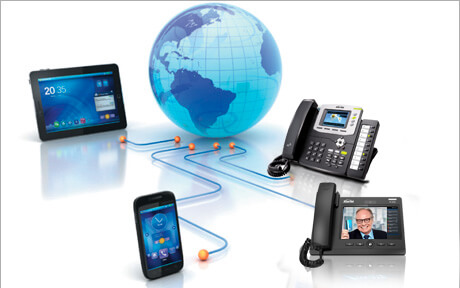
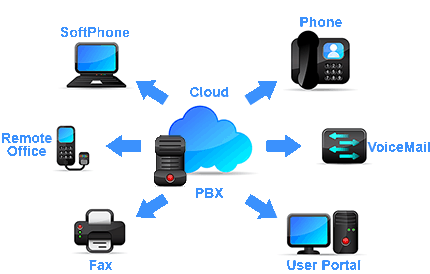
Cloud-based VoIP relies primarily on a stable internet connection and high bandwidth. The Cloud PBX (Private Branch Exchange) connects directly to your IP address and can be accessed from your office using either VoIP desk IP phones or softphone applications.
This means you can make or receive calls from anywhere in the world as long as you have internet access, usually verified with your password.
Your service provider manages system setup, storage, and complete management for a monthly subscription fee. They also provide all necessary backups in case of data loss.

Concerns About Cloud Computing

Traditional concerns about servers, security, downtime, and high equipment costs are no longer your responsibility. Your main focus becomes managing your company’s connected phones or computers to this cloud PBX.

Key Benefits of Cloud-Based Communication Systems

1. Reduced Costs

The biggest advantage of cloud-based systems is lower setup and operational costs.

To illustrate, let’s use email as an example. If you want to create and use an email system, you have two choices:

First option: The traditional approach — buy a domain, purchase a server, buy an operating system, purchase an email server license, buy storage units, and hire an IT team capable of managing all these tools, plus the time needed to build and test this system before deployment.

Second option: Choose and use a cloud-based email service provider, like Gmail or Yahoo, for a simple monthly subscription.

2. Higher Security

Believe it or not, VoIP systems are among the most targeted by hackers worldwide. If proper security measures aren’t taken, breaches are inevitable!
Cloud service providers typically implement strong security protocols and protection measures to safeguard your system.

3. Ease of Use

Cloud providers design simple, user-friendly management portals for system configuration and monitoring. They handle complex system settings on your behalf, ensuring easy administration and no need for professional IT staff to maintain the system.

4. Flexibility and Remote Work Support

Cloud-based phone systems offer unlimited scalability and support remote work. Employees can register their phones from anywhere. For example, in the United States today, over 4 million people work remotely on a daily basis throughout the country, without any significant additional costs.

How to Choose the Right Service Provider

Choosing a cloud PBX service provider depends on the size of your work environment, your company or organization, your budget, and your needs. You should also consider selecting a provider with a long-standing reputation and experience, as well as after-sales support and warranty services.

XonTel is one of the leading providers of cloud-based PBX services, offering all the solutions and features needed to operate your communication system on the cloud. For more details click here

Follow us on LinkedIn

call2action-En

For more information about XonTel products and services, leave your data and one of our specialists will contact you

What Is Unified Communications? Key Benefits for Your Business

Posted on: July 1st, 2017 by xontel_admin

Unified Communications (UC) is a new technological approach or method for achieving integration and coordination of communication channels. It combines communication tools to enable companies and organizations to manage all their communications as a single entity, while still allowing each to be managed independently.

What is Unified Communications (UC) and How Does It Work?

As previously defined, Unified Communications integrates multiple communication methods. UC works by synchronizing real-time communication services—such as phone calls, instant messaging or chat, presence information, call management, and video conferencing—with non-real-time communication tools, such as voicemail, email, SMS, and fax.

UC allows a user to send a message on one platform and have it appear on another. For example, a voicemail can be accessed through email or a mobile phone, and the user can immediately respond via text chat or video call.

Unified Communications System

Advantages of Unified Communications

Most UC advantages focus on increasing employee productivity, providing fast and seamless communication, and completing tasks more efficiently. Large organizations also gain additional benefits by integrating communications into their administrative processes.

Key advantages include:

1. Device Flexibility

Employees can receive voice and video calls inside or outside the office on any device (computer or smartphone).

2. Faster Communication

Quick access to the right person at the right time through presence information and real-time status updates.

3. Integration with Enterprise Applications

UC can be integrated with systems like Customer Relationship Management (CRM), Customer Service Management (CSM), or Enterprise Resource Planning (ERP).

4. Cost Reduction

Lower communication costs and enhanced Internet Protocol (IP)-based communications.

5. Future Scalability

UC is the ideal solution for future expansion, enabling businesses to scale easily and quickly.

6. Competitive Advantage

Small and medium enterprises can operate and compete with large global companies using the same communication capabilities.

7. Centralized Management

All company communications can be created, unified, and managed from a single location or under one roof.

From the above, it’s clear that Unified Communications bridges the gap between VoIP and other computer-based communication technologies.

Sahab Technology is the first leading Arab company in the field of unified communications, offering its products through XonTel.

For more information about XonTel products and services click here

Follow us on LinkedIn

call2action-En

For more information about XonTel products and services, leave your data and one of our specialists will contact you

What Are VoIP Phones? A Complete Guide to Internet-Based Calling

Posted on: April 25th, 2017 by xontel_admin
VoIP Phone – IP Phones

What is an IP Phone or VoIP Phone?

A VoIP phone (or IP Phone) is a telephone that uses Voice over Internet Protocol (VoIP) technology, which allows phone calls to be made over the Internet instead of the traditional Public Switched Telephone Network (PSTN).
Most companies today use VoIP phones to transmit voice over their private managed networks or via the public Internet.
Private networks provide higher security and better quality of service than public networks or the Internet.
On the other hand, IP Phone systems allow greater control over call quality, resulting in much clearer audio than traditional phone systems.

Key Features and Benefits of IP Phones (VoIP Phones)

1. Voicemail Flexibility

Employees can leave voicemail messages accessible to colleagues via their phones, computers, or even mobile devices if supported by appropriate software.

2. Increased Productivity

Innovative telephony applications can run directly on the VoIP phone to streamline communication and improve efficiency.

3. Traditional Phone Features

VoIP phones offer multiple lines, call forwarding, call transfer, and audio conferencing capabilities.

4. Network Compatibility

VoIP phones can automatically detect your network, reducing costs and complications when adding or moving devices on the network.

5. Wireless and Security Standards

They support major wireless standards and key security protocols for secure communication.

Key Highlights of XonTel VoIP Phones:

  • Development teams and environments based on the latest global standards.
  • User manuals included with each device.
  • Touchscreen or standard colored displays that are easy to use.
  • Conference phone capabilities with easy connection to external speakers.
  • Audible and visual alerts.
  • Low installation costs with minimal cabling and full warranty.
  • No annual licensing fees required.

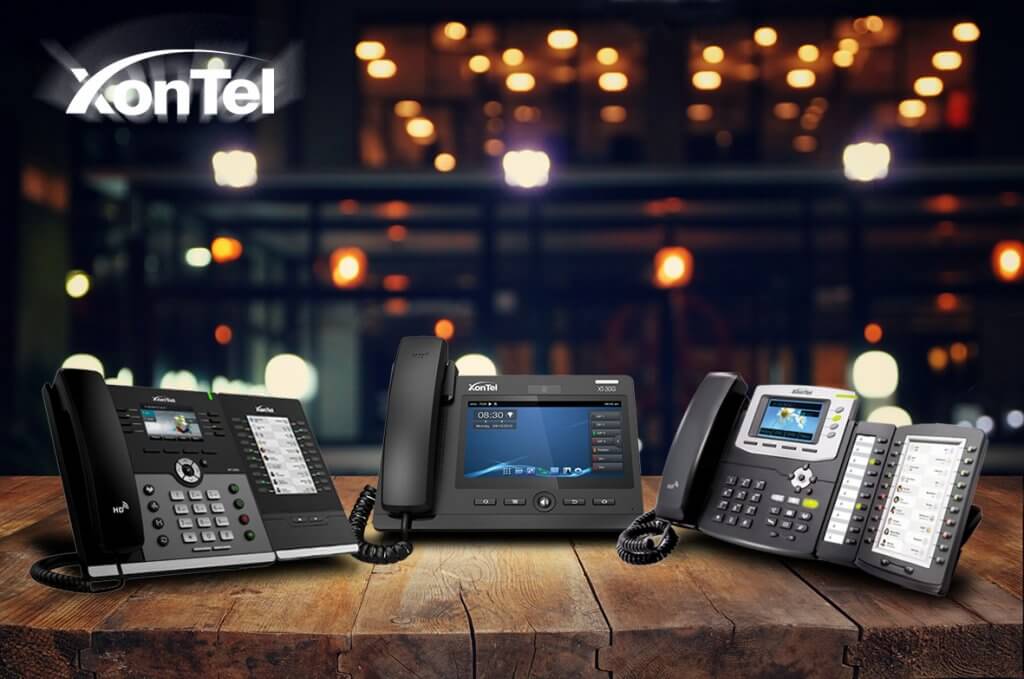
XonTel is the first Arab company to manufacture and develop VoIP (IP) phones. It produces a wide range of VoIP phones suitable for various work environments: offices, homes, remote locations, desert sites, branch offices, or mobile use.

In addition to providing the essential communication features for daily work, XonTel VoIP phones include advanced functionalities that help employees increase efficiency, productivity, and collaboration.

For more information about XonTel phones click here

Follow us on LinkedIn
call2action-En

For more information about XonTel products and services, leave your data and one of our specialists will contact you

How to Build a Complete IP Phone System in Just 5 Steps

Posted on: April 22nd, 2017 by xontel_admin

After explaining the components of modern corporate communication systems in previous articles—including VoIP technology, modern PBX systems, IP Phones, and call center systems—it’s now time to show how to integrate all these technologies into a modern, unified IP-based communication system.
Your company deserves to embrace the full potential of modern communication technology.
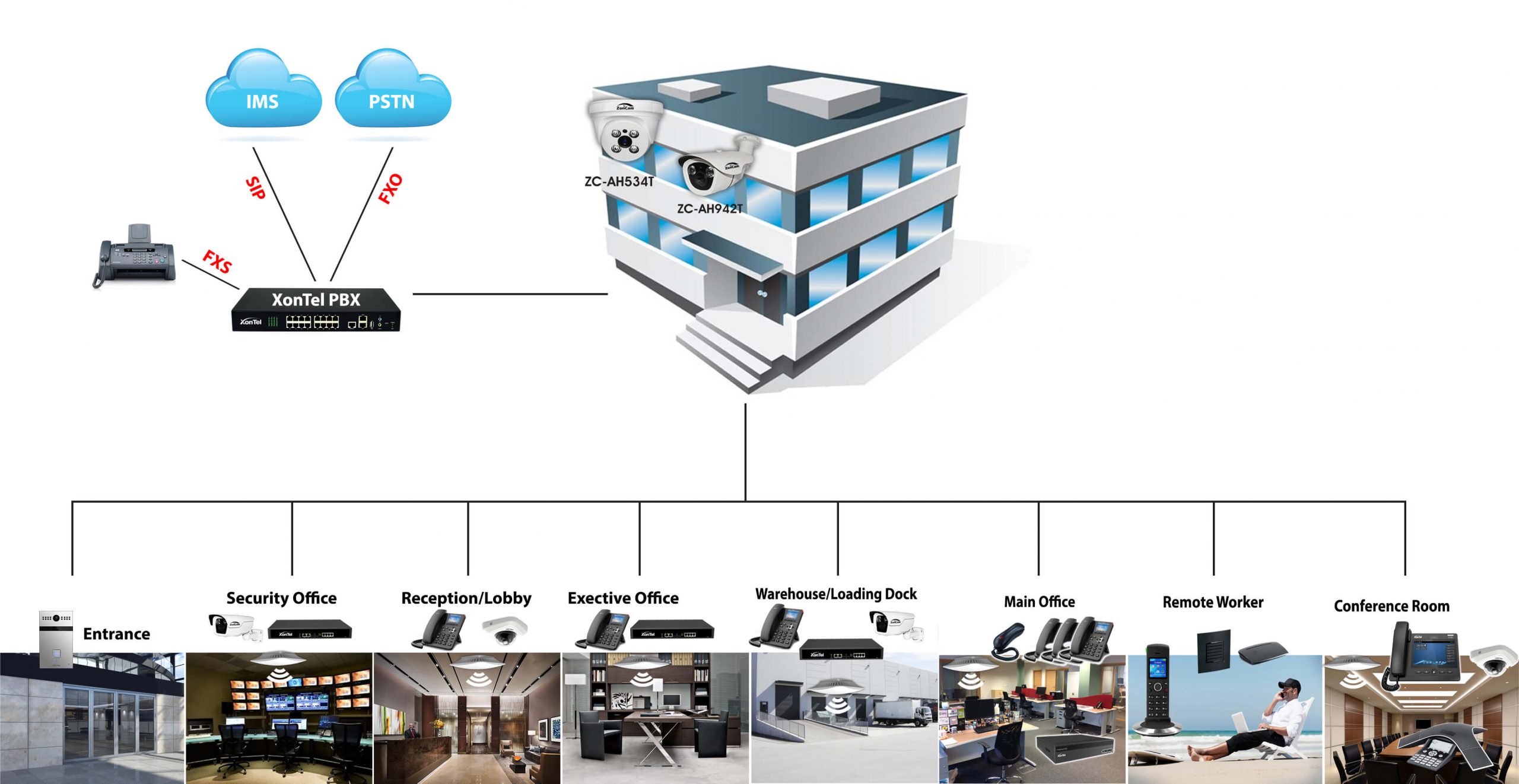
Here’s a simplified overview of a unified communication network:

نظام اتصالات متكامل

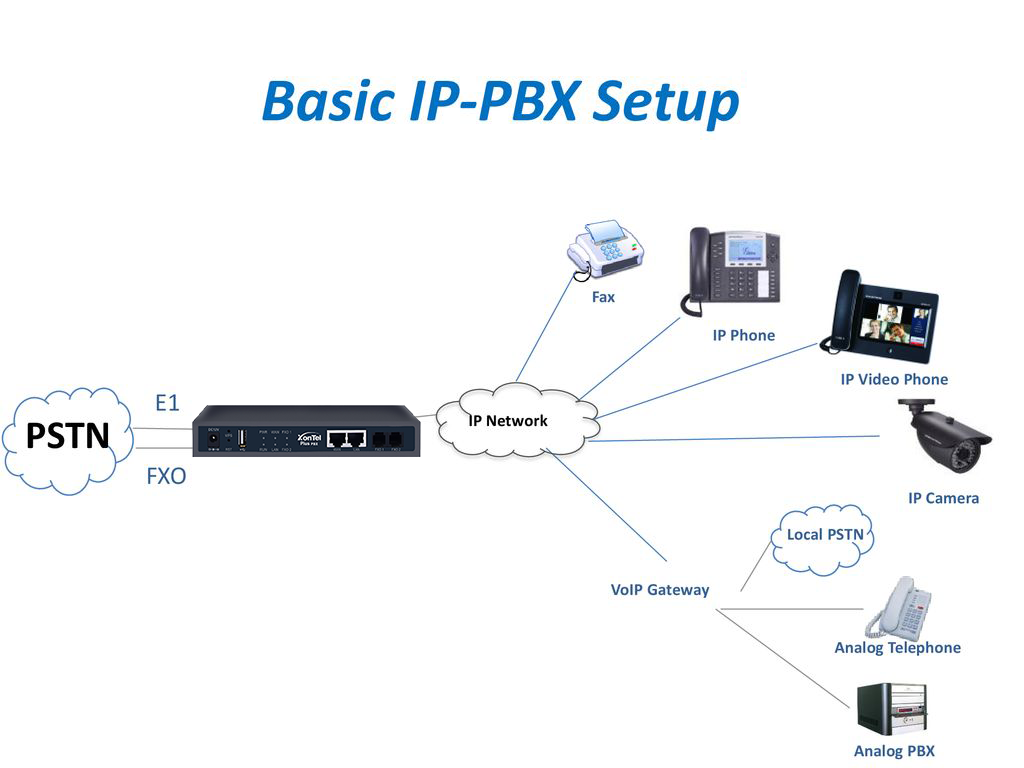
As shown in the diagram above, building a communication system consists of 5 key stages:

1. Install a Modern IP-PBX (Central Switchboard)

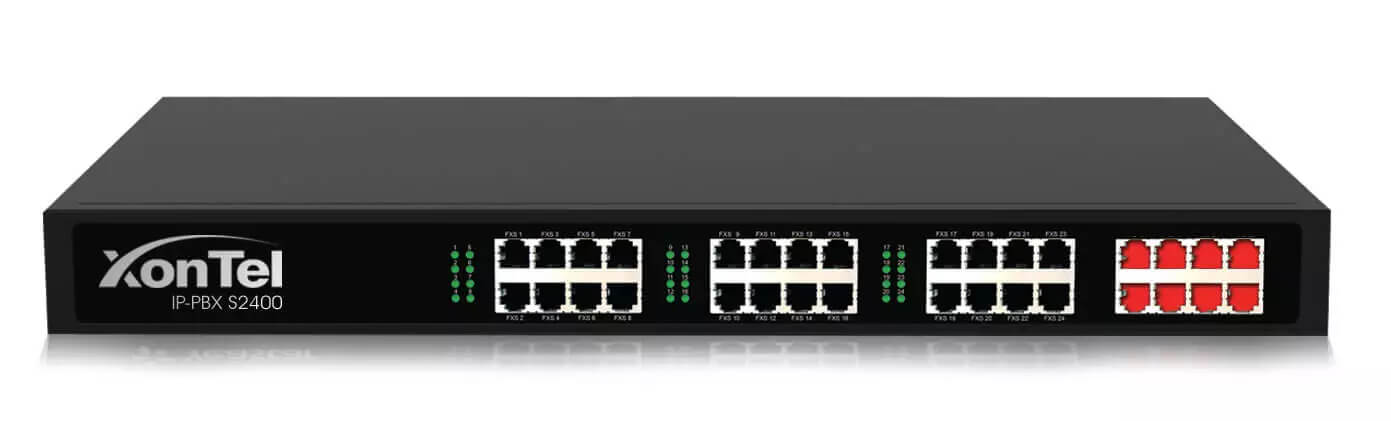
The PBX (Private Branch Exchange) is the cornerstone of any unified communication system. XonTel provides the latest IP-PBX system, the S2400, which requires no licensing fees or installation costs. It is suitable for companies of all sizes.
Using a unified communication system, you can connect and manage all IP-based devices—including:

  • Analog phones or IP Phones
  • Audio and video conference devices
  • Wireless phones
  • Security systems
  • Fax machines and intercoms

Essentially, this PBX can manage any modern IP device securely and efficiently, completing about 50% of the setup for your communication system.

2. Choose IP Phones (Internet Voice Phones)

Selecting the right phone for your work environment is critical. Key considerations include:

  • Phone features and specifications
  • Compatibility with your PBX (some brands work only with the same brand PBX)
  • Warranty and update policies

XonTel offers a wide range of IP Phones suitable for any company size, featuring:

  • High-quality voice and video calls
  • Full compatibility with any PBX
  • Power over Ethernet (PoE), eliminating the need for separate power sources
  • Touchscreen options, conference phones, and ceiling speakers

View XonTel IP Phones here

3. Use ATA Devices to Convert Analog Phones to VoIP

For small or medium-sized companies, purchasing new IP phones may not be financially feasible. Analog Telephone Adapters (ATA) convert traditional analog phones into VoIP phones, allowing you to upgrade your system without replacing all devices.

XonTel offers a variety of ATA devices suitable for different environments.

4. Set Up Conferencing Systems

Modern communication allows remote meetings without physical presence. You can hold audio or video conferences with all branches worldwide, making conferencing systems a core component of any unified communication setup.

XonTel provides a range of devices and software for remote meetings, including audio and video solutions.

Explore XonTel conferencing solutions here

5. Integrate Security Systems

The final component, equally important, is security integration. You can connect:

  • Surveillance cameras
  • Intercom systems
  • Attendance and access control devices

XonTel offers a wide range of IP-based security solutions, including PBX-compatible intercoms, cameras, smart home systems, and biometric attendance devices.

Now that we’ve explained the 5 key components, you can build a unified and integrated communication system consisting of a smart IP-PBX, IP Phones, ATA devices, remote conferencing systems, and security systems—all using the latest global technologies.

Follow us on LinkedIn

call2action-Ar

للمزيد من المعلومات عن خدمات ومنتجات زونتل أترك بيناتك وسيقوم أحد المختصين بالتواصل معك

What Is an ATA Device? Upgrade Your Old Analog Phone to VoIP

Posted on: April 22nd, 2017 by xontel_admin

In a previous article, we explained IP Phones (VoIP phones) and highlighted the features and advantages they provide—capabilities that traditional analog phones cannot offer.

In this article, we discuss one of the main challenges faced by business owners or technicians when switching from old analog systems to VoIP technology.

When Deciding to Switch to VoIP, You Have Two Options:

1. Buy New Phones

Purchase new VoIP-enabled phones to replace the old analog phones in your company.

This solution can be costly, especially for small businesses.

2. Adapt Existing Phones

For example, if a small company has 100 analog phones across its main office and branches, replacing all of them with VoIP phones can be expensive.

In this case, it is recommended to use Analog Telephone Adapters (ATA)—devices that convert analog phones to VoIP.

What is an ATA Device and How Did It Originate?

An ATA (Analog Telephone Adapter) is a device that converts analog voice signals from a traditional phone into digital signals, allowing them to be transmitted over the Internet using VoIP.

ATAs first appeared in the late 1990s as manufacturers sought to develop a small intermediary device that connected analog phones to internal networks, improving voice speed and quality.

This marked the first step in migrating analog phones to VoIP technology.

Later, companies realized they could transmit both data and voice over the same network, reducing costs and allowing unified network management—this led to the second generation of ATA devices.

ATA Enhanced Features:

Over time, ATAs were enhanced with additional features, such as:

  • Call encryption and protection
  • Conference calling
  • Caller ID detection
  • Call forwarding and hold
  • Do Not Disturb functionality
  • Many other advanced services

How Does an ATA Work?

The operation of an ATA is straightforward:

  1. Connect your traditional analog phone to the ATA device using the same phone cable that would normally connect to the wall.
  2. Connect the ATA device to the Internet.
  3. The ATA converts the analog signals from your phone into digital signals, allowing voice communication over a VoIP network.

ATA Device Connection Diagram

XonTel is a leading company in the development and production of ATA devices. You can view their products here.

Follow us on LinkedIn

call2action-En

For more information about XonTel products and services, leave your data and one of our specialists will contact you

How to Choose the Right VoIP Provider for Your Business

Posted on: April 20th, 2017 by xontel_admin

At first glance, choosing a service provider might seem like an easy task. However, when it comes to selecting a VoIP Service Provider—a company that enables voice communication over the Internet—the decision becomes much more complex.

In this article, we’ll help you understand how to choose the best VoIP provider for your business needs and what key factors to consider before signing any contract.

VoIP Technology - Internet Communication

VoIP Technology – Internet Communication

1. Ensure Your Internet Connection Supports VoIP

Before subscribing to any VoIP service, it’s essential to make sure your Internet connection is fast and stable enough to handle not only data but also voice, video, and image transmission.

A high-speed, high-quality connection with minimal data loss and latency is critical for clear, uninterrupted communication.

It’s recommended to run several tests before subscribing—not only speed tests, but also tests for:

  • Line stability
  • Packet loss
  • Latency (delay)
  • Response time to other network points

For example, the minimum recommended Internet speed for VoIP communication is 1 Mbps, with a latency of no more than 150 milliseconds.

2. Compare Options to Save Costs

One of the greatest advantages of VoIP is that most advanced features are built into IP devices themselves, not the service.

With VoIP, you don’t need to pay extra for features like:

  • Call waiting
  • Call forwarding
  • Conferencing

These features are already included in your IP phone or PBX system, allowing you to save thousands of dollars compared to traditional landline services.

Another key advantage is lower international calling costs, as calls are made entirely over the Internet—dramatically reducing expenses.

3. Choose the Right Type of VoIP Provider

There are hundreds of VoIP service providers—both local and cloud-based. The best choice depends on your business size and needs:

For Individuals or Very Small Businesses:

Free providers like Skype or Google Voice are ideal for basic Internet calling when you only need one or two lines.

For Professional or Enterprise-Level Communication:

Choose business-grade VoIP providers that offer complete solutions including voice, video, data, and mobility.

XonTel is one of the leading VoIP service providers in the Arab region, offering complete communication systems for businesses.

You can, for example, purchase a PBX system here and a SIP Trunk here, allowing you to build a fully professional communication network on your premises.

For Companies with Limited Resources:

If your company has limited financial resources, consider working with a local provider who can supply ATA devices to convert analog phones to VoIP.

Alternatively, you can choose cloud-based (hosted) VoIP services, which offer an affordable, scalable solution without heavy upfront investment.

4. Review All Contract Details Carefully

When signing with a VoIP provider, always review the terms and conditions in detail. Pay close attention to:

  • Subscription and fee structure (one-time or recurring)
  • Device policies and usage limits
  • Equipment warranties
  • Service quality guarantees (QoS)
  • Upgrade and update policies
  • Extra charges for additional features
  • Equipment compatibility with the provider’s network
  • Costs associated with service cancellation
  • Conditions for keeping your existing phone numbers

Whenever possible, it’s best to purchase hardware (phones, adapters, etc.) directly from the provider, ensuring full compatibility and technical support.

After reviewing these key factors—Internet quality, cost comparison, provider selection, and contract details—you’ll be ready to choose the right VoIP service provider for your business.

XonTel stands as one of the largest VoIP service providers in the Arab region, and the first Arab company to produce and develop advanced Internet-based communication equipment.

You can explore XonTel’s full range of products and services here.

Follow us on LinkedIn

call2action-En

For more information about XonTel products and services, leave your data and one of our specialists will contact you

Why Upgrade to VoIP? The Real Cost of Keeping Traditional Phones

Posted on: April 12th, 2017 by xontel_admin

If you want to cut your company’s phone bills and gain access to advanced features that traditional phone systems can’t offer—such as allowing employees to work from anywhere, hosting video meetings, or generating detailed communication reports—then VoIP (Voice over Internet Protocol) is the ideal solution for your business.

We’ve previously explained in detail what VoIP is and its main advantages (you can read that article here). In this article, we’ll show you why it’s time to replace your old communication system with a modern, Internet-based VoIP system.

Key Facts and Statistics

  1. Companies save 50% to 75% on communication equipment costs after switching to VoIP.
  2. Businesses typically reduce their monthly communication expenses by around 50% using VoIP. (Source: www.itworld.com)
  3. Global investments in VoIP-related technologies were projected to reach $88 billion by 2018. (Source: www.infonetics.com)
  4. Traditional landline companies lose around 700,000 customers per month to VoIP. (Source: www.infonetics.com)
  5. By the end of 2017, there were over 1 billion VoIP users worldwide. (Source: www.technews.tmcnet.com)

These figures clearly show that the future of business communication lies in VoIP. Internet-based systems are rapidly replacing traditional telephony across companies and institutions worldwide.

Comparison: Traditional Telephony vs. VoIP

IP Phone VS PSTN Comparison

The following comparison highlights the key differences between traditional phone systems and VoIP:

FeatureTraditional Phone Service (PSTN)Voice over Internet Protocol (VoIP)
Installation CostTypically high in most casesVaries by setup; computer-to-computer calls are often free—only equipment costs apply
Operating CostBased on usage timeMuch cheaper; no per-minute costs once implemented
EquipmentLow-cost but limited functionalityProvided by the service provider; requires modern IP-based devices and good infrastructure
Mobility (Flexibility)Fixed and non-portableFully mobile; accessible from anywhere via the Internet
FeaturesBasic call functions (dial, receive, hold)Includes advanced features like voicemail, group calls, and video conferencing
ReliabilityHighly reliableVery reliable with stable power and Internet connection
SecurityGenerally secureSecure with firewalls and encryption, though network precautions are needed
ScalabilityDifficult to expand; requires new wiring and possibly constructionEasy to scale—just add new VoIP phones or software users

Why VoIP is the Better Choice

From the comparison above, it’s clear that VoIP has become the practical and flexible alternative to traditional phone systems. It offers:

  • Reduced communication costs—especially for international calls
  • Simplified scalability and management
  • Enhanced flexibility, allowing calls and meetings from anywhere
  • A wide range of modern features that improve collaboration and productivity

Sahab Technology, through its brand XonTel, is one of the pioneering VoIP providers in the Arab world. XonTel offers a complete range of VoIP products and services, helping businesses transition smoothly to modern Internet-based communication systems.

Click here to learn more about XonTel’s products and services.

Follow us on LinkedIn

call2action-En

For more information about XonTel products and services, leave your data and one of our specialists will contact you

What Is an IP PBX? Your Guide to Modern Business Phone Systems

Posted on: April 9th, 2017 by xontel_admin

You may have come across terms like IP PBX, IP Switchboard, or Internal Telephone Exchange, they all refer to the same concept in the world of modern communications.
Let’s start by explaining what the term PBX (Private Branch Exchange) means.

A PBX (Private Branch Exchange) is an internal telephone system installed within a company or organization to manage internal communication between employees.
All internal calls are handled through the PBX system independently from external telephone lines, which means internal calls are free, regardless of how many are made.
Costs only apply when making external calls outside the organization, where the internal PBX connects to the external telephone network.

What is an IP PBX (Internal Switchboard)?

XonTel PBX

Internal Communication with IP PBX

An IP PBX (also called IP Switchboard or Internal IP Exchange) allows employees to communicate internally by simply dialing three or four digits.
The PBX also manages:

  • Forwarding external calls to internal extensions
  • Connecting internal users to external numbers and redirecting them to other extensions
  • Multi-party calls and call cost tracking

These systems are typically managed by qualified IT or telecom technicians.

Integrating Internal Networks with IP PBX Systems

One of the most important advancements in communication technology was the integration of corporate local area networks (LANs) with internal telephone systems.
This integration led to the emergence of IP-PBX systems, which transmit voice as data packets over the Internet Protocol (IP).
As a result, companies can now conduct phone calls using their internal data networks instead of traditional analog lines—bringing together voice and data communication on a single infrastructure.
This innovation gave rise to a new generation of network-based PBX systems, which quickly began replacing traditional analog PBXs due to their efficiency and flexibility.

IP PBX Growth in the United States:

In the United States, for example:

  • The distribution of IP PBX systems increased from 1% to 16% of total PBX sales within five years.
  • The distribution of traditional PBXs dropped by 11% during the same period.
  • This trend is expected to continue in the coming years as more businesses transition to IP-based communication.
بدالة IP

Why IP PBX Systems Outperform Traditional PBXs

IP-based PBX systems offer numerous advantages over traditional systems, including:

1. Easy Relocation

The IP PBX system can be moved anywhere with minimal effort.

2. Flexible Connectivity

Devices can connect to the  PBX (Private Branch Exchange) from inside or outside the company.

3. High-Quality Voice Transmission

Calls are transmitted via advanced IP technology for superior quality.

4. Remote Work Compatibility

Employees can use IP phones from offices, homes, or mobile devices—whether using physical phones or mobile applications.

5. Enhanced Features Not Available in Analog Systems

IP phones provide advanced functionalities not available in traditional analog systems.

6. Advanced Features and Capabilities

IP phones offer features such as:

  • Visual voicemail
  • Personal folders and contact management
  • Call recording
  • Video conferencing
  • Integration with email and CRM systems

These features make IP PBX systems far more powerful and efficient than traditional analog systems.

XonTel, a brand of Sahab Technology, is the first and only Arab company to develop and manufacture IP-based PBX systems using advanced VoIP technology.

For more information about XonTel IP PBX systems click here.

Follow us on LinkedIn

call2action-En

For more information about XonTel products and services, leave your data and one of our specialists will contact you

Call Center Solutions: How to Choose the Right System

Posted on: April 2nd, 2017 by xontel_admin

Modern Call Center Systems (or Contact Centers) are now considered one of the most valuable assets any company can own, as they serve as the core of customer relationship management.
In this article, we’ll explore the key features and benefits of Call Center solutions.

Call Center - Contact Center

Call Center

What Is a Call Center?

A Call Center is the main communication hub between a company and its customers. It is a centralized office designed to receive and handle customer calls for:

  • Technical support
  • Sales inquiries
  • Product information
  • Customer service requests

In addition to the business sector, call centers are widely used in government agencies to provide citizens with direct, fast, and efficient service. Through telephony and computer integration, agents can manage calls and provide assistance with ease.

Key Call Center Technologies:

  • Automatic Call Distribution (ACD): Routes incoming calls to the most suitable agent.
  • Computer Telephony Integration (CTI): Links the phone system with computer applications.
  • Interactive Voice Response (IVR): Plays pre-recorded voice messages to guide callers or receive inputs using keypad tones or voice commands (Auto Attendant).
  • Administrative Dashboards and Reports: Enable managers to monitor performance, track call volumes, and allocate agents dynamically across departments as needed.

XonTel Call Center System

The XonTel Call Center System is one of the most advanced and comprehensive call management solutions available today. It offers a full suite of tools that empower businesses to manage all customer interactions with maximum efficiency.

Key Features:

  • Detailed Call Reports: Full tracking of all inbound and outbound calls by date, time, duration, and agent.
  • Voicemail for All Extensions: Ensures no customer inquiry is missed.
  • Automatic Call Distribution: Evenly distributes calls among agents.
  • Interactive Voice Response (IVR): Provides an automated answering and routing system.
  • Financial Reporting: Generates detailed cost and usage summaries.
  • Supervisor Dashboard: Allows real-time monitoring of agent performance.
  • Two-Year Warranty: Includes free updates and system maintenance.
  • And many more powerful features…

XonTel’s Contact Center Solutions provide a reliable, scalable, and cost-effective platform that enhances communication, boosts customer satisfaction, and improves operational performance.

For more details about XonTel Call Management Systems, click here.

Follow us on LinkedIn

call2action-En

For more information about XonTel products and services, leave your data and one of our specialists will contact you

What is VoIP and How VoIP Technology can boost your Business

Posted on: March 21st, 2017 by xontel_admin
ما هو الفويب

You may have noticed the rapid evolution of communication technology around the world and the emergence of VoIP technology, which is described by experts as a revolutionary technology that will completely reshape the entire global communications system.
In this article, we will explain what VoIP is and how your business can benefit from this technology.

What is VoIP?

The term VoIP stands for Voice over Internet Protocol.

This simply means the ability to transmit voice over the Internet or internal networks instead of being transmitted via traditional landline networks.

Consequently, any number of people connected together through the Internet or an internal network can communicate by phone using this technology.

How VoIP Technology Works?

  1. Converting analog signals into digital signals.
  2. Efficiently compressing voice packets to prevent audio delays.
  3. Transmitting the voice packet over the Internet Protocol (IP).
  4. At the receiver’s end, the packet is analyzed, the data is extracted, and the digital signals are converted back into audio and sent to the phone.
ما هو الفويب

Benefits and advantages of Voice over Internet Protocol technology

  • Cost savings: Using VoIP significantly reduces communication costs, and international calls using this technology are cheaper than any other communication method.
  • You can also use mobile calling apps instead of traditional desk phones, reducing hardware expenses.
  • Flexibility: VoIP service can be used from anywhere in the world, either via mobile apps or your IP phone, using your internal extension numbers.
  • Ease of scalability: You can easily expand and add new lines or devices effortlessly.
  • Additional services: Includes traditional phone services as well as other features such as: The ability to hold conference calls, voicemail, customizable ringtones, and the option to save and add caller details, etc.
  • Ease of Use: The VoIP phone system allows you to set up and manage your phone system easily thanks to a graphical user interface (GUI).

Or via the Internet, making it easy to install, manage the system, and view reports.

  • The ability to integrate voice, video, and data technologies simultaneously:

The use of VoIP technology allows users to access all Internet-based applications, such as software programs or email, while simultaneously handling voice, video, and data over the same network.

XonTel Technology is the first Arab company to pioneer the development and manufacture of high-quality VoIP communication devices.

XonTel manufactures high-quality, affordable phones and PBXs for homes, companies, and various government agencies. To learn more about XonTel’s services and products, click here.

Sources (Wikipedia)

Follow us on LinkedIn

call2action-En

For more information about XonTel products and services, leave your data and one of our specialists will contact you

Choosing the Right Communication Device IP-PBX for Business

Posted on: January 24th, 2017 by xontel_admin

The electronics market today is flooded with countless types and models of PBX systems, also known as VoIP IP-PBX, along with a wide variety of IP phones.

These modern PBX systems have become essential components of today’s telecommunications revolution, thanks to the to the wide range of features they offer to businesses and individuals in a single device.

When choosing an advanced PBX system, many companies find themselves confused especially when planning to build an intelligent and modern communication network that connects departments internally or links branches across different locations.
By following a few key criteria, businesses can select the right PBX model that meets their needs effectively.

Key Criteria to Consider When Purchasing a PBX System or VoIP Phone

  • Product quality and obtaining international quality certifications such as FCC & CE.
  • Features and services offered by the PBX system.
  • Whether all its features are completely free or some features require additional fees.
  • Duration of warranty (guarantee).
  • Is the PBX system easy to operate and install, and whether it requires a specialised technician with a high cost to manage the phone network?
  • Can the company’s branches be connected to a single centralized phone network for free internal calls using a PBX system?
  • Does the system provide call recording and monitoring to ensure service quality for users?
  • Does it provide reports of all incoming and outgoing calls with specific time, date, and hour details?
  • After-sales service and fast technical support.
  • Total project cost.

For more information about the features and advantages of XonTel IP-PBX systems and IP phones, click here.

call2action-En

For more information about XonTel products and services, leave your data and one of our specialists will contact you