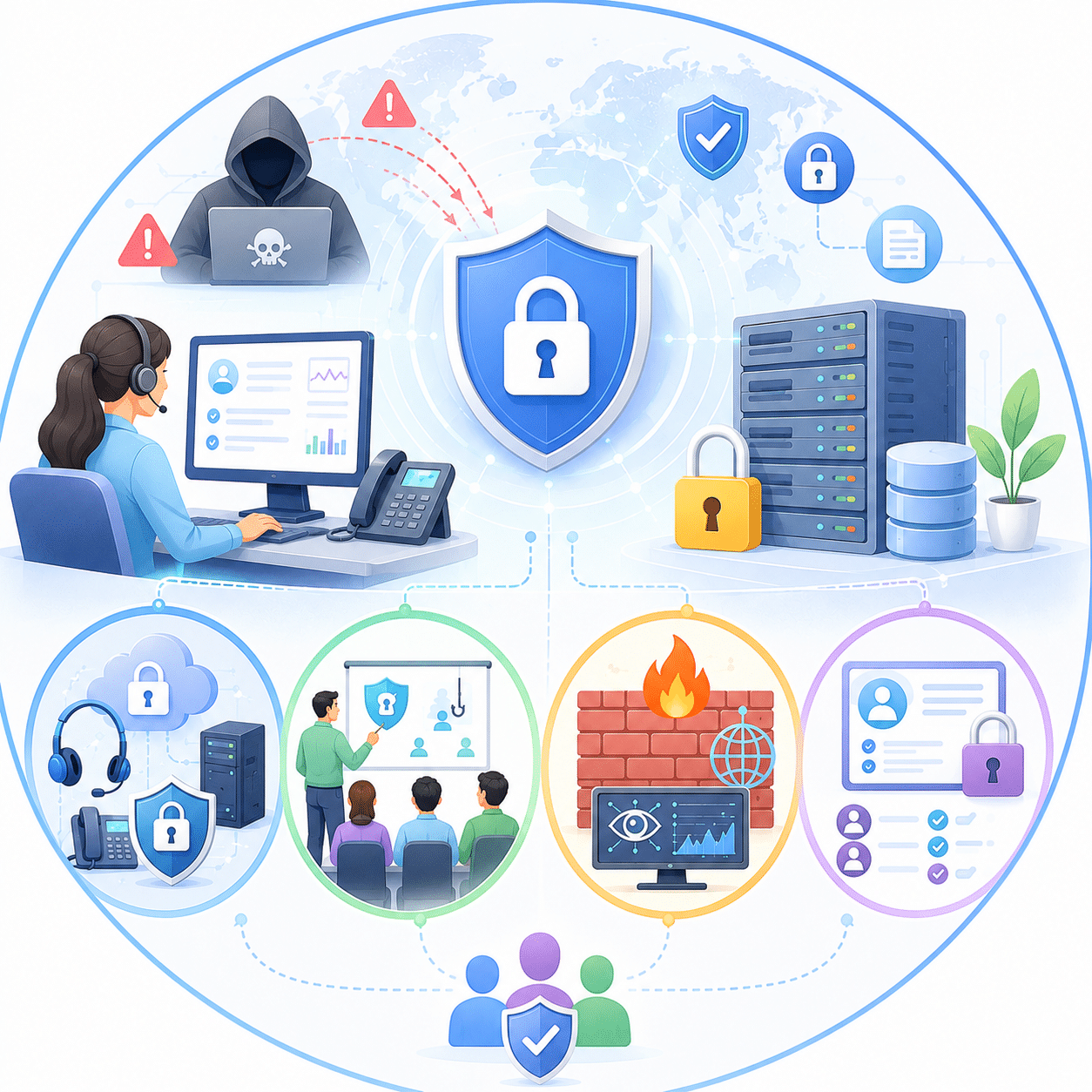
تركيب بدالة IP الكويت: الدليل الشامل لتطوير اتصالات الشركات 2026

Posted on: March 7th, 2026 by xontel_admin

ماذا لو كانت فواتير اتصالات شركتك الشهرية يمكن تخفيضها بنسبة تصل إلى 40%، مع زيادة إنتاجية فريقك في نفس الوقت؟

ندرك تماماً حجم التحديات التي تواجهها يومياً: تكاليف باهظة للمكالمات الدولية، صعوبة في ربط فروعك المنتشرة، والقلق المستمر من تعطل النظام بسبب الاعتماد على دعم فني غير متخصص. هذه العقبات لم تعد مجرد إزعاج تشغيلي، بل أصبحت عائقاً حقيقياً يهدد قدرتك على المنافسة والنمو في سوق الكويت الديناميكي.

هذا الدليل الشامل هو خريطة طريقك نحو التميز. ستكتشف كيف أن تركيب بدالة IP الكويت من خلال حلول زونتل الذكية يحول نظام اتصالاتك إلى أصل استراتيجي قوي. نعدك بتقديم رؤية واضحة لنظام موحد يربط جميع الموظفين بسلاسة، ويوفر أدوات متقدمة لتسجيل المكالمات واستخراج التقارير، مدعوماً بفريق دعم فني محلي موثوق يمكنك الاعتماد عليه.

استعد للانطلاق في رحلة لتطوير اتصالات شركتك، حيث نستعرض بالتفصيل كيف تساهم تقنياتنا في بناء بنية تحتية مرنة ومستعدة لمواجهة تحديات المستقبل حتى عام 2026.

النقاط الرئيسية

  • اكتشف الفروق الجوهرية في التكاليف التشغيلية بين البدالات التقليدية والحديثة، وكيف تساهم أنظمة IP في تحقيق وفورات مالية استراتيجية.
  • تعرّف على الخطوات المنهجية لضمان نجاح مشروع تركيب بدالة IP الكويت، بدءاً من تحليل المتطلبات وحتى فحص جاهزية شبكتك الداخلية.
  • استوعب المبادئ التقنية الأساسية التي تشغل الاتصالات الذكية، وكيف يتيح بروتوكول SIP إمكانيات متطورة تتجاوز المكالمات الصوتية التقليدية.
  • قارن بين مزايا التعامل مع شريك تقني محلي متخصص يفهم متطلبات السوق الكويتي، والاعتماد على حلول عالمية قد لا تتناسب مع بيئة عملك.

لماذا أصبح تركيب بدالة IP ضرورة حتمية للشركات في الكويت عام 2026؟

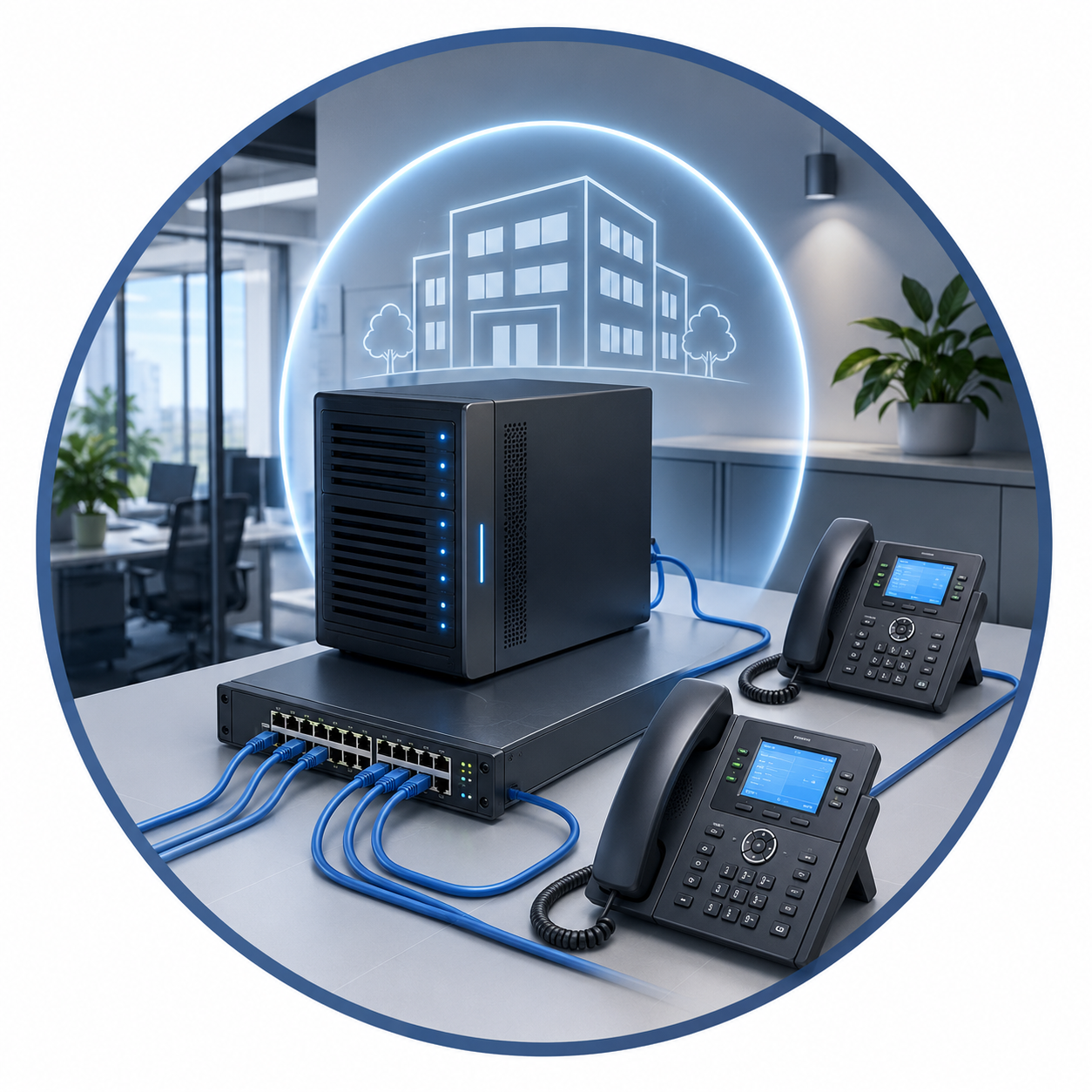
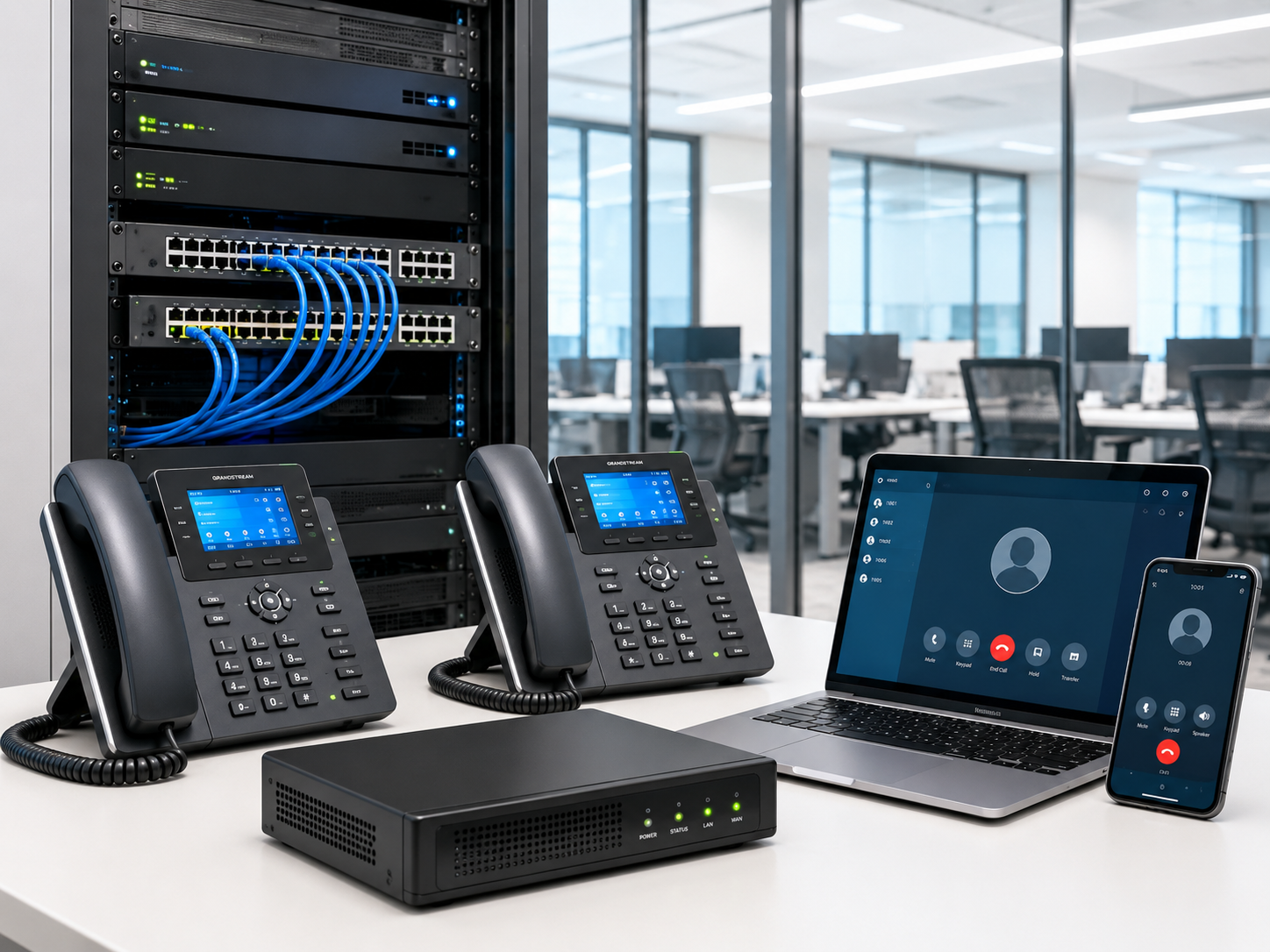
في قلب التحول الرقمي الذي تشهده الكويت، لم تعد أنظمة الاتصالات مجرد أداة للتواصل، بل أصبحت العمود الفقري للكفاءة التشغيلية والنمو. بحلول عام 2026، لن يكون الانتقال إلى بدالة IP (IP PBX) خيارًا ترفيًا، بل استثمارًا استراتيجيًا لا غنى عنه. ببساطة، بدالة IP هي نظام هاتف مؤسسي يستخدم بروتوكول الإنترنت (IP) لإدارة وتوجيه المكالمات، محولاً شبكة الإنترنت لديك إلى بنية تحتية للاتصالات الموحدة. على عكس البدالات التقليدية التي تعتمد على شبكات الهاتف النحاسية المنفصلة، تعمل أنظمة بدالات IP PBX على دمج الصوت والبيانات والفيديو في شبكة واحدة متكاملة، مما يفتح آفاقًا جديدة للإنتاجية والتعاون.

هذا التحول يكتسب زخمًا متسارعًا في الكويت، مدفوعًا بمتطلبات بيئة العمل الحديثة. لقد كشف نموذج العمل الهجين، الذي أصبح واقعًا في أكثر من 50% من الشركات الكويتية الكبرى، عن القصور الجوهري في الأنظمة القديمة. فالبدالة التقليدية تربط الموظف بمكتبه المادي، بينما تحرر بدالة IP الموظف ليصبح مكتبه حيثما كان، سواء في المنزل، أو في فرع آخر، أو أثناء التنقل، مع الاحتفاظ بنفس رقم التحويلة والميزات الكاملة. إن عملية تركيب بدالة IP الكويت لم تعد تتعلق فقط بتحديث التكنولوجيا، بل بتمكين القوى العاملة المرنة والموزعة جغرافيًا.

تتوافق هذه الرؤية بشكل مباشر مع أهداف رؤية “كويت جديدة 2035″، التي تركز على بناء اقتصاد ذكي ومستدام. تساهم حلول زونتل الذكية للاتصالات الموحدة في تحقيق هذه الرؤية عبر تزويد الشركات بالأدوات اللازمة لتعزيز الكفاءة، وخفض النفقات، وتقديم خدمة عملاء استثنائية. إنها تمثل الأساس التقني الذي يمكّن الشركات من المنافسة والازدهار في العصر الرقمي.

فوائد الانتقال إلى نظام الاتصالات الموحدة

الانتقال إلى بدالة IP لا يمثل تحديثًا تقنيًا فحسب، بل هو قفزة نوعية في كفاءة الأعمال. الفوائد المباشرة تشمل:

  • خفض التكاليف بشكل جذري: يمكن للشركات تحقيق وفورات تصل إلى 75% على المكالمات الدولية وما يصل إلى 40% على تكاليف التشغيل الإجمالية للاتصالات، وذلك بفضل استخدام خطوط SIP Trunking الفعالة من حيث التكلفة.
  • مرونة التوسع الفوري (Scalability): إضافة موظف جديد أو فتح فرع آخر لا يتطلب تمديدات سلكية معقدة أو تركيبات باهظة. يمكن إضافة خطوط جديدة خلال دقائق عبر واجهة برمجية بسيطة، مما يمنح الشركة مرونة لا مثيل لها للنمو.
  • دمج الأجهزة المكتبية والذكية: عبر تطبيقات (Softphone)، يتحول هاتف الموظف الذكي أو حاسوبه المحمول إلى امتداد كامل لهاتفه المكتبي، مما يضمن عدم تفويت أي مكالمة عمل هامة ويعزز الإنتاجية أثناء التنقل.

تحديات الأنظمة القديمة في بيئة العمل الحديثة

التمسك بالبدالات التناظرية (Analog) القديمة يضع الشركات أمام تحديات تشغيلية حقيقية تعيق نموها في السوق الكويتي التنافسي:

  • محدودية الربط بين الفروع: ربط فرع في الأحمدي بالمكتب الرئيسي في مدينة الكويت باستخدام الأنظمة التقليدية عملية مكلفة ومعقدة، وغالبًا ما تؤدي إلى تجربة اتصال متقطعة وغير موثوقة.
  • غياب البيانات التحليلية: تفتقر هذه الأنظمة إلى ميزات حيوية مثل التقارير المتقدمة عن حجم المكالمات، أو تسجيلها لضمان الجودة وتدريب الموظفين، مما يجعل من الصعب قياس أداء خدمة العملاء وتحسينه.
  • صعوبة الصيانة وندرة قطع الغيار: أصبحت الأنظمة التناظرية تقنية متقادمة، مما يجعل العثور على قطع غيار أو فنيين متخصصين لصيانتها أمرًا صعبًا ومكلفًا، ويزيد من مخاطر التوقف عن العمل.

كيف تعمل أنظمة بدالات IP الحديثة؟ التكنولوجيا خلف اتصالات زونتل الذكية

تجاوزت أنظمة الاتصالات الحديثة مجرد كونها أداة لإجراء المكالمات. اليوم، تمثل بدالة IP (IP PBX) العصب الرقمي للمؤسسات في الكويت، حيث تدمج الصوت والبيانات والفيديو في منصة موحدة وذكية. لفهم القيمة الحقيقية لهذه الأنظمة، يجب النظر إلى التكنولوجيا الأساسية التي تدعمها، والتي تحول كل مكالمة إلى فرصة لتعزيز الإنتاجية والأمان.

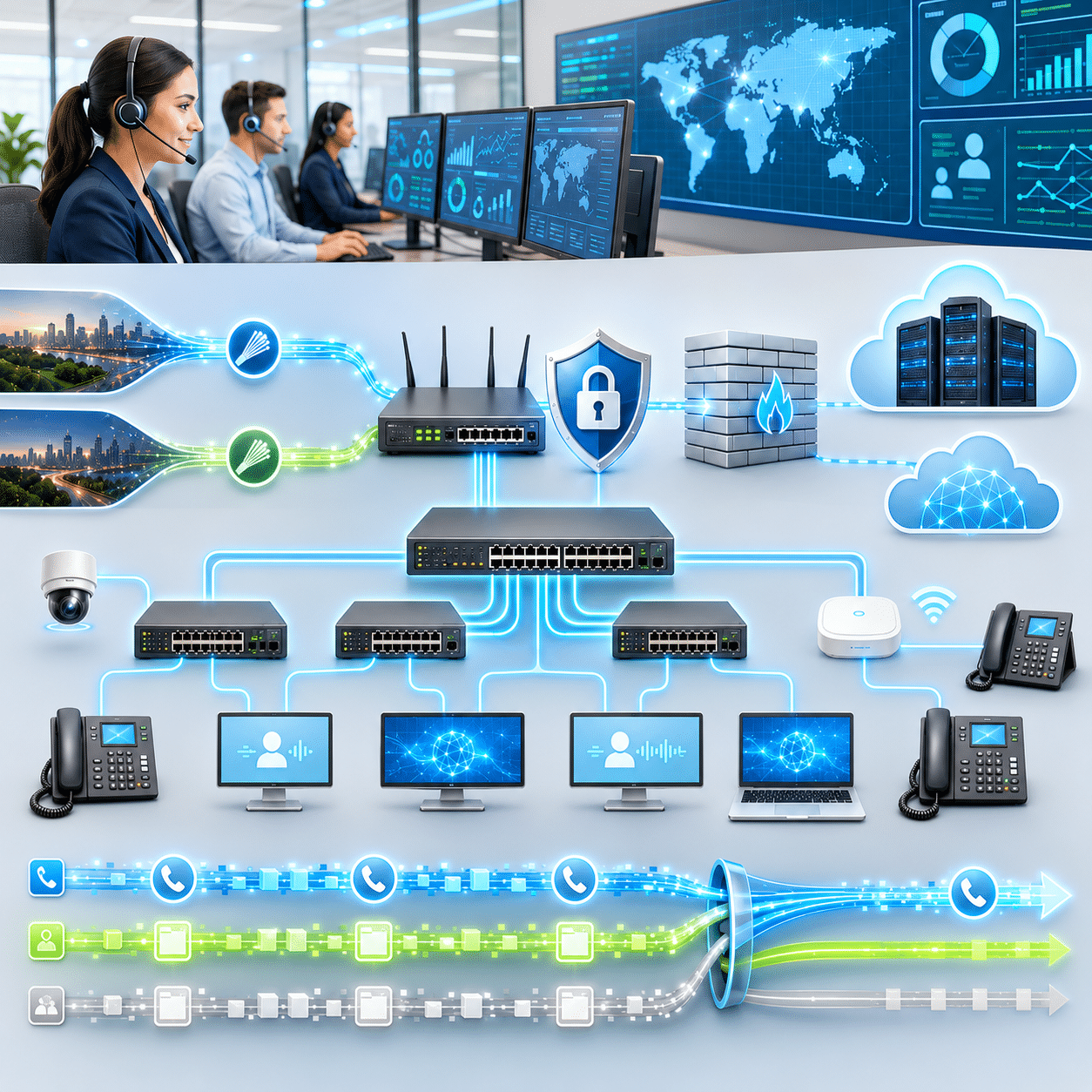
في جوهر كل نظام اتصالات عبر بروتوكول الإنترنت (VoIP) يكمن بروتوكول بدء الجلسة (SIP). يعمل هذا البروتوكول كلغة عالمية للأجهزة، حيث يقوم بتحويل الموجات الصوتية لصوتك إلى حزم بيانات رقمية صغيرة. يتم إرسال هذه الحزم عبر شبكة الإنترنت أو شبكتك المحلية (LAN) بسرعة فائقة ثم يعاد تجميعها إلى صوت واضح تمامًا لدى الطرف الآخر. هذه العملية، الموضحة بالتفصيل في دليل هيئة الاتصالات الفيدرالية، هي التي تتيح مرونة وجودة لا مثيل لهما مقارنة بالخطوط الأرضية التقليدية. إنها تفتح الباب أمام ميزات متقدمة وتكاليف تشغيل أقل.

لكن التحول لا يعني التخلي عن استثماراتك الحالية. تدرك زونتل أن العديد من الشركات لا تزال تعتمد على خطوط الهاتف التقليدية. هنا يأتي دور بوابات FXO/FXS، التي تعمل كجسر تقني يربط بين عالم الاتصالات التناظرية والرقمية. تتيح هذه البوابات دمج خطوطك الأرضية الحالية بسلاسة في نظام IP PBX الجديد، مما يضمن انتقالًا سلسًا دون انقطاع للخدمة ويحافظ على أرقام هواتفك المعروفة لدى عملائك.

مع تزايد الاعتماد على الشبكات الرقمية، أصبح الأمان السيبراني أولوية قصوى. تم تصميم بدالات زونتل بطبقات حماية متقدمة لحماية اتصالاتك. نستخدم بروتوكولات تشفير رائدة مثل SRTP (Secure Real-time Transport Protocol) و TLS (Transport Layer Security) لتشفير كل من المكالمات الصوتية وبيانات الإشارة. هذا يمنع بشكل فعال محاولات التنصت أو الاختراق، مما يضمن سرية محادثات عملك ويوفر حماية بنسبة 99.9% ضد هجمات الاحتيال الهاتفي الشائعة.

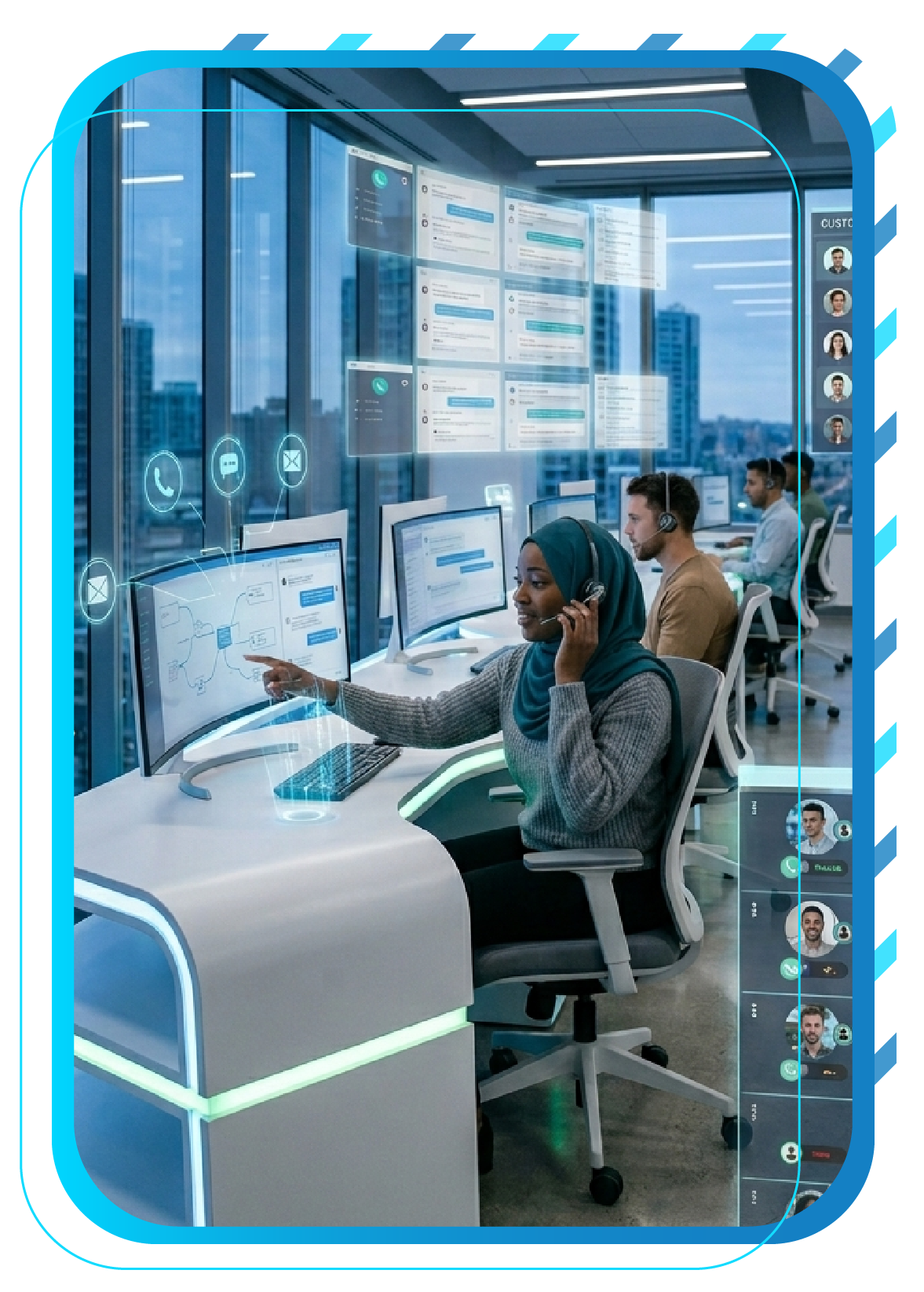
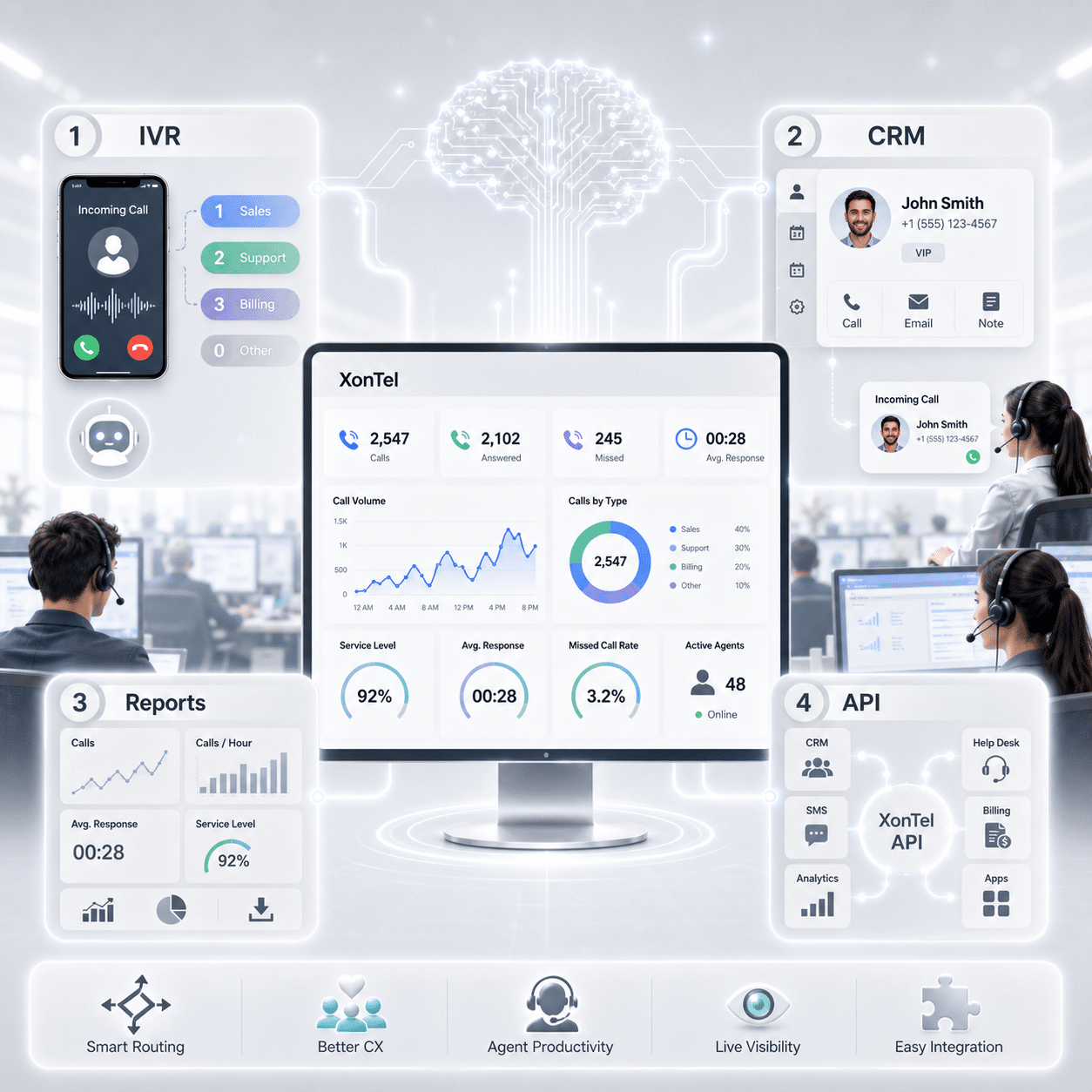
القوة الحقيقية تكمن في التكامل. إن عملية تركيب بدالة IP الكويت من زونتل لا تقتصر على توفير الاتصالات، بل تهدف إلى تحسين عملياتك التجارية بالكامل. من خلال ربط البدالة مباشرة مع أنظمة إدارة علاقات العملاء (CRM) مثل Salesforce أو Zoho، يمكنك زيادة إنتاجية فريق المبيعات بنسبة تصل إلى 25%. عند ورود مكالمة من عميل، تظهر جميع بياناته تلقائيًا على شاشة الموظف، مما يسمح بتقديم خدمة شخصية وسريعة. يتم تسجيل المكالمات والبيانات تلقائيًا في ملف العميل، مما يوفر رؤى قيمة لتحسين استراتيجيات المبيعات وخدمة العملاء.

المكونات الأساسية لنظام IP PBX المتكامل

يتكون النظام البيئي للاتصالات الموحدة من عدة عناصر تعمل بتناغم لتوفير تجربة سلسة:

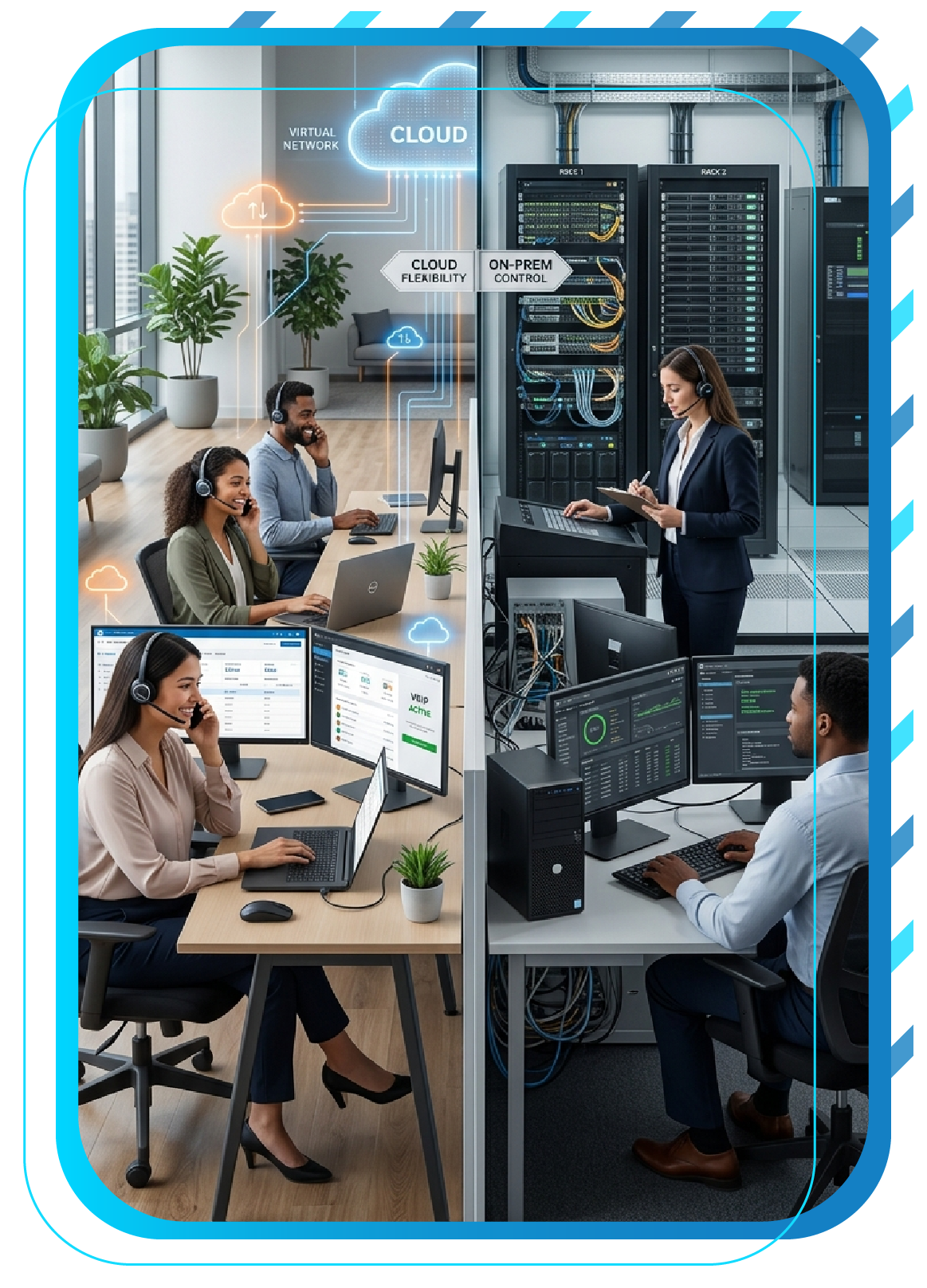
  • السيرفر المركزي (البدالة): هو العقل المدبر للنظام، سواء كان مثبتًا في موقعك (On-Premise) أو مستضافًا على السحابة، ويدير جميع المكالمات والميزات.
  • أجهزة هواتف IP والتطبيقات (Softphones): تشمل هواتف مكتبية متطورة وتطبيقات للهواتف المحمولة وأجهزة الكمبيوتر، مما يمنح الموظفين حرية العمل من أي مكان.
  • الربط السحابي (Cloud Integration): يوفر تخزينًا آمنًا لتسجيلات المكالمات والنسخ الاحتياطي للبيانات، مما يضمن استمرارية الأعمال وسهولة الوصول للمعلومات.

ميزات الذكاء الاصطناعي في بدالات 2026

المستقبل هنا، وبدالات زونتل تقوده بميزات الذكاء الاصطناعي التي تعيد تعريف الكفاءة. لم يعد الأمر يتعلق فقط بإجراء المكالمات، بل بجعل كل تفاعل أكثر ذكاءً. اكتشف كيف يمكن لحلول زونتل الذكية أن تعيد تعريف تجربة عملائك من خلال:

  • الرد الآلي الذكي (Smart IVR): يتجاوز القوائم التقليدية ليفهم اللغة الطبيعية، مما يسمح للعملاء بالتعبير عن احتياجاتهم مباشرة وتوجيههم بدقة تصل إلى 95% للموظف المناسب من المحاولة الأولى.
  • تحليل المشاعر (Sentiment Analysis): يقوم بتحليل نبرة الصوت في المكالمات المسجلة لتحديد مستوى رضا العملاء، وتنبيه المديرين للمكالمات السلبية التي قد تتطلب متابعة أو تدريبًا إضافيًا للموظفين.
  • توزيع المكالمات التلقائي (ACD) المتقدم: يوجه المكالمات الواردة ليس فقط إلى الموظف المتاح، بل إلى الموظف الأكثر مهارة وخبرة للتعامل مع استفسار العميل المحدد، مما يحسن معدلات حل المشكلات من أول اتصال بنسبة 20%.

مقارنة بين البدالات التقليدية وأنظمة IP PBX: أيهما يوفر تكاليف أكثر؟

عند اتخاذ قرار استراتيجي بشأن البنية التحتية للاتصالات في شركتك، يبرز السؤال الأهم: هل البدالات التقليدية (PABX) لا تزال خياراً مجدياً أم أن أنظمة IP PBX الحديثة هي الحل الأمثل؟ للوهلة الأولى، قد تبدو تكلفة التجهيز الأولية لأنظمة IP أعلى، لكن التحليل الدقيق للتكاليف التشغيلية على المدى الطويل (OPEX) يكشف عن وفورات مالية هائلة تجعلها الاستثمار الأذكى لأي شركة تتطلع للنمو والكفاءة.

تعتمد البدالات التقليدية على شبكة أسلاك نحاسية منفصلة وخطوط هاتف أرضية (PSTN) لكل مستخدم، مما يترتب عليه فواتير شهرية ثابتة ومرتفعة، خاصة للمكالمات الدولية. في المقابل، تعمل أنظمة IP PBX عبر شبكة الإنترنت الحالية لديك، مما يلغي الحاجة لخطوط هاتف متعددة ويقلل تكلفة المكالمات بنسبة تصل إلى 70%، خاصة عند الاتصال بالفروع الدولية. إن التقنية التي تدعم هذه الأنظمة، والمعروفة باسم VoIP، هي المحرك الأساسي لهذه الكفاءة. ويمكن الاطلاع على تحليل شامل حول فوائد VoIP للشركات لفهم كيف يمكن لهذه التقنية أن تخفض التكاليف وتزيد من مرونة الأعمال.

الفروقات الجوهرية لا تقتصر على التكلفة فقط، بل تمتد لتشمل جوانب حيوية أخرى:

  • مرونة التوسع: إضافة مستخدم جديد في نظام تقليدي تتطلب تركيب بطاقة إضافية وتمديد أسلاك جديدة، وهي عملية مكلفة ومعقدة. أما في نظام IP PBX، فتتم إضافة المستخدم خلال دقائق عبر واجهة تحكم رسومية بسيطة، دون الحاجة لأي تعديلات مادية.
  • جودة الصوت: توفر أنظمة IP PBX الحديثة جودة صوت عالية الوضوح (HD Voice)، مما يضمن اتصالات أكثر نقاءً ووضوحاً مقارنة بالخطوط التناظرية التقليدية التي قد تعاني من التشويش.
  • سهولة الإدارة: تتيح أنظمة زونتل الذكية للمسؤولين إدارة النظام بالكامل، من إضافة مستخدمين إلى إعداد قواعد توجيه المكالمات، عبر لوحة تحكم مركزية سهلة الاستخدام يمكن الوصول إليها من أي مكان، مما يقلل الاعتماد على فنيي الصيانة الخارجيين.

الجدوى الاقتصادية للشركات الكويتية

بالنسبة للسوق الكويتي، فإن عملية تركيب بدالة IP الكويت تقدم عائداً استثمارياً (ROI) سريعاً وملموساً. بفضل الاستقرار العالي لأنظمة زونتل، تنخفض تكاليف الصيانة الدورية بنسبة تصل إلى 60% مقارنة بالبدالات القديمة. الأهم من ذلك، أن النظام يستغل شبكة البيانات المحلية (LAN) الموجودة بالفعل في مكتبك، مما يلغي تماماً تكاليف تمديد الأسلاك الهاتفية الجديدة التي قد تصل إلى آلاف الدنانير. تتوقع معظم الشركات الكويتية استرداد كامل قيمة استثمارها في نظام IP PBX خلال 18 إلى 24 شهراً فقط.

المرونة في الربط بين الفروع

تكمن القوة الحقيقية لأنظمة IP PBX في قدرتها على توحيد الاتصالات عبر المواقع الجغرافية المتعددة. تخيل أن لديك مقراً رئيسياً في مدينة الكويت وفروعاً في دبي ولندن والرياض. عبر نظام IP PBX من زونتل، تصبح جميع هذه الفروع وكأنها في مكتب واحد. يمكن للموظف في الكويت الاتصال بزميله في لندن عبر طلب رقمه الداخلي المكون من 3 أو 4 أرقام فقط، وتكون المكالمة مجانية تماماً. يتم كل ذلك مع إدارة مركزية كاملة من المقر الرئيسي، مما يوفر تحكماً مطلقاً ويقلل النفقات التشغيلية بشكل جذري، ويجعل تركيب بدالة IP الكويت ليس مجرد تحديث، بل هو خطوة استراتيجية نحو بيئة عمل عالمية متصلة وفعالة.

خطوات تركيب وبرمجة بدالة IP في الكويت: من التخطيط إلى التشغيل

إن الانتقال إلى نظام اتصالات حديث لا يقتصر على شراء الأجهزة، بل هو عملية هندسية متكاملة تتطلب الدقة والخبرة. في زونتل، نتبع منهجية صارمة تضمن أن كل عملية تركيب بدالة IP الكويت تتم وفقاً لأعلى معايير الجودة، محولةً نظام الاتصالات في شركتك إلى أصل استراتيجي يعزز الإنتاجية والأمان.

تبدأ رحلتنا بفهم عميق لمتطلبات عملك. نقوم بتحليل دقيق لعدد المستخدمين الحاليين والمتوقعين، وعدد الخطوط الخارجية اللازمة، وطبيعة المكالمات اليومية. على سبيل المثال، قد تحتاج شركة استشارات في شرق تضم 50 موظفاً إلى ما لا يقل عن 15 خطاً متزامناً للتعامل مع استفسارات العملاء والمكالمات الدولية، بينما قد يكتفي مكتب محاماة أصغر بـ 5 خطوط. هذا التحليل الأولي هو حجر الزاوية لاختيار البدالة المناسبة، سواء كانت XonTel-100 أو XonTel-500، مما يضمن لك عدم دفع تكاليف لميزات لا تحتاجها، مع ترك مساحة للتوسع المستقبلي بنسبة 30% على الأقل.

أهمية الفحص الميداني قبل التركيب

نصر في زونتل على إجراء فحص ميداني شامل لموقعك، سواء كان في حولي، العاصمة، أو أي منطقة أخرى في الكويت. هذه الزيارة ليست مجرد إجراء شكلي، بل هي خطوة حيوية لضمان أداء لا تشوبه شائبة. خلال الفحص، يقوم مهندسونا بتقييم البنية التحتية للشبكة لديك، والتأكد من أن أجهزة الراوتر والسويتش (Switches & Routers) قادرة على التعامل مع حركة بيانات VoIP دون تأخير أو تقطيع، مع استهداف زمن وصول (Latency) أقل من 150 مللي ثانية، وهو المعيار الذهبي لجودة الصوت الفائقة.

بعد ذلك، ننتقل إلى مرحلة اختيار الأجهزة. بناءً على تقييم الاحتياجات والفحص الميداني، نوصي بالمزيج الأمثل من بدالات زونتل الذكية، هواتف IP التي تناسب كل دور وظيفي (من هواتف الاستقبال المتقدمة إلى الهواتف العملية للمكاتب)، وأنظمة الإنتركام الذكية التي تتكامل بسلاسة مع نظام الاتصالات لديك.

مرحلة البرمجة والتخصيص

هنا يتحول النظام من مجرد أجهزة إلى حل اتصالات مخصص لشركتك. يقوم فريق البرمجة لدينا بإعداد النظام بدقة متناهية، بدءاً من تسجيل رسائل الترحيب الصوتية الاحترافية (IVR) باللغتين العربية والإنجليزية، وتوجيه المتصلين إلى القسم الصحيح بكفاءة. كما نقوم بتفعيل ميزات أمنية متقدمة، مثل وضع قواعد اتصال تمنع المكالمات الدولية غير المصرح بها بعد ساعات العمل، مما يقلل من مخاطر الاحتيال الهاتفي بنسبة تصل إلى 95%. علاوة على ذلك، نربط بدالة IP بنظام الإنتركام الذكي مثل XonTel XT-13P، مما يمكّن موظف الاستقبال من التحقق من هوية الزوار عبر الفيديو وفتح الأبواب مباشرة من هاتفه المكتبي.

لا تكتمل عملية تركيب بدالة IP الكويت لدينا إلا بتدريب فريقك. نقدم جلسات تدريبية مكثفة لضمان أن موظفيك يمكنهم الاستفادة من جميع الميزات المتقدمة للنظام، من تحويل المكالمات بسهولة إلى إعداد المؤتمرات الهاتفية. ومع عقود الدعم الفني المستمر، نضمن استمرارية أعمالك وحل أي طارئ بكفاءة وسرعة. هل أنت مستعد لتقييم شبكتك وبدء التحول الرقمي لاتصالاتك؟ اطلب فحصاً ميدانياً مجانياً اليوم.

زونتل: شريكك الموثوق لتركيب وصيانة أنظمة البدالات المتطورة في الكويت

عندما يتعلق الأمر باختيار نظام الاتصالات المناسب لشركتك، فإن القرار يتجاوز مجرد مقارنة الميزات التقنية. إنه يتعلق باختيار شريك يفهم تمامًا بيئة عملك وتحديات السوق المحلي. منذ انطلاقتها كعلامة تجارية كويتية في عام 2013، رسّخت زونتل مكانتها كخيار استراتيجي للشركات التي تبحث عن حلول اتصالات ذكية وموثوقة ومصممة خصيصًا لتلبية متطلبات السوق الكويتي.

إن اختيارك لزونتل لا يعني فقط حصولك على منتج، بل يعني الدخول في شراكة مبنية على الخبرة المحلية العميقة. على عكس الماركات العالمية التي تقدم حلولًا قياسية، تم تصميم وتطوير أنظمة زونتل وهواتفها وبرمجياتها مع الأخذ في الاعتبار خصوصية البنية التحتية للاتصالات في الكويت وطبيعة احتياجات الشركات المحلية، سواء كانت صغيرة، متوسطة، أو كبيرة.

يكمن تفوقنا في قدرتنا على الجمع بين الابتكار العالمي والدعم المحلي الفوري. نحن نؤمن بأن التكنولوجيا الفائقة يجب أن تكون مدعومة بخدمة عملاء استثنائية. لهذا السبب، قمنا ببناء شبكة واسعة من الموزعين المعتمدين والفرق الفنية المنتشرة في جميع أنحاء الكويت، مما يضمن سرعة استجابة لا تضاهى لطلبات الدعم الفني والصيانة. مع زونتل، لن تضطر للانتظار أيامًا لحل مشكلة تقنية، ففريقنا على أهبة الاستعداد لخدمتك في غضون ساعات قليلة.

الجودة ليست مجرد شعار، بل هي أساس كل ما نقوم به. تخضع جميع منتجاتنا، من البدالات المركزية إلى هواتف IP، لعمليات فحص جودة صارمة لضمان أداء مستقر وموثوقية طويلة الأمد. كما يلتزم فريق البحث والتطوير لدينا بالابتكار المستمر، حيث نقوم بإصدار تحديثات برمجية دورية تضيف ميزات جديدة وتعزز الأمان، مما يضمن أن عملية تركيب بدالة IP الكويت مع زونتل هي استثمار ينمو مع شركتك.

حلول زونتل المتكاملة للأعمال

نقدم منظومة اتصالات متكاملة تتجاوز مجرد إجراء المكالمات. يشتمل نظام الكول سنتر المتقدم لدينا على أدوات احترافية لإدارة تدفق مكالمات العملاء، مع ميزات مثل قوائم الانتظار الذكية وتسجيل المكالمات والتقارير التحليلية. كما نوفر مجموعة متنوعة من هواتف IP، كهاتف XT-42G بشاشته الملونة للمديرين التنفيذيين، وهاتف XT-22G العملي للموظفين، مع إمكانية التكامل السلس مع أنظمة الإنتركم والكاميرات الأمنية والتحكم بالدخول.

التزامنا تجاه العميل الكويتي

ندرك أن استمرارية أعمالك تعتمد على أنظمة اتصالات فعالة. لهذا السبب، نوفر دعمًا فنيًا شاملاً عن بعد وميدانيًا على مدار الساعة طوال أيام الأسبوع، لضمان معالجة أي طارئ بأقصى سرعة وكفاءة. كما أن التزامنا بالتحديثات الدورية يضمن بقاء نظامك متوافقًا مع أحدث التقنيات والبروتوكولات الأمنية العالمية، مما يحمي استثمارك ويمنحك راحة البال التامة. ابدأ اليوم بتطوير البنية التحتية للاتصالات في شركتك. اتصل بنا اليوم للحصول على استشارة مجانية لتركيب بدالتك.

مستقبل اتصالات شركتك يبدأ اليوم

لقد أصبح واضحًا أن الاعتماد على أنظمة الاتصالات التقليدية لم يعد خيارًا قابلاً للاستمرار في بيئة الأعمال الكويتية سريعة التطور. بحلول عام 2026، سيكون التحول إلى بدالات IP هو المعيار الأساسي للشركات التي تسعى لتحقيق الكفاءة التشغيلية والنمو المستدام. وكما استعرضنا، توفر هذه الأنظمة مرونة لا تضاهى، وتخفيضًا ملموسًا في التكاليف، ومجموعة من الميزات الذكية التي تعزز التعاون والإنتاجية. إن إتمام عملية تركيب بدالة IP الكويت بنجاح يعتمد بشكل مباشر على اختيار الشريك التكنولوجي المناسب الذي يفهم احتياجاتك الفريدة.

في زونتل، نحن لا نقدم مجرد تقنية، بل نقدم شراكة استراتيجية مبنية على الثقة. بخبرة تمتد لأكثر من 10 سنوات في السوق الكويتي، وفريق دعم فني محلي متخصص يتمركز في حولي لضمان استجابة سريعة، وحلول معتمدة تحظى بثقة كبرى المؤسسات الحكومية والخاصة، نضمن لك نظام اتصالات موثوق وآمن وقابل للتطوير. نحن هنا لنحول تحديات الاتصالات لديك إلى فرص حقيقية للنمو.

لا تدع المستقبل يفوتك. اتخذ الخطوة الأولى نحو تحديث البنية التحتية لاتصالاتك. اطلب عرض سعر مخصص لنظام بدالة IP لشركتك الآن واكتشف كيف يمكن لحلول زونتل الذكية أن تقود أعمالك نحو التميز.

الأسئلة الشائعة حول تركيب بدالة IP

ما هي التكلفة التقريبية لتركيب بدالة IP في الكويت؟

تبدأ تكلفة تركيب بدالة IP في الكويت للشركات الصغيرة من حوالي 150 ديناراً كويتياً للنظام الأساسي. يرتفع السعر بناءً على عدد المستخدمين، ونوع هواتف IP المطلوبة، والميزات المتقدمة مثل تسجيل المكالمات أو مراكز الاتصال. للحصول على عرض سعر دقيق، يقوم خبراؤنا بتحليل احتياجات عملك لتقديم حل مخصص وفعال من حيث التكلفة يضمن أفضل عائد على الاستثمار.

هل يمكنني الاحتفاظ بأرقامي القديمة عند الانتقال لنظام IP؟

نعم، يمكنك الاحتفاظ بجميع أرقام هواتفك الحالية عند الترقية إلى نظام بدالة IP. تتم هذه العملية من خلال خدمة نقل الأرقام (Number Portability) التي تضمن انتقالاً سلساً دون أي انقطاع في اتصالاتك. يعمل فريقنا على تنسيق العملية بالكامل مع مزودي الخدمة في الكويت لضمان استمرارية أعمالك والحفاظ على هوية أرقامك التي يعرفها عملاؤك.

هل يحتاج نظام بدالة IP إلى سرعة إنترنت عالية جداً؟

لا يتطلب نظام بدالة IP سرعات إنترنت فائقة. تحتاج كل مكالمة متزامنة إلى حوالي 100 كيلوبت في الثانية فقط، وهي سرعة متوفرة في معظم باقات الإنترنت التجارية القياسية في الكويت. الأهم من السرعة هو استقرار الاتصال وجودته. تضمن أنظمتنا جودة صوت عالية الدقة (HD) حتى مع سرعات الإنترنت المعتدلة، مما يجعلها حلاً فعالاً وموثوقاً.

ما هو الفرق بين بدالة زونتل والبدالات السحابية الأخرى؟

تتميز بدالة زونتل بكونها حلاً متكاملاً يجمع بين الأجهزة والبرامج المصممة للعمل معاً بكفاءة مطلقة. على عكس بعض البدالات السحابية التي تعتمد على أطراف ثالثة، نحن نقدم نظاماً كاملاً مع دعم فني مباشر في الكويت. يركز تصميمنا على الأمان المتقدم، وقابلية التوسع السلسة، وتوفير تجربة اتصالات موحدة حقيقية وليس مجرد خدمة هاتفية.

هل توفر زونتل ضماناً على أجهزة الهواتف والبدالات؟

بالتأكيد، توفر زونتل ضماناً شاملاً لمدة عامين على جميع أجهزة البدالات وهواتف IP التي نقوم بتركيبها. هذا الضمان يغطي أي عيوب مصنعية ويؤكد التزامنا بتقديم منتجات عالية الموثوقية. نحن نثق في جودة حلولنا الهندسية، ونسعى لتوفير راحة البال لعملائنا من خلال دعم فني قوي وضمانات تعكس متانة منتجاتنا.

كيف يساعد نظام تسجيل المكالمات في تحسين أداء الموظفين؟

يساعد تسجيل المكالمات على تحسين الأداء عبر توفير بيانات عملية لتقييم جودة خدمة العملاء. يمكن للمديرين مراجعة المكالمات لتدريب الموظفين الجدد، وتحديد نقاط القوة والضعف، وضمان الالتزام بمعايير الشركة. كما أنه أداة حيوية لحل النزاعات مع العملاء بشكل سريع من خلال توفير سجل دقيق للمحادثات، مما يعزز الشفافية والمسؤولية.

هل يمكن ربط بدالة IP بنظام الإنتركام وكاميرات المراقبة؟

نعم، يمكن ربط بدالة IP من زونتل بسهولة مع أنظمة الإنتركام وكاميرات المراقبة التي تدعم بروتوكول SIP. يتيح هذا التكامل الذكي استقبال مكالمات الإنتركام مباشرة على هواتف المكتب أو الهواتف الذكية، مع إمكانية فتح الأبواب عن بعد. كما يمكن عرض بث الفيديو من الكاميرات على شاشات هواتف IP المتوافقة، مما يعزز أمان منشأتك بشكل كبير.

ما هي المدة المستغرقة لعملية التركيب والبرمجة بالكامل؟

تستغرق عملية تركيب بدالة IP في الكويت وبرمجتها بالكامل عادةً ما بين يوم عمل واحد إلى ثلاثة أيام للشركات الصغيرة والمتوسطة. يعتمد الجدول الزمني الدقيق على حجم النظام وتعقيد الشبكة الداخلية للعميل. يحرص فريقنا الفني المتخصص على إنجاز التركيب بكفاءة عالية لتقليل أي تأثير على سير العمل اليومي وضمان انتقال سلس إلى نظام الاتصالات الجديد.

أسعار بدالات IP في الكويت لعام 2026: دليل شامل لتكاليف الأنظمة الذكية

Posted on: March 6th, 2026 by xontel_admin

هل يمكن أن يكلفك نظام الاتصالات الذي تختاره اليوم 30% أكثر من ميزانيتك الأولية بحلول عام 2026 بسبب رسوم التراخيص والصيانة غير المتوقعة؟ هذا التساؤل ليس مجرد افتراض، بل هو واقع يواجه العديد من الشركات في الكويت عند الاستثمار في بنية تحتية جديدة للاتصالات. نحن ندرك تمامًا أن الموازنة بين الجودة الفائقة والتكلفة المعقولة تمثل تحديًا حقيقيًا، وأن الغموض حول التكاليف طويلة الأمد يمكن أن يحول قرارًا استراتيجيًا إلى مصدر قلق مستمر.

لهذا السبب، قمنا بإعداد هذا الدليل الشامل لتوضيح خريطة أسعار بدالات IP في السوق الكويتي. نعدك بتزويدك بالمعرفة اللازمة لتقدير ميزانيتك بدقة متناهية، وفهم الفروق الجوهرية بين تكاليف الشراء لمرة واحدة ونماذج الاشتراك السحابي. سنستعرض معًا العوامل الحاسمة التي تحدد التكلفة الإجمالية، مما يضمن لك اختيار نظام اتصالات ذكي وقابل للتوسع يدعم نمو أعمالك دون أي أعباء مالية مفاجئة.

النقاط الرئيسية

  • تعلم كيفية التقييم الدقيق لاحتياجات شركتك، بدءاً من عدد المستخدمين وحتى جاهزية الشبكة، لوضع ميزانية دقيقة لنظام الاتصالات.
  • اكتشف الفروق المالية الجوهرية بين الأنظمة المحلية والسحابية لفهم كيف تتأثر أسعار بدالات IP بنموذج أعمالك التشغيلي.
  • وازن بين النفقات الرأسمالية (CAPEX) للبدالات المحلية والنفقات التشغيلية (OPEX) للحلول السحابية لاتخاذ قرار استثماري استراتيجي.
  • تعرف على استراتيجيات تحقيق أقصى كفاءة في التكاليف عبر دمج الأنظمة الذكية مع خطوط الاتصال التقليدية لديك بسلاسة.

ما هي العوامل التي تحدد أسعار بدالات IP في الكويت؟

إن تحديد ميزانية لنظام اتصالات جديد يتجاوز مجرد شراء أجهزة. هو استثمار استراتيجي طويل الأمد يهدف إلى تحسين كفاءة العمليات وخفض التكاليف التشغيلية بشكل جذري. تعمل أنظمة بدالات IP الحديثة على تحويل شبكة الإنترنت الداخلية لديك إلى بنية تحتية للاتصالات، مما يقلل بشكل مباشر من فواتير المكالمات الدولية والمحلية بنسب قد تصل إلى 60%، ويعزز من إنتاجية الموظفين عبر توفير قنوات اتصال موحدة. لذلك، فإن فهم العوامل التي تشكل أسعار بدالات IP ليس مجرد خطوة ضرورية، بل هو أساس اتخاذ قرار مستنير يخدم أهداف شركتك لسنوات قادمة.

العامل الأكثر تأثيراً على التكلفة هو حجم النظام، والذي يُقاس بعدد المستخدمين أو التحويلات (Extensions). فتكلفة نظام مصمم لخدمة 20 موظفاً تختلف كلياً عن نظام يخدم 250 موظفاً. لكن العلاقة ليست خطية دائماً؛ فغالباً ما ينخفض متوسط التكلفة لكل مستخدم مع زيادة حجم النظام. يضاف إلى ذلك دور الميزات المتقدمة، فالتراخيص المطلوبة لتفعيل خاصية تسجيل المكالمات، والتي تعتبر إلزامية في القطاعات المالية وخدمة العملاء، أو نظام الرد الآلي الذكي (IVR) متعدد المستويات، تزيد من التكلفة الإجمالية للبرمجيات.

في سوق الكويت، تلعب البنية التحتية الحالية لمقر الشركة دوراً حاسماً في تحديد تكاليف التأسيس. الشركات التي تتخذ من الأبراج المكتبية الحديثة في مدينة الكويت مقراً لها، والتي تكون مجهزة مسبقاً بشبكات بيانات منظمة، يمكنها تقليل تكاليف التمديدات والتركيب بنسبة تصل إلى 40% مقارنة بالمواقع التي تتطلب تأسيس شبكة من الصفر. لهذا السبب، يعد إجراء مسح ميداني احترافي للموقع خطوة أولى لا غنى عنها للحصول على عرض سعر دقيق.

المكونات الأساسية لميزانية نظام الاتصالات

تتوزع ميزانية نظام الاتصالات عادةً على ثلاثة بنود رئيسية. أولاً، تكلفة الأجهزة (Hardware) التي تشمل البدالة المركزية وهواتف IP المكتبية، والتي تتراوح أسعارها بين 20 د.ك. للطرازات الأساسية و150 د.ك. أو أكثر للهواتف الذكية المتقدمة. ثانياً، تراخيص البرمجيات (Software Licenses) التي تغطي رسوم تفعيل كل مستخدم وتراخيص الميزات الخاصة. وأخيراً، تكاليف التأسيس والشبكة، وتشمل تمديد الكابلات، وتركيب محولات الشبكة (PoE Switches)، وتجهيز غرفة السيرفر.

تأثير العلامة التجارية والمنشأ على السعر

تتفاوت الأسعار بشكل ملحوظ بين العلامات التجارية العالمية والحلول الإقليمية. فبينما تقدم العلامات الكبرى تقنيات مثبتة، فإنها تأتي بتكلفة أعلى. في المقابل، يكمن التحدي الأكبر في ضمان استمرارية الأعمال. إن الحصول على دعم فني محلي وسريع في الكويت يقلل من خسائر توقف النظام، والتي قد تكلف الشركات مئات الدنانير عن كل ساعة توقف. تُقدم زونتل، كعلامة تجارية كويتية رائدة، حلاً ذكياً يوازن بين التكلفة المبدئية المنطقية والجودة العالمية الموثوقة، معززةً ذلك بدعم فني محلي يضمن استمرارية أعمالك.

تقدير تكلفة بدالة IP حسب حجم الشركة (2026)

إن تحديد أسعار بدالات IP ليس عملية مباشرة تعتمد على رقم واحد، بل هي استثمار استراتيجي يتناسب طرديًا مع حجم طموحات الشركة ونطاق عملياتها. لفهم التكلفة الحقيقية، يجب تحليلها بناءً على عدد المستخدمين، والميزات المطلوبة، والبنية التحتية للأجهزة. المعيار الأكثر دقة للمقارنة هو “التكلفة لكل مستخدم”، والذي يوفر رؤية واضحة حول العائد على الاستثمار لكل موظف.

تختلف الاحتياجات بشكل جذري بين شركة ناشئة ومؤسسة حكومية. دعنا نحلل الميزانيات التقديرية المتوقعة لعام 2026 حسب كل شريحة في السوق الكويتي:

  • الشركات الناشئة والمكاتب الصغيرة (حتى 10 موظفين): يتركز الاستثمار الأولي هنا على تأسيس بنية تحتية موثوقة وقابلة للنمو. تتراوح الميزانية التقديرية بين 900 و 2,800 دولار أمريكي. يشمل هذا المبلغ وحدة البدالة الرئيسية، وهواتف IP أساسية، والترخيص المبدئي. الهدف هو بناء نظام يدعم النمو المستقبلي دون الحاجة إلى استبدال كامل.
  • المؤسسات المتوسطة (20 إلى 100 موظف): هنا، تصبح الميزات المتقدمة مثل ربط الفروع، ووحدات الكول سنتر، والتكامل مع أنظمة CRM ضرورية لتحسين الإنتاجية. تتراوح الميزانية في هذه الفئة بين 4,500 و 18,000 دولار أمريكي. يتأثر السعر النهائي بشكل كبير بعدد التراخيص الإضافية ونوعية الأجهزة الطرفية المطلوبة.
  • المشاريع الكبرى والقطاعات الحكومية (أكثر من 1,000 خط): هذه المشاريع تتطلب حلولاً مصممة خصيصًا تضمن أعلى مستويات الأمان والجاهزية (High Availability). تبدأ التكاليف عادةً من 90,000 دولار أمريكي وقد تتجاوز ذلك بكثير. تشمل هذه التكلفة خوادم احتياطية، وأنظمة حماية متقدمة، وعقود دعم فني متخصصة على مدار الساعة.

تعتمد كل هذه التقديرات على تقنية نقل الصوت عبر بروتوكول الإنترنت (VoIP) كأساس. لفهم أعمق لكيفية عمل هذه الأنظمة وتأثيرها على التكلفة الإجمالية، يقدم هذا دليل شامل لتقنية VoIP من Forbes رؤى قيمة تساعد صناع القرار على اتخاذ خيارات مستنيرة.

أسعار الأجهزة الطرفية وهواتف IP

تمثل الأجهزة نقطة الاتصال المباشرة مع الموظفين، وتؤثر جودتها على كفاءة العمل اليومي. يتراوح سعر هاتف مكتبي أساسي عالي الجودة مثل XonTel XT-10P بين 45 و 65 دولارًا، بينما يمكن أن تصل تكلفة هواتف الفيديو المتطورة التي تدعم مؤتمرات الفيديو عالية الدقة إلى 300 دولار. أما تجهيزات غرف الاجتماعات، فتبدأ من 400 دولار لهواتف المؤتمرات القياسية، وتتجاوز 1,500 دولار للأنظمة المتكاملة. كما تعتبر سماعات الرأس الاحترافية لفرق خدمة العملاء، والتي يتراوح سعرها بين 70 و 150 دولارًا، استثمارًا ضروريًا لضمان وضوح المكالمات.

تراخيص الأنظمة والميزات الإضافية

تمنح التراخيص البرمجية نظام الاتصالات الخاص بك القوة والمرونة. على سبيل المثال، تفعيل وحدة الكول سنتر المتقدمة (Call Center Module) قد يتطلب رسومًا لمرة واحدة تتراوح بين 1,200 و 3,500 دولار بناءً على عدد الوكلاء والميزات. كما أن تكاليف الربط مع أنظمة إدارة علاقات العملاء (CRM Integration) تبدأ من 700 دولار للترخيص الأساسي. ولضمان استمرارية الأداء والأمن السيبراني، يُنصح بالاشتراك في خطة التحديثات السنوية، والتي تبلغ تكلفتها عادةً 15% من قيمة تراخيص البرامج الأولية، مما يضمن حماية استثمارك على المدى الطويل. نظرًا لتعدد العوامل، فإن استشارة فريق خبراء زونتل هي الخطوة الأولى لتحديد الميزانية الدقيقة لمشروعك.

المقارنة المالية: البدالات المحلية مقابل البدالات السحابية

إن اتخاذ القرار بين نظام بدالة محلي (On-premise) وآخر سحابي (Cloud) يتجاوز الميزات التقنية ليصل إلى جوهر الاستراتيجية المالية للشركة. يعتمد الاختيار بشكل أساسي على كيفية تفضيل المؤسسة لتوزيع نفقاتها: هل تفضل استثماراً رأسمالياً أولياً كبيراً (CAPEX) أم نفقات تشغيلية شهرية متكررة (OPEX)؟ لكل نموذج مزاياه التي تتناسب مع أهداف الشركات المتوسطة والكبيرة في الكويت.

تتطلب البدالات المحلية، مثل أنظمة زونتل الذكية، استثماراً رأسمالياً أولياً. بالنسبة لشركة في الكويت تضم 100 موظف، قد يتراوح هذا الاستثمار بين 25,000 و 40,000 دولار أمريكي، ويشمل ذلك الخوادم، والتراخيص الدائمة، وأجهزة الهواتف، والتركيب. في المقابل، يعمل النظام السحابي بنموذج النفقات التشغيلية، حيث تدفع الشركة اشتراكاً شهرياً لكل مستخدم، يتراوح عادة بين 22 و 35 دولاراً أمريكياً. لنفس الشركة، يعني هذا تكلفة تشغيلية سنوية تتراوح بين 26,400 و 42,000 دولار أمريكي.

على مدى 5 سنوات، تبدأ المعادلة المالية في الميل لصالح البدالات المحلية. بالنظر إلى المثال السابق، قد تصل التكلفة الإجمالية للنظام المحلي إلى حوالي 48,000 دولار أمريكي (شاملة الصيانة السنوية البسيطة)، بينما قد تتجاوز تكلفة النظام السحابي 132,000 دولار أمريكي. لذلك، بالنسبة للشركات الكويتية التي يتجاوز عدد موظفيها 70-80 موظفاً وتخطط للاستقرار على المدى الطويل، يصبح الاستثمار في بدالة IP محلية هو الخيار الأوفر مالياً بعد السنة الثانية من التشغيل. إن مقارنة أسعار بدالات IP المختلفة تكشف أن تكلفة الملكية الإجمالية هي المقياس الحقيقي للقيمة.

تتمتع الكويت ببنية تحتية متطورة للإنترنت بمعدل استقرار يصل إلى 99.8%، مما يجعل الحلول السحابية خياراً موثوقاً لمعظم الشركات. ومع ذلك، بالنسبة للقطاعات الحيوية مثل البنوك أو شركات الخدمات اللوجستية، حيث يمكن أن يكلف انقطاع الاتصال لدقائق قليلة آلاف الدولارات، يوفر النظام المحلي طبقة إضافية من الأمان التشغيلي لأنه يعمل بشكل مستقل عن استقرار الإنترنت العام.

تكلفة الملكية الإجمالية (TCO) على المدى الطويل

يتحقق العائد على الاستثمار (ROI) عند استبدال الأنظمة التقليدية ببدالة IP محلية من خلال التخلص شبه الكامل من الفواتير الشهرية المتكررة لكل مستخدم. كما تتلاشى تكاليف عقود الصيانة الباهظة للأجهزة المادية القديمة. تمنح أنظمة زونتل مرونة فائقة في التوسع؛ فإضافة موظفين جدد يتطلب فقط شراء ترخيص أو جهاز هاتف بتكلفة محدودة، بدلاً من إضافة اشتراك شهري جديد ومكلف إلى فاتورة النفقات التشغيلية.

الأمان والخصوصية وتأثيرهما على القرار المالي

الاستثمار في تأمين البيانات على خادم محلي يمنح سيطرة كاملة على البنية التحتية الأمنية. هذا الأمر حيوي للشركات التي تخضع لمتطلبات الامتثال الصارمة للقوانين الكويتية، خاصة فيما يتعلق بتخزين تسجيلات المكالمات والبيانات الحساسة داخل حدود الدولة. لهذا السبب، تفضل العديد من الجهات الحكومية والمؤسسات المالية في الكويت الاستثمار في البدالات المحلية، معتبرة التكلفة الأولية استثماراً ضرورياً في السيادة على البيانات وتقليل المخاطر.

كيفية التخطيط لميزانية تركيب بدالة IP في مدينة الكويت

إن تحديد ميزانية دقيقة لتركيب نظام بدالة IP جديد هو خطوة استراتيجية تضمن تحقيق أقصى استفادة من استثمارك وتجنب التكاليف غير المتوقعة. لا يقتصر الأمر على سعر الأجهزة فقط، بل يشمل منظومة متكاملة من الخدمات والبنية التحتية. اتباع خريطة طريق واضحة من خمس خطوات يضعك على المسار الصحيح للحصول على أفضل أسعار بدالات IP مع ضمان استمرارية الأعمال.

التخطيط المدروس يبدأ من الداخل. قبل البحث عن عروض الأسعار، يجب أن تمتلك فهماً كاملاً لمتطلباتك الحالية والمستقبلية. إليك الخطوات العملية لتأسيس ميزانية واقعية وفعالة في بيئة الأعمال الكويتية:

  • الخطوة الأولى: جرد عدد المستخدمين وتحديد أنواع الهواتف. ابدأ بإحصاء دقيق لعدد الموظفين الذين سيستخدمون النظام. قم بتصنيف احتياجاتهم: هل يحتاجون هواتف IP أساسية للمكالمات فقط (مثل طراز Xontel XT-22G)، أم هواتف تنفيذية بشاشات ملونة ومفاتيح إضافية (مثل Xontel XT-46G)؟ لا تنسَ هواتف غرف الاجتماعات وأجهزة الاستقبال. هذا الجرد هو حجر الأساس في تحديد تكلفة الأجهزة.
  • الخطوة الثانية: تقييم جاهزية شبكة الـ LAN وتقنية PoE. هل شبكتك المحلية الحالية قادرة على دعم جودة الصوت عبر بروتوكول الإنترنت (VoIP)؟ يجب أن تستخدم كابلات من فئة Cat5e على الأقل. الأهم من ذلك، هل تدعم محولات الشبكة (Switches) خاصية Power over Ethernet (PoE)؟ إذا لم تكن مدعومة، ستحتاج إلى إضافة تكلفة محولات طاقة منفصلة لكل هاتف، والتي تتراوح بين $15 و $25 للقطعة الواحدة.
  • الخطوة الثالثة: تحديد نوع خطوط الاتصال. الاختيار بين خطوط SIP Trunks الرقمية والخطوط التناظرية التقليدية يؤثر بشكل مباشر على التكاليف التشغيلية. توفر خطوط SIP مرونة أكبر وتكلفة أقل للمكالمات الدولية، وهو عامل حيوي للشركات العاملة في الكويت. قد تحتاج للاحتفاظ بخط تناظري واحد أو اثنين كخط طوارئ أو لجهاز الفاكس.
  • الخطوة الرابعة: طلب عروض أسعار تفصيلية. عند التواصل مع الموردين، اطلب عرض سعر يوضح كل بند على حدة: تكلفة البدالة، أسعار الهواتف، رسوم التراخيص، تكلفة التركيب والبرمجة، والتدريب. المقارنة بين العروض الشفافة تمنحك رؤية واضحة للقيمة الحقيقية.
  • الخطوة الخامسة: تخصيص بند للطوارئ والتوسعات المستقبلية. من الحكمة دائمًا تخصيص ما بين 10% إلى 15% من إجمالي الميزانية كبند احتياطي. هذا المبلغ يغطي أي تكاليف غير متوقعة أثناء التركيب، مثل الحاجة إلى تمديدات إضافية، أو يمنحك المرونة لإضافة 3-5 مستخدمين جدد خلال العام الأول دون الحاجة لموافقات مالية جديدة.

رسوم التركيب والبرمجة الاحترافية

الاستعانة بفني معتمد من Xontel ليست رفاهية، بل هي ضرورة لحماية استثمارك. الفنيون غير المعتمدين قد يقدمون أسعارًا أقل في البداية، لكن الأخطاء في البرمجة يمكن أن تؤدي إلى مشاكل أمنية، وانقطاع في الخدمة، وتكاليف إصلاح تتجاوز بكثير ما تم توفيره. في الكويت، تتراوح تكلفة ساعة العمل الفنية لبرمجة وتركيب البدالات الذكية بين $75 و $120 للمهندس المعتمد. كما أن تخصيص ساعتين لتدريب الموظفين الأساسيين يقلل من تذاكر الدعم الفني بنسبة تصل إلى 40% في الأشهر الثلاثة الأولى.

عقود الصيانة والدعم الفني السنوية

عقد الصيانة السنوي (SLA) هو بوليصة تأمين لضمان استمرارية اتصالاتك. تشمل هذه العقود عادةً تحديثات البرامج، الدعم الفني عن بعد، وزمن استجابة محدد (مثلاً، 4 ساعات للمشاكل الحرجة). تكلفتها السنوية تتراوح بين 15% و 20% من إجمالي قيمة النظام. يوفر الدعم عن بعد حلاً سريعًا لمعظم المشاكل البرمجية، بينما تكون الزيارات الميدانية في مناطق مثل حولي ومدينة الكويت ضرورية للمشاكل المتعلقة بالأجهزة. إن اختيار عقد دعم وقائي يضمن إجراء فحوصات دورية للنظام، مما يمنع حدوث المشاكل قبل أن تؤثر على أعمالك. للحصول على عرض أسعار شفاف ومفصل يشمل كافة احتياجاتك، تواصل مع خبراء حلول زونتل اليوم.

لماذا تعتبر حلول زونتل (XonTel) الأكثر كفاءة سعرياً؟

عند البحث في سوق الاتصالات، قد تبدو المقارنة بين أسعار بدالات IP مهمة معقدة. لكن القيمة الحقيقية لا تكمن في السعر الأولي المنخفض فقط، بل في العائد الإجمالي على الاستثمار (ROI). تقدم زونتل ما نسميه “القيمة الذكية” (Smart Value)، وهي معادلة دقيقة تجمع بين التكنولوجيا المتطورة، الموثوقية التشغيلية، والتكلفة التنافسية لتقديم حل لا يحل مشاكل اليوم فحسب، بل ينمو مع طموحات شركتك المستقبلية.

تتفوق زونتل على المنافسين من خلال التركيز على أربعة محاور أساسية تجعلها الخيار الأكثر كفاءة من حيث التكلفة للشركات المتوسطة والكبيرة في الكويت:

  • توفير تكاليف الانتقال: بدلاً من إجبارك على التخلص من خطوطك الأرضية التقليدية، توفر زونتل بوابات FXO/FXS متطورة. هذه البوابات تدمج خطوطك القديمة بسلاسة في نظام IP PBX الحديث، مما يلغي الحاجة إلى استثمار ضخم ومفاجئ ويضمن انتقالاً تدريجياً وميسور التكلفة.
  • حلول أمنية متكاملة: لا يقتصر نظام زونتل على الاتصالات الصوتية. يتكامل النظام بشكل أصلي مع أجهزة الإنتركم الذكية مثل XT-13P، مما يحول بدالة الهاتف إلى مركز تحكم أمني موحد. هذا التكامل يغنيك عن شراء أنظمة أمنية منفصلة، ويوفر تكاليف التركيب والصيانة.
  • دعم فني محلي مباشر: إن وجود المقر الرئيسي لشركة زونتل في الكويت يعني أنك تحصل على دعم فني مباشر من الخبراء الذين صمموا النظام. هذا يلغي الحاجة للتعامل مع وسطاء أو مراكز دعم دولية، مما يضمن حل المشكلات بسرعة قياسية ويقلل بشكل كبير من تكاليف التشغيل ووقت التوقف عن العمل.

منتجات زونتل المخصصة لمختلف الميزانيات

تدرك زونتل أن كل شركة لها احتياجات وميزانية مختلفة. لذلك، قمنا بتصميم مجموعة من المنتجات التي توفر أداءً استثنائياً دون تكاليف باهظة. تعتبر هواتفنا المكتبية مثل XT-42G و XT-22G خيارات مثالية، حيث تقدم جودة صوت عالية الدقة (HD Voice) وشاشات ملونة ومفاتيح قابلة للبرمجة بأسعار تنافسية. أما نظام الكول سنتر المتكامل من زونتل، فهو استثمار واحد يمنحك ميزات متعددة مثل تسجيل المكالمات، والتقارير المتقدمة، ونظام الاستجابة الصوتية التفاعلية (IVR)، مما يوفر عليك تكلفة شراء تراخيص برمجيات متعددة. كما أن قابلية النظام للربط مع المفاتيح الذكية والأقفال الإلكترونية تعزز من قيمته في المكاتب الحديثة.

قصص نجاح وتوفير حقيقي من واقع السوق الكويتي

الأرقام تتحدث عن نفسها. نجحت إحدى شركات الخدمات اللوجستية الرائدة في الكويت في خفض فواتير الاتصالات الشهرية بنسبة 50% خلال ستة أشهر فقط من تركيب نظام زونتل. تم تحقيق هذا التوفير الهائل عبر توجيه المكالمات الدولية عبر قنوات SIP الأقل تكلفة، ودمج فروع الشركة المتعددة في شبكة واحدة مجانية، وإلغاء عقود الصيانة الباهظة من المزود القديم. ويشيد عملاؤنا باستمرار بسهولة الصيانة وتوفر قطع الغيار محلياً، مما يقلل من أي توقف محتمل للعمل ويضمن استمرارية الأعمال.

إن مقارنة أسعار بدالات IP يجب أن تتجاوز التكلفة الأولية. مع زونتل، أنت تستثمر في نظام بيئي متكامل، مدعوم بخبرة محلية، ومصمم لتحقيق أقصى قدر من التوفير على المدى الطويل. اكتشف كيف يمكن لشركتك تحقيق كفاءة مماثلة.

هل أنت مستعد لترقية نظام اتصالاتك وتحقيق وفورات حقيقية؟

احصل على استشارة مجانية وعرض سعر مخصص لمؤسستك

خطوتك التالية: بناء نظام اتصالات ذكي ومُحسَّن التكلفة

لقد أصبح واضحاً أن تحديد أسعار بدالات IP في الكويت لعام 2026 يعتمد على رؤية استراتيجية تتجاوز التكلفة الأولية. فالقرار الصائب يوازن بين حجم الشركة، الميزات المطلوبة، والمفاضلة بين الأنظمة المحلية والسحابية لضمان تحقيق أقصى عائد على الاستثمار. التخطيط الدقيق للميزانية هو حجر الأساس لامتلاك بنية تحتية للاتصالات تدعم نمو أعمالك بكفاءة وأمان.

في زونتل (XonTel)، نحن لا نبيع مجرد أنظمة، بل نبني شراكات طويلة الأمد. بخبرة تمتد منذ عام 2013 في سوق الاتصالات الكويتي، ودعم فني محلي من مقرنا في حولي بمدينة الكويت، نقدم حلولاً ذكية حازت على ثقة كبرى الهيئات الحكومية والتجارية. نحن نضمن لك نظاماً يجمع بين الأداء المتفوق والكفاءة السعرية.

لا تترك التخمين يحدد مستقبل اتصالات شركتك. دع فريق خبرائنا يقدم لك تحليلاً دقيقاً لاحتياجاتك. احصل على عرض سعر مخصص لنظام بدالة IP الخاص بشركتك الآن وابدأ رحلة التحول الرقمي بثقة تامة.

الأسئلة الشائعة حول أسعار بدالات IP في الكويت

كم يتراوح متوسط سعر بدالة IP لشركة صغيرة في الكويت؟

يتراوح متوسط تكلفة نظام بدالة IP أساسي لشركة صغيرة تضم 10 إلى 20 موظفًا في الكويت بين 450 د.ك. و 900 د.ك. يغطي هذا الاستثمار المبدئي الجهاز المركزي والتراخيص البرمجية الأساسية. يعتمد السعر النهائي على متطلبات محددة مثل عدد المكالمات المتزامنة والميزات المتقدمة المطلوبة، مما يضمن حلاً مصمماً خصيصاً ليواكب نمو أعمالك.

هل توجد رسوم شهرية مخفية عند شراء بدالة IP من زونتل؟

لا، تلتزم زونتل بالشفافية الكاملة في عرض الأسعار. توضح عروضنا جميع التكاليف بشكل مفصل ومسبق، بما في ذلك الأجهزة وتراخيص البرامج وعقود الصيانة الاختيارية. لا توجد أي رسوم شهرية مخفية. أي تكاليف متكررة، مثل خدمات خطوط SIP المتقدمة أو اتفاقيات الدعم السنوية، يتم تحديدها بوضوح والموافقة عليها قبل الشراء لضمان استثمار يمكن التنبؤ به وفعال من حيث التكلفة.

ما الفرق في التكلفة بين هواتف IP السلكية واللاسلكية؟

تكون تكلفة هواتف IP اللاسلكية (Wi-Fi أو DECT) أعلى بنسبة تتراوح بين 30% و 60% مقارنة بالهواتف السلكية. على سبيل المثال، قد يبلغ سعر هاتف IP سلكي قياسي حوالي 25 د.ك.، بينما يتراوح سعر الطراز اللاسلكي المماثل بين 35 د.ك. و 50 د.ك. يعتمد الاختيار على احتياجات العمل؛ حيث توفر الهواتف السلكية أقصى درجات الموثوقية للموظفين المكتبيين، بينما تمنح النماذج اللاسلكية مرونة التنقل للموظفين داخل مكان العمل.

هل يمكنني استخدام هواتف قديمة مع بدالة IP جديدة لتقليل التكاليف؟

على الرغم من إمكانية توصيل الهواتف التناظرية القديمة تقنياً باستخدام محول هاتف (ATA)، إلا أننا لا نوصي بذلك في بيئة عمل احترافية. يحد هذا النهج من الوصول إلى الميزات المتقدمة لبدالة IP، مثل مؤتمرات الفيديو وحالة الحضور، مما يقلل من كفاءة النظام. لتحقيق التكامل السلس والإنتاجية المثلى، يعد الاستثمار في هواتف IP أصلية تعمل ببروتوكول SIP هو الاستراتيجية الأكثر فعالية من حيث التكلفة على المدى الطويل.

كيف تؤثر ميزة تسجيل المكالمات على سعر ترخيص البدالة؟

تتطلب ميزة تسجيل المكالمات عادةً ترخيصًا برمجيًا إضافيًا، مما قد يزيد من التكلفة الإجمالية للنظام بنسبة تتراوح بين 5% و 15%. تعتمد التكلفة الدقيقة على عدد المستخدمين أو القنوات التي تحتاج إلى التسجيل بشكل متزامن. يتيح هذا النهج المعياري للشركات الاستثمار في هذه الأداة القوية لضمان الجودة والامتثال فقط عند الحاجة التشغيلية إليها، مما يضمن استثمارًا قابلاً للتطوير.

ما هي تكلفة ربط فرعين للشركة في الكويت باستخدام بدالة IP واحدة؟

لا يترتب على ربط فرعين ببدالة IP واحدة من زونتل سوى تكاليف ترخيص إضافية بسيطة، وغالباً ما يقتصر الأمر على شراء هواتف IP للفرع الثاني. التكلفة الرئيسية تتعلق بإنشاء اتصال VPN مستقر بين الموقعين، وهو ما يتم عبر مزود خدمة الإنترنت الخاص بك. هذا النهج المركزي يلغي الحاجة إلى بدالة ثانية، مما يقلل بشكل كبير من نفقات الأجهزة ويبسط الإدارة.

هل تشمل أسعار البدالات تركيب خطوط الإنترنت والاتصال؟

لا، إن أسعار بدالات IP لا تشمل تكلفة خدمة الإنترنت أو خطوط SIP الفعلية. يجب الحصول على هذه الخدمات بشكل منفصل من أحد مزودي خدمة الإنترنت المرخصين في الكويت. يقوم فريقنا بتقديم المواصفات الفنية التفصيلية ويتشاور مع قسم تكنولوجيا المعلومات لديكم لضمان الحصول على النطاق الترددي والاتصال المناسبين لتحقيق الأداء الأمثل للنظام.

كم تبلغ تكلفة عقد الصيانة السنوي لنظام بدالة متوسط الحجم؟

يتراوح عقد الدعم والصيانة السنوي لنظام متوسط الحجم (50-100 مستخدم) عادةً بين 10% و 18% من سعر الشراء الأولي للأجهزة والبرامج. على سبيل المثال، لنظام تبلغ قيمته 3,000 د.ك.، سيتراوح العقد السنوي بين 300 د.ك. و 540 د.ك. يضمن هذا الاستثمار الحصول على دعم فني بأولوية، وتحديثات للبرامج، ومراقبة استباقية للنظام لضمان استمرارية اتصالات أعمالك دون انقطاع.

Business PBX in Kuwait: Guide to Choosing the Right System for your business Smart growth

Posted on: February 15th, 2026 by xontel_admin

In the fast-paced business environment within the Kuwaiti market, communications are no longer just a means of talking; they have become the backbone of employee productivity and customer satisfaction.
The search for the best telecommunications company in Kuwait requires finding a partner who understands the nature of the local market and provides technology that combines efficiency with smart cost management.

In this article, we highlight how to choose the most suitable PBX system for companies in Kuwait for your business, and why the market is currently shifting toward software-based and cloud solutions.

Why does your business need an advanced communication system?

Searching for telecommunications companies in Kuwait is not limited to simply obtaining phone devices; it involves organizing call flow, connecting branches, and providing advanced features such as voicemail, call forwarding, and detailed reporting.

Features of the best PBX system for companies:

  1. Cost Reduction: VoIP technologies significantly reduce international and local communication bills.
  2. Flexibility: The ability to work from anywhere (Work from Home) through smartphone applications connected to the PBX system.
  3. Ease of Management: Simple software interfaces that allow you to add new users in seconds.

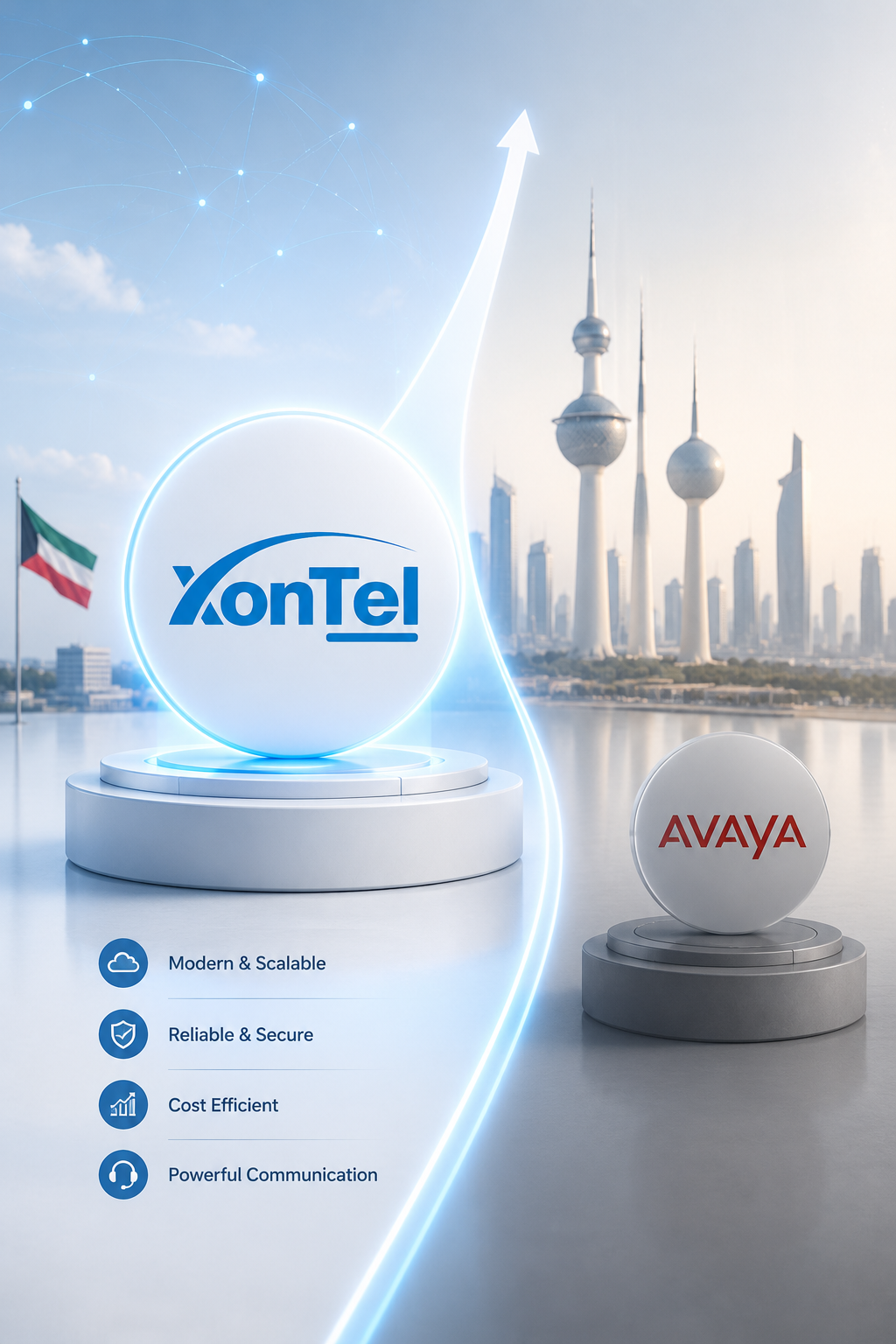
XonTel: the smart and stronger alternative to Avaya systems in Kuwait

Companies previously relied on Avaya systems, but with rising maintenance and upgrade costs, organizations today are looking for an Avaya Kuwait alternative that provides:

  • Lower operating costs
  • Fast local technical support
  • Scalability and flexibility
  • Integration with CRM systems

Avaya has always restricted its devices to work only with certain systems, but at XonTel, we offer software and cloud solutions that surpass traditional systems. Our platforms support global SIP protocols, giving you the freedom to choose IP phones without being tied to a specific brand, positioning us among the leading telecommunications companies in Kuwait that provide flexible and scalable solutions. XonTel delivers advanced solutions as the best alternative to traditional Avaya systems, offering strong performance and ease of use.

Professional PBX Installation Services

Installing a PBX is not just about connecting wires; it is an engineering process that begins with assessing your company’s needs, designing the communication network topology, and then programming and testing. XonTel provides comprehensive PBX installation services that include:

  • IP-PBX Systems: Ideal for companies with an existing network infrastructure.
  • Cloud PBX: The perfect solution for start-ups and medium-sized businesses that do not want to invest in on-premises server hardware.

How to Choose the Best Telecommunications Company in Kuwait?

When choosing between companies, make sure to consider:

  • Technical Support: Fast response in emergency situations.
  • System Updates: Ensuring you have the latest security and technical features.
  • System Integration: The PBX’s ability to integrate with customer relationship management (CRM) software.

Conclusion

If you are looking for a PBX for companies in Kuwait that combines power, ease of use, and competitive pricing, or if you want to upgrade your current system or need a Kuwait Avaya alternative, XonTel provides the technology that keeps your business always connected. We believe the best PBX for companies is one that grows with your business and makes communication with your customers seamless at all times.

Do you want to upgrade your company’s communication system? Contact our team of experts at XonTel today for a free consultation and to design the optimal system for your business.

call2action-En

For more information about XonTel products and services, leave your data and one of our specialists will contact you

How AI-Powered Call Centers Are Transforming Customer Service in Kuwait

Posted on: February 14th, 2026 by xontel_admin

In today’s rapidly accelerating digital transformation, excellence in customer service is no longer just an option, but a necessity for survival. Business owners are constantly searching for a call center system that goes beyond simply answering calls, to the point of predicting customer needs and delivering instant, effective responses.

This is where AI-powered call center technologies provided by Xontel come into play, revolutionizing the very concept of corporate communication.

What Is an AI-Powered Call Center System?

An AI-powered call center is the latest generation of contact center systems, leveraging artificial intelligence technologies in:

  • Smart Call Routing.
  • Advanced Interactive Voice Response (Smart IVR).
  • Sentiment analysis during calls.
  • Real-time performance monitoring.
  • Predictive analytical reports.

This evolution transforms the call center system from a simple tool for handling calls into a fully integrated platform designed to enhance the customer experience and boost sales.

Why does your company need a professional call center system?

Choosing a professional call center system means:

  • Improving customer service.
  • Reducing waiting times.
  • Increasing employee productivity.
  • Monitoring performance accurately.
  • Improving management decisions based on data.

At Xontel, we offer a fully integrated cloud-based call center system that operates entirely online, without the need for complex hardware or costly infrastructure.

Advantages of Xontel's cloud-based system

1- Flexible and scalable cloud system

With a cloud-based system, you can:

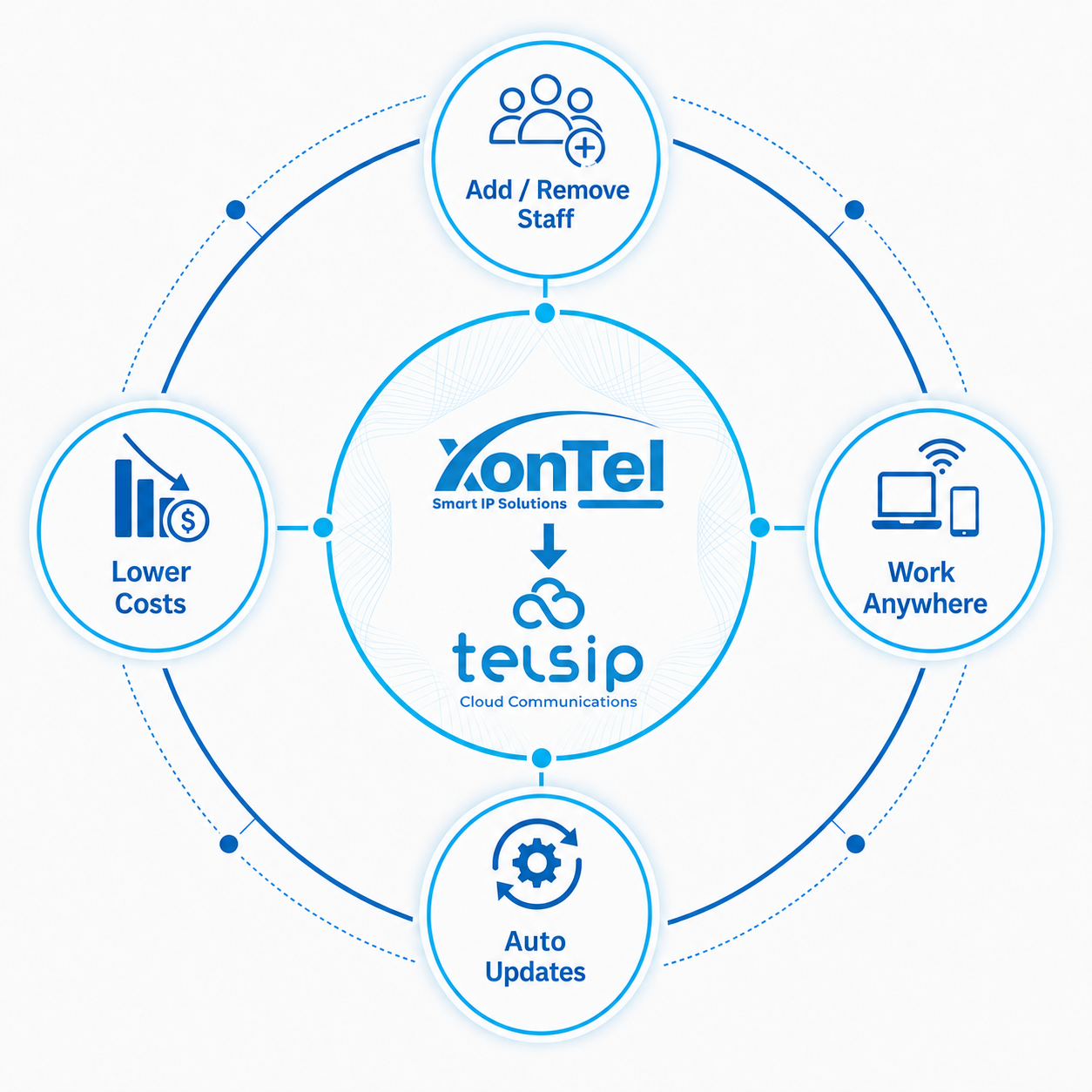
  • Easily add or remove employees.
  • Work flexibly from anywhere.
  • Reduce maintenance costs.
  • Automatic system updates.

Whether you’re a start-up or a large enterprise, a cloud communications system gives you the flexibility you need to grow.

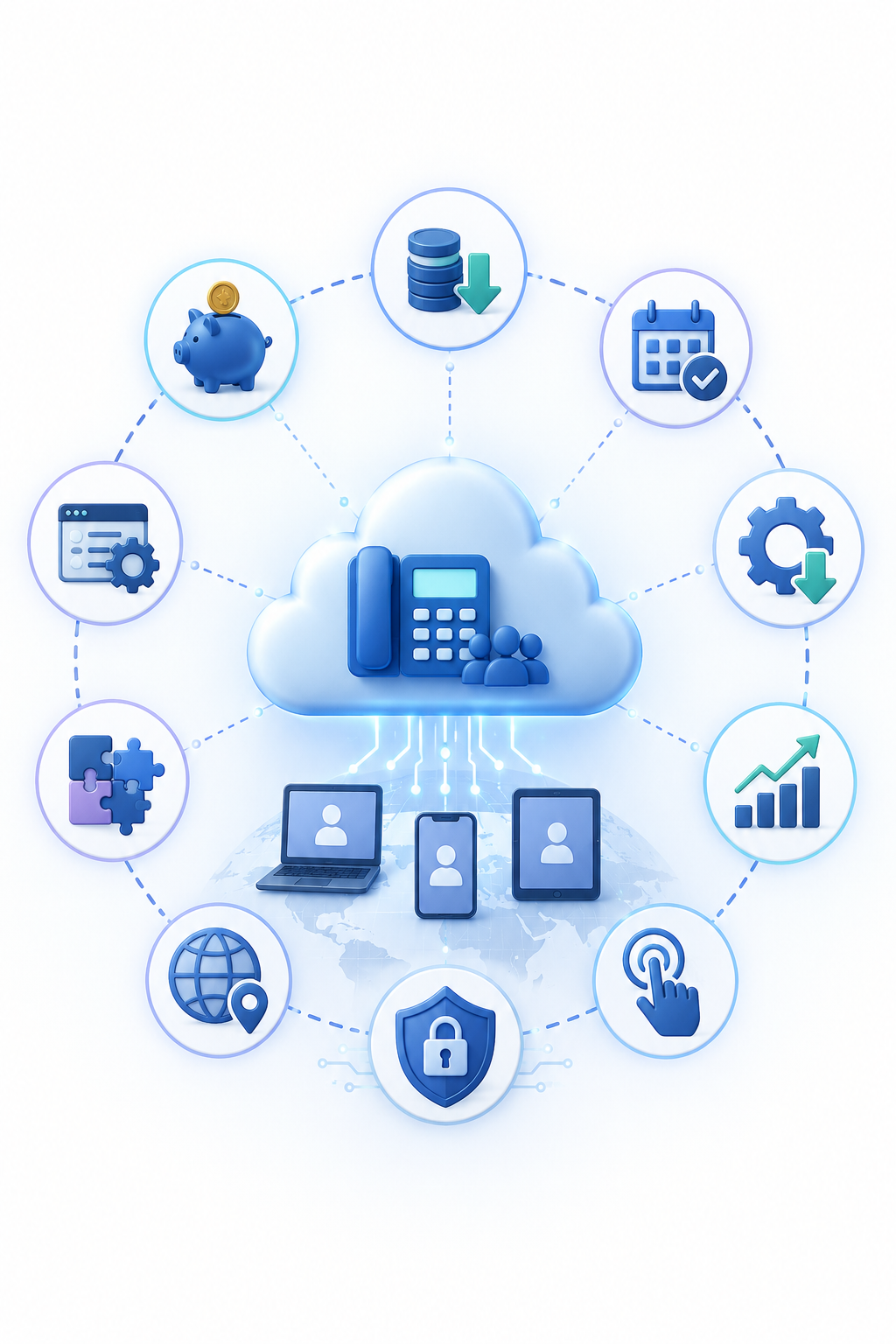
نظام اتصالات سحابي
ربط الكول سنتر بالـ CRM

2- Integrating the call center with CRM for smarter business insights

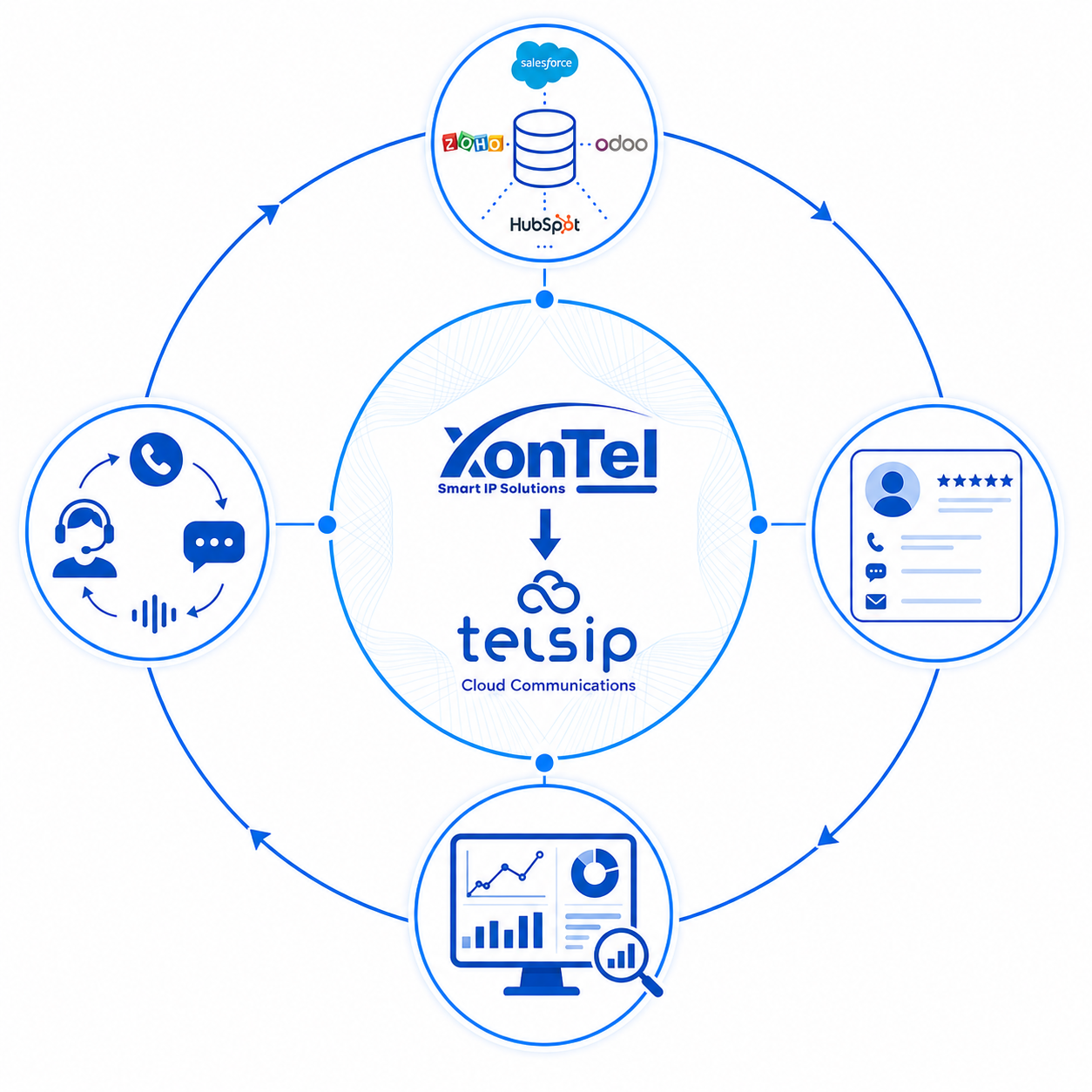
One of the key features of the modern system is integrating the call center with CRM.

When a customer calls:

  • Customer data appears instantly to the agent.
  • Calls are automatically recorded within the system.
  • The status of the request or complaint can be tracked without delay.
  • The customer experience is significantly improved.

We also offer the possibility of integrating with CRM systems such as Salesforce, Zoho, Odoo, or any other customer relationship management system your company uses.

This integration transforms the call center system into a centralized information hub for all customer data.

3- Advanced reports and analytics

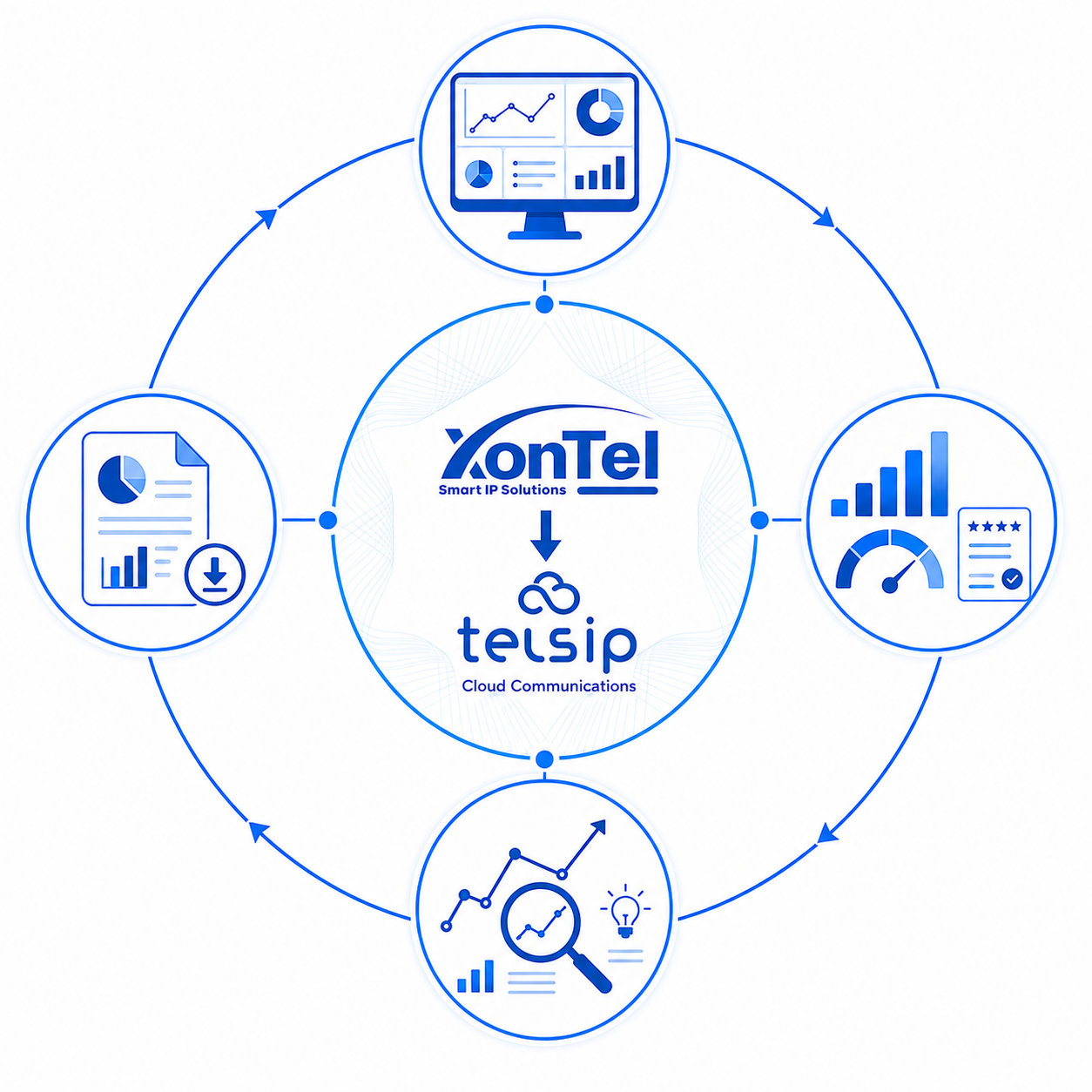
A professional call center system provides detailed reports, including:

  • Inbound and outbound call volume.
  • Call duration.
  • Individual agent performance.
  • Conversion and sales rates.
  • Peak time analysis.

With Artificial Intelligence technologies, you can find out:

  • Optimal times to contact customers.
  • Reasons for losing customers.
  • Opportunities to increase revenue.

Comparison Between Traditional and Cloud-Based Systems

Traditional communications system

Xontel's cloud-based communications system

Requires hardware and servers

Fully cloud-based, works entirely online

High maintenance costs

Low operating costs

Limited scalability

Instant scalability

Manual updates

Automatic updates

Switching to a cloud-based system is no longer an option, but a necessity to ensure business continuity.

Sectors and businesses served professionally by XonTel's call center system

  • E-commerce companies.
  • Banks and financial institutions.
  • Clinics and hospitals.
  • Shipping and logistics companies.
  • Government agencies, authorities and ministries.
  • Telecommunications companies.

Any business that relies on customer communication can benefit from Xontel’s AI-powered call center system.

Why choose Xontel in Kuwait?

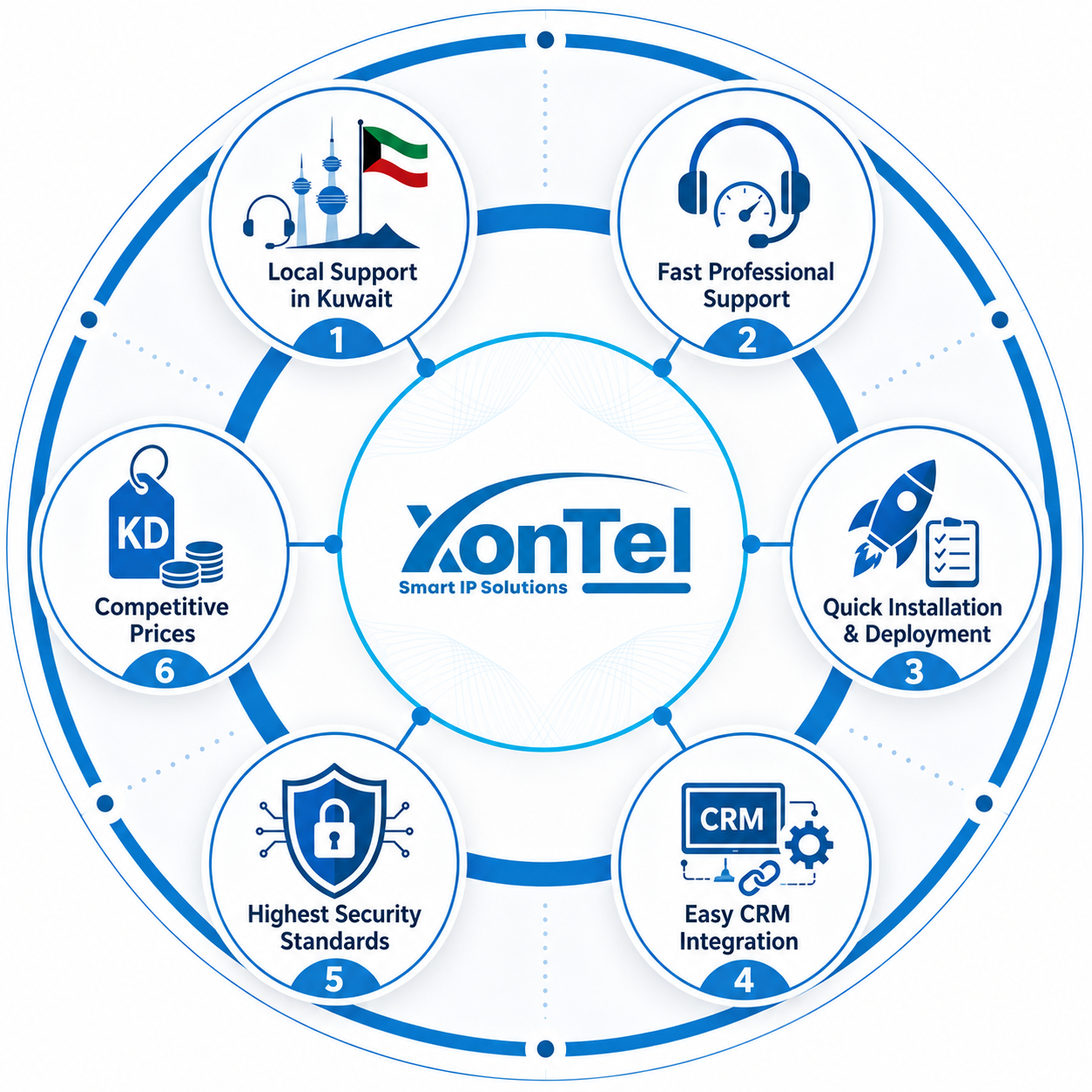
  • Local technical support within Kuwait.
  • Professional and fast technical support, unlike internationally well-known models.
  • Quick installation and deployment.
  • Easy integration with CRM systems, unlike international brands.
  • Highest security standards.
  • Competitive prices.

We don’t just offer a call center system, we provide a comprehensive platform to improve customer experience and achieve real growth for your business.

Get Started with AI-Powered Call Center System

If you’re looking for:

✔️ A professional call center system.

✔️ A reliable cloud-based communications system.

✔️ Easy integration of the call center with CRM.

✔️ A complete solution that works from anywhere.

Then Xontel is your ideal technology partner in Kuwait.

Contact us today for a free consultation and discover how an AI-powered call center system can take your business to a whole new level of professionalism and efficiency.

call2action-En

For more information about XonTel products and services, leave your data and one of our specialists will contact you

Traditional Phone System vs. IP Network Phone System PBX vs IP-PBX

Posted on: December 13th, 2025 by xontel_admin

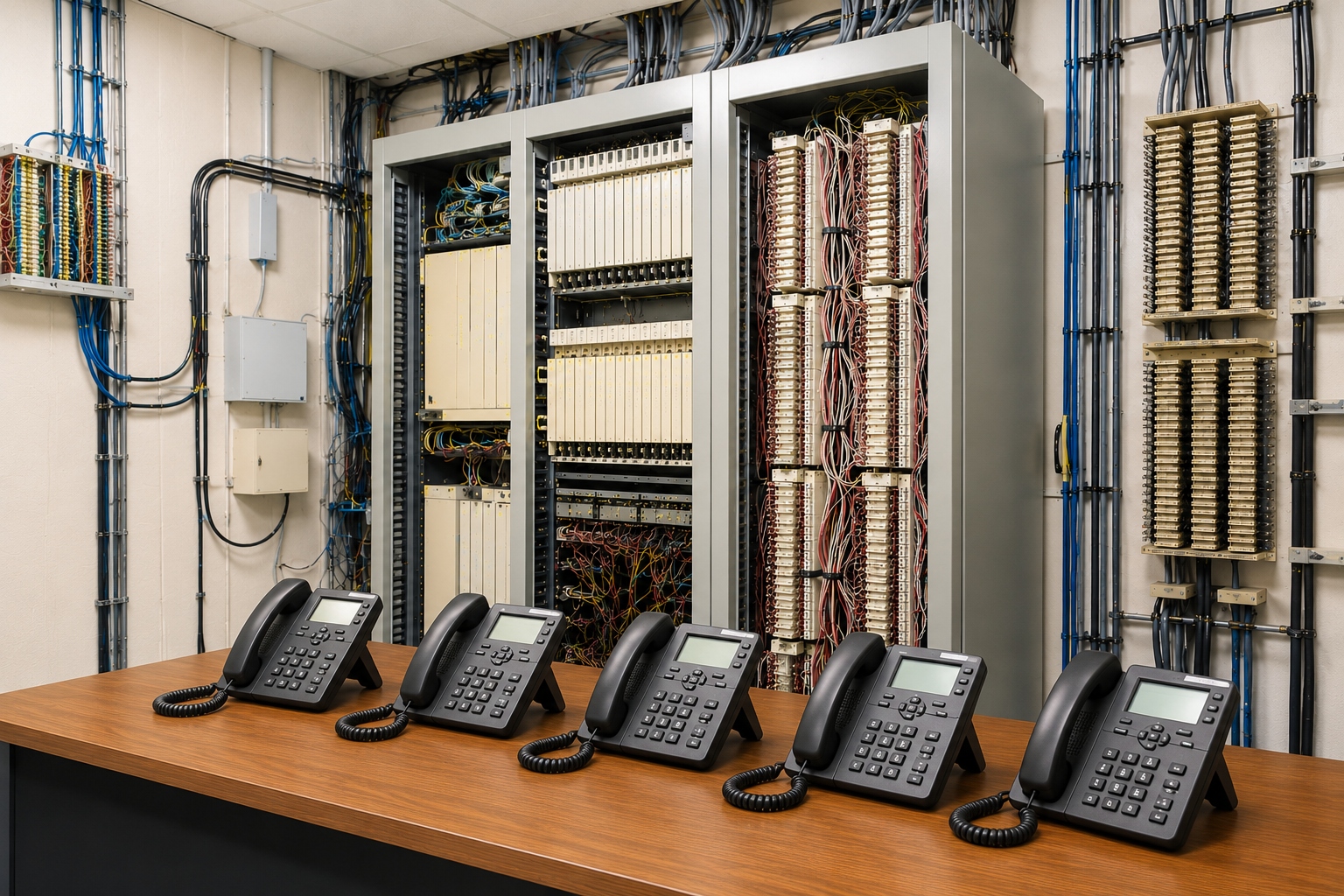
The traditional communications system appeared in the early 1960s and was considered a revolution in the world of telecommunications, offering excellent voice quality and a reliable communications system. It remained dominant in the telecommunications field for more than half a century due to the absence of a strong competitive alternative.
At the beginning of the new century, communication systems that rely on a company’s internal network and the Internet, known as IP-PBX systems, appeared and began to break the dominance of the traditional PBX world.
With the rise of smartphones and apps, and following the COVID-19 pandemic, the true value and actual capabilities of modern IP-based communication systems (IP-PBX) have become evident, with an annual growth rate of about 10.4%.
The modern communications market is expected to reach about $87.2 billion by 2035 (source).

What is the traditional PBX communication system?

Private Branch Exchange (PBX) is an internal communication system within a company that allows making and receiving calls inside the organization using traditional analog phone lines. It relies on physical hardware installed on the company’s premises. The company’s headquarters can also be connected to its branches through the public switched telephone network (PSTN).

This system was designed to simplify company communications. Previously, companies needed separate phone lines for each employee to make calls, and all calls had to go through the public switched telephone network (PSTN). However, with the introduction of the traditional PBX system, internal communication between employees became free of charge and no longer required passing through the public telephone network.

What are its components?
  • Depends on copper cables
  • Analog / ISDN / PRI lines
  • Automatic Call Distributor (ACD)
  • Standard analog telephones

What is a network-based communication system (IP-PBX)?

A network or internet-based phone system is the latest generation of private branch exchange (PBX) technology and operates over internet protocols (VoIP).
VoIP (Voice over Internet Protocol) is a technology that converts voice call signals into digital data packets and transmits them over the Internet instead of traditional landlines. It is also known as Internet Protocol (IP) telephony. This allows users to make calls over a company’s internal LAN network or the Internet using hardware devices or software applications.

Thanks to its numerous advanced features, VoIP provides modern and inexpensive communication solutions for businesses. Companies benefit from functionalities such as auto attendants, interactive voice response (IVR) systems, and analytics tools to streamline their communications. This makes VoIP technology more feature-rich and more affordable than landline services.

What are its components?
  • A server operating with the SIP protocol
  • Local Area Networks (LAN) and the Internet
  • IP phones (networked telephones)
  • Mobile or browser-based applications and Windows software

Aspect

Traditional Communication System (PBX)

Network-Based Communication System IP-PBX (VoIP)

Installation

Complex and numerous devices requiring a specialised team

Simple and less complex devices

Connection

Via landlines (PSTN/PRI)

Via the internal network and the Internet

Installation costs

High (installation, operation, and configuration)

Low, mainly dependent on IP Phone

Operating costs

High call costs (monthly line subscriptions - maintenance)

Call costs are almost zero – with cloud-based systems, only a minimal monthly subscription fee is required

Hardware

A separate phone must be purchased for each employee

A separate phone is not required for each employee, mobile apps or browser can be used

Scalability

Difficult, expensive, inflexible, and time-consuming

Much easier, low-cost, and flexible

Features provided by the system

Very limited

Highly advanced features and numerous smart tools

Integration with other systems

Very limited integration

Complete flexibility for integration with any system

Maintenance and Upgrades

Requires a specialized IT team to maintain and upgrade the system.

The service provider handles all maintenance and upgrades.

Security and protection

No cyber threats

There is a possibility of cyber threats, which can be reduced by using standard security measures and proper encryption. Additional protection, such as a firewall, may be required to prevent breaches.

Which phone system should you choose: PBX or IP-PBX (VoIP) ?

The choice between PBX and VoIP systems depends on the size of your business, your budget, your specific needs, and your business requirements.

A traditional PBX communications system is a reliable and secure option for businesses that require standard call quality and have an existing infrastructure for traditional telephones. However, it is expensive and requires high initial and maintenance costs.

In comparison, the network-based VoIP communication system offers a modern and cost-effective solution for all businesses, whether small, medium or large, thanks to its flexibility and powerful features.

XonTel is considered a leader and one of the best PBX companies that develops and manufactures IP PBX systems.

XonTel offers the latest technologies that compete with global brands at competitive prices, along with a professional, highly skilled support team dedicated to accurately meeting all customer needs with high efficiency, making it the best choice.

call2action-En

For more information about XonTel products and services, leave your data and one of our specialists will contact you

What Is Call Tracking? How Does It Work?

Posted on: December 1st, 2025 by xontel_admin

Modern call center systems come with numerous features and tools that help increase productivity and analyse data efficiently. One of the important features found in modern call center systems ( contact centers) is the ‘call tracking feature’.
When you hear the term ‘call tracking,’ you may think it is a feature used by call centers to ensure that sales representatives follow pre-written scripts or responses, or a feature used by parents to monitor their mischievous teenagers.
However, it is a completely different feature used by marketers to identify the source of calls and analyse them to improve advertising campaigns. Call tracking is not a supervisory tool for call center employees, rather it is a marketing tool aimed at analysing data and understanding and evaluating the performance of advertising and marketing campaigns.

What is a call tracking tool?

It is a tool that allows marketers to obtain important information from each incoming customer call. This information is used to evaluate the marketing campaign and understand the customer’s motives for making the call. It clarifies which advertisement or page prompted the customer to call, whether the customer is interested or just making an enquiry, the outcome of the call, and more.
For example, if a customer calls a company that uses call tracking software, the company can identify the advertisement they saw, the web page or social media platform they came from, and even the keywords they searched for that led them to contact the company.

Once a phone call is made, AI-powered conversation analytics can be used to analyse the language used in the call to determine whether the customer made a purchase, received a quote, booked an appointment, or achieved what marketers like to call a “conversion.”
You can then use this data to measure the success of your marketing campaigns, improve future advertising, update your website and social media platforms based on customer insights, and enhance other advertising methods to attract more high-value customers via phone.

Without call tracking feature, it is impossible to measure the return on investment (ROI) of your marketing efforts , which aim to convert calls into sales.

According to Forrester, 84% of marketers confirm that phone calls are among the most important and powerful types of conversions they receive, and they confirm that calls achieve higher conversion rates and greater purchase value than any other marketing channel.

How does a call tracking software work?

Cloud-based call tracking software, such as Telsip or Xontel, enables marketers to connect customers’ online journeys with their phone calls. By collecting online data through simple JavaScript codes, it tracks important customer information such as:

  • Source of the visit.
  • Type of advertising campaign.
  • Keywords used by the customer.
  • Pages visited by the customer.
  • Time spent by the customer on each page.
  • Where the customer clicked on the page.
  • Or the website can be linked to a phone number so that when the customer clicks it, the call is routed through the call center and connected to a sales or customer service representative.

All of this is done using advanced call center systems such as Telsip and Xontel
So, when someone calls a phone number provided for example by Xontel, the call is routed through the Xontel platform to a call center, agent, or another destination. This allows Xontel to collect digital data and link the caller’s previous activity to the call. This happens almost instantly and in real time.

How can marketers use call tracking?

Marketers use call tracking to improve the performance of paid advertising (such as Google Ads or social media ads) and optimise the customer journey from start to end by linking digital data with phone calls.

Some of the key benefits they gain include:
  • Reducing cost per click (CPC).
  • Reducing cost per acquisition (CPA).
  • Minimizing wasted advertising budget.
  • Increasing return on ad spend (ROAS).
Benefits of incoming call tracking:
  • Determine the true return from each marketing campaign.
  • Track all conversions that occur via phone calls.
  • Optimize ad spending and attract higher-quality customers.
  • Segment customers.
  • Build a complete profile of the caller with data from the conversation.
  • Retarget callers based on their previous preferences or purchase history with the company.
  • Improve marketing messages using the language and keywords customers use.
  • Increase conversion rates by tracking and enhancing sales team performance.
  • Integrate call data with company systems such as CRM and others.

Which businesses should use call tracking solutions?

Any business that relies on phone calls to acquire customers should use this technology, such as:

  • Car dealerships.
  • Healthcare providers.
  • Bank clients.
  • Franchise companies.
  • Insurance companies.
  • Travel agencies.
  • Telecommunications companies.
  • Real estate agencies.
  • Electronics stores.

Questions to ask when choosing a call tracking system:

When evaluating any company or system that offers call tracking, you should ask the following questions:

  • Does it use AI to analyze calls?
  • Does it provide accurate tracking of keywords and user click paths?
  • Can it track multiple calls from several numbers on a single page?
  • Does it integrate with your existing marketing and sales tools?
  • Can it record calls and transcribe them?
  • How accurate are the transcriptions it produces?
  • Does it use AI to analyze call transcripts?
  • Can it analyze calls based on key words relevant to your marketing funnel?
  • Can it analyze call content to determine how many calls resulted in sales or appointments, and how many actually converted?

call2action-En

For more information about XonTel products and services, leave your data and one of our specialists will contact you

Improving Call Center Performance: 7 Challenges & Solutions

Posted on: November 29th, 2025 by xontel_admin

One of the major problems companies face is having dissatisfied customers. Dealing with unhappy customers, unmotivated employees , and high staff turnover—along with the constant increase in call volume—are all factors that make managing a call center a significant challenge.

Contact centers are known for being high-pressure work environments, and managing call center staff can be a demanding task. Fortunately, there are many unconventional solutions to these challenges.

Below are seven of the most important challenges facing contact center management today, along with practical tips to help managers handle them effectively.

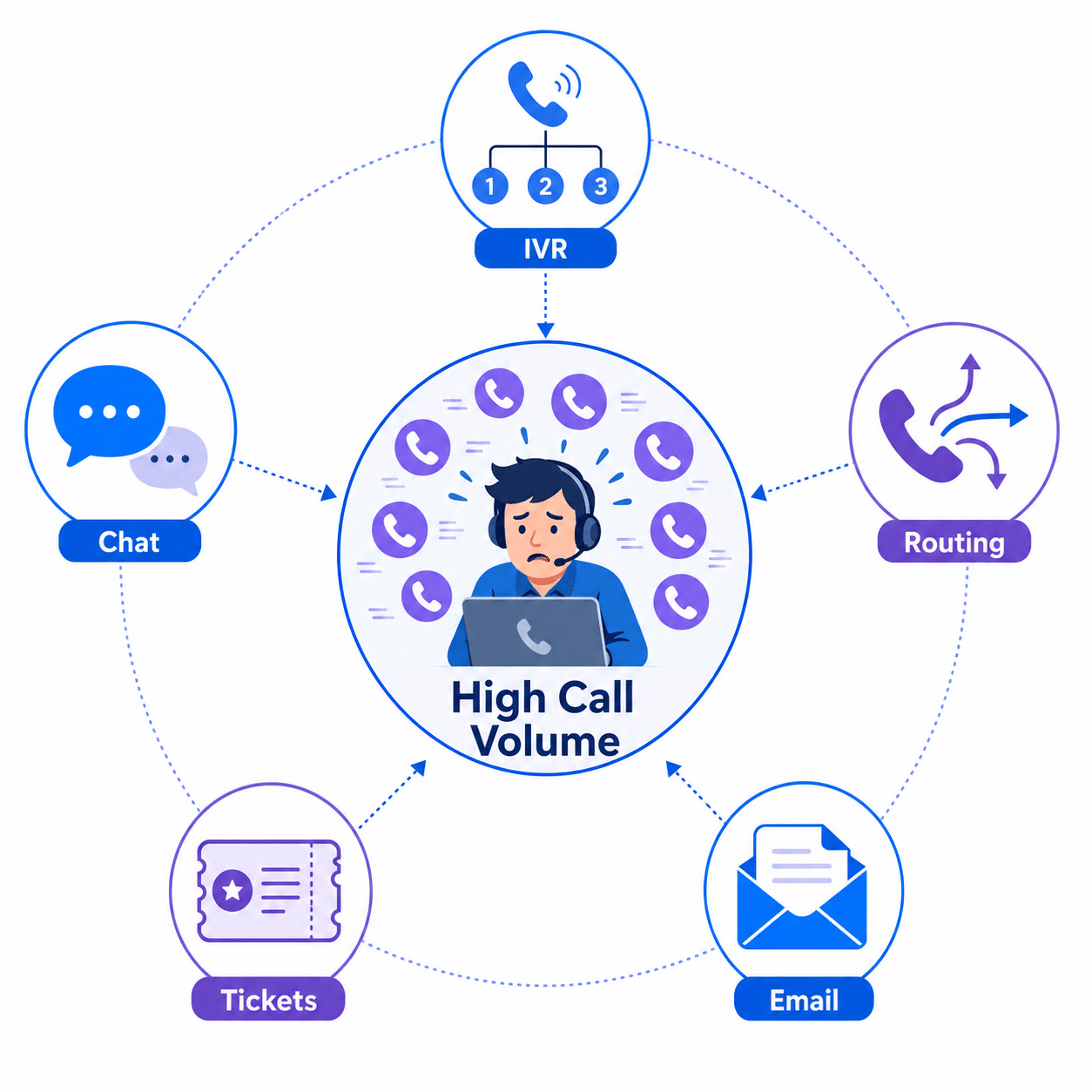
Challenge 1: Managing a large volume of calls every day.

The most significant challenge is for agents to handle a large and heavy call volume efficiently and intelligently without affecting the speed or quality of service. For example, when launching a new product, during peak hours in restaurants or hotels, or when a technical malfunction or failure occurs, issues related to managing high call volumes become more apparent. More calls mean longer wait times, lower customer satisfaction, more complaints, and increased employee burnout.

Proposed solutions:

  • Enable IVR (Interactive Voice Response) systems.
  • Activate intelligent call routing.
  • Redirect customers to other communication channels such as chat, tickets, and email.
  • Adjust call center staffing flexibly based on peak hours.

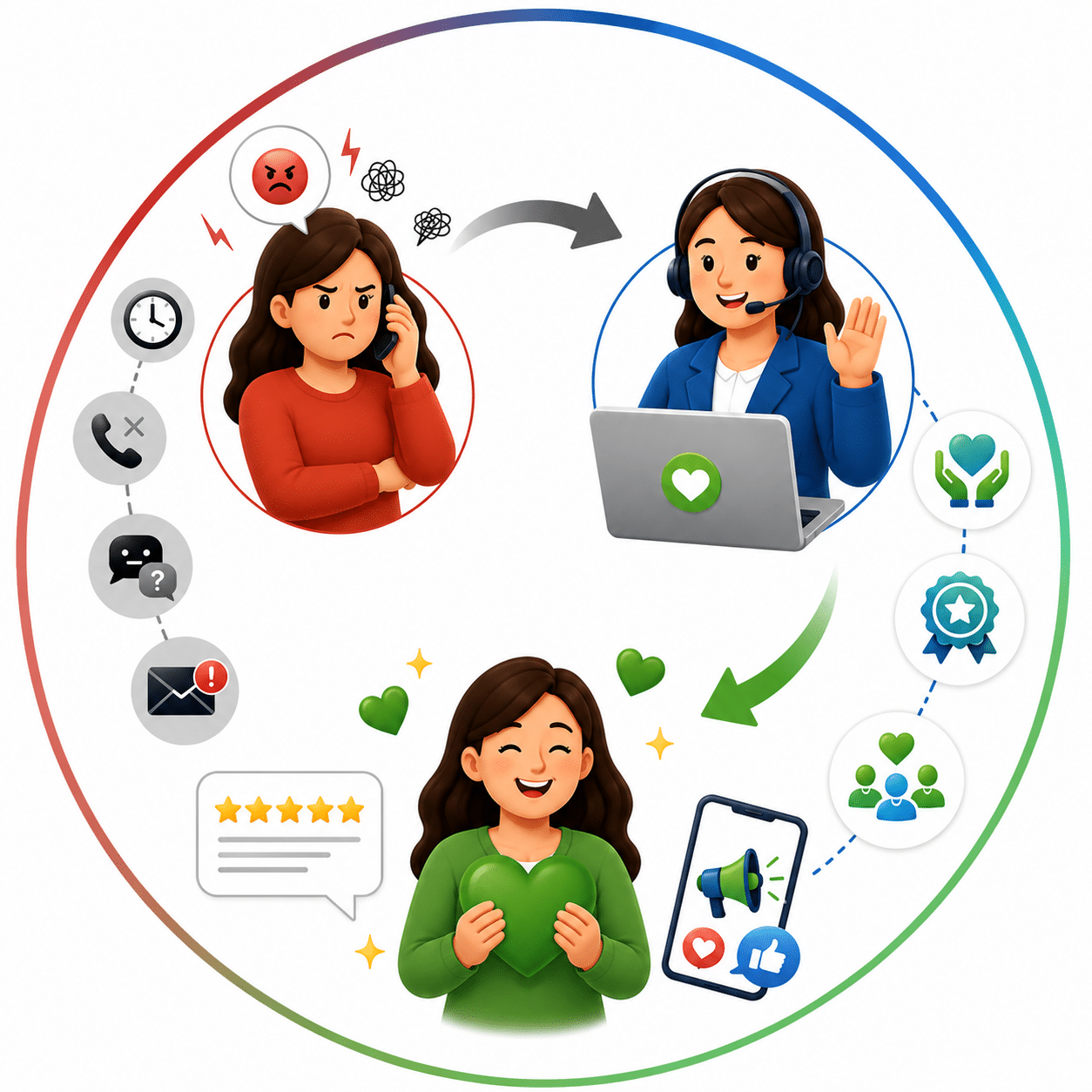
Challenge 2: Dissatisfied customer

There is no doubt that customer satisfaction is the primary goal for any company and any contact center manager, whether the call center focuses on customer service, technical support, or sales.

According to a recent global report by Salesforce, 88% of consumers believe that the customer service and contact center experience a company provides is just as important as the product or service itself. This makes maintaining a high-quality customer experience a demanding task for any manager, any contact center system, and any customer service system.

Proposed solutions:

There are many tips and studies that enhance the customer experience. But the main conclusion of all studies is: take good care of your customers, and they will take good care of you. In other words, customers who feel valued and welcomed are likely to reward you with brand loyalty and even more, they may help promote your brand.

Customers, whether calling or using online channels to reach the contact center, want their issues resolved and their questions answered as quickly and efficiently as possible. When they contact your company for service or support, they expect the agent who answers to be enthusiastic and fully prepared to assist them. Customers also appreciate an experience where the agent puts forth their best effort to resolve the problem.

You can train your call center staff to provide exceptional customer service by encouraging them to pay attention to customers and suggest a reward system for employees who deliver an outstanding customer service experience.

Another solution is using modern technologies to facilitate the customer journey. Interactive Voice Response (IVR) system is one tool that provides a personalised customer experience by gathering information about the reason for the call and directing it to the right agent without the need to transfer between three or four employees until the right agent is reached. Customers dislike long waits or frequent transfers between employees, so ensuring that they are connected to the right agent on the first attempt can greatly enhance their satisfaction.

Challenge 3: Reliance on traditional systems and failure to keep pace with technology.

Many companies still rely on outdated customer service systems that lack integration or smart analytics, leading to slow workflows and less effective customer service. While technology is a powerful tool for contact center managers to ensure efficient staff management, outdated or outdated systems can become a major obstacle.
Professional call center managers make it a priority to stay up to date with the latest technological solutions in the world of communications to boost productivity and increase team efficiency.

Proposed solutions:

Do you rely on cloud systems and artificial intelligence (AI) to streamline your operations and save time in managing your contact center?

If the answer is no, you should consider taking this step urgently. In the era of multi-channel communication, contact centers can use technology to easily manage customer communications across multiple channels, including social media, text messages, email, and, of course, phone calls.

At XonTel and Telsip, we have been developing AI-powered call center solutions for many years, helping to manage call centers effectively by providing the ability to analyse large amounts of call data. One of our key focuses is ensuring that managers have a clear overview of every call without the need to search through logs or listen to lengthy recordings. We also provide instant insights and feedback to employees.

Agent training is one of the most time-consuming tasks for managers. However, automating call recording and transcription, and using AI to evaluate call quality, helps improve training effectiveness and reduce the time required for it.

Challenge 4: Poor integration and connection between the company's communication channels.

One of the most prominent problems facing companies today is customer contacting through various channels such as phone, email, chat, and ticketing systems. Poor integration and connectivity between these systems can lead to:

  • Customer distraction and the need to explain their problem every time they contact the company.
  • Extreme delays in resolving customer issues.
  • Customer dissatisfaction.

Proposed solutions:

  • Use call center systems that support Omnichannels communication, such as Xontel and Telsip systems.
  • Recording customer data and contact dates in a centralised database.
  • Standardise customer response policies across all communication channels.
  • Properly train employees to handle multiple communication channels.

Challenge 5: Analysing big data properly.

Contact centers deal with thousands of customers on a daily basis and collect and record data from hundreds or thousands of customer interactions every day, whether through calls, chat, email, social media, etc. This can be a significant challenge and time-consuming for managers responsible for tracking and analysing contact center data.

Managers also find it difficult to ensure the accuracy of data when dealing with massive amounts of information. Inaccurate data can lead to wrong decisions and faulty analyses that can negatively impact the company.   

Proposed solutions:

Data accuracy and quality can be verified by:

  • Use systems that provide appropriate analysis tools: Relying on advanced data analysis tools helps managers understand data quickly and accurately, allowing them to focus more on finding solutions.
  • Regularly updating customer data in an undisruptive way to ensure the highest quality of recorded customer data and using it correctly.
  • Use artificial intelligence (AI) to analyse customer data and predict the customer’s next steps or preferences, giving the sales team more opportunities to increase the company’s sales and profits based on these insights. Modern intelligent systems such as Xontel & Telsip support such analyses and predictions.

Challenge 6: Security challenges and data protection.

Contact centers or call centers record customer data and contain important information about customers, such as their accounts and purchases, which requires the company to secure this data properly, especially if you rely on a cloud-based call center system, because any weakness in data security could lead to:

  • Data leaks or breaches, causing significant financial losses to the company and severe damage to its reputation.
  • Loss of customer trust in the company.
  • Legal claims, fines, and compensation demands.

Proposed solutions:

  • Use call center systems with robust security and encryption.
  • Train employees on security awareness and preventing social engineering attacks.
  • Implement robust firewall systems to protect the network and monitor hacking attempts.
  • Restrict employee access to customer data based on roles and permissions.

Challenge 7: High employee turnover rate.

Employee turnover in contact centers is not only high but also above the average for any other profession. This makes managing contact center staff more difficult.
Contact center employees leave their jobs at a rate 30% higher than other professions. Statistics show that 80% of customer service employees experience high levels of stress and overtime, which is an alarming rate.
High employee turnover is a reality for many call center managers, who must constantly be prepared to find and hire new staff.

Proposed solutions:

  • The best way to address high staff turnover is to enhance direct engagement with employees and create a positive work environment. This also includes focusing on employees’ strengths and identifying and addressing areas for improvement.
  • Employees integration and training: For example, due to time limitations, a company may neglect to train new employees in the hope of quickly filling staffing gaps, but this can backfire. Agents who suddenly find themselves directly facing issues they are not sufficiently prepared to handle can easily become stressed and are more likely to experience burnout, causing them to consider leaving their jobs and seeking alternatives.
  • The best approach is to make the tasks as manageable as possible for new employees within your busy contact center operations. Assign them realistic tasks and avoid putting them under pressure.
  • Finally, a committed employee is more likely to stay with your organization in the long term. Monitor your employees for signs of stress and burnout, provide effective support, foster a positive work environment, and ensure your team is motivated to succeed. Organise team-building exercises, hold friendly competitions within the company, share ideas and recognition, and focus on building a positive workplace culture.

call2action-En

For more information about XonTel products and services, leave your data and one of our specialists will contact you

Unified Number for Companies

Posted on: November 18th, 2025 by xontel_admin

Communicating with customers via phone is vital and important, as a company’s phone number plays a crucial role in enhancing interaction with its customers, whether it is a small business or a large organisation. Therefore, having a unified Number for your company is a necessity for many reasons.
Despite the development of communication methods and digital platforms, some statistics show that more than 50% of customers still prefer to communicate with companies via traditional telephone lines.

In this post, we explain a detailed overview of the definition of a unified number for companies and its importance.

What is the company's unified number?

The unified number is a single phone number that connects all company’s branches and departments, and serves as the primary contact point for customers and clients who want to communicate with the company.
This number provides an easy and quick way to reach the different departments without any complications, which enhances the user experience, increases customer satisfaction, and helps companies deliver their services more efficiently.

Through the unified Number, companies can build a strong professional image and enhance customer loyalty, which leads to increased sales and the continuity of the relationship with customers.

Examples of unified numbers in some countries

  • In Saudi Arabia: The unified number consists of 9 digits and starts with 9200.
  • In Kuwait: The unified number consists of 7 digits and starts with 188.

The number should be easy to remember and unique, and all customers should be able to call it from anywhere in the world.
This number can also be linked to the company’s main switchboard, enabling all branches worldwide to be connected so that customer’s call is directed to the appropriate branch or the relevant employee to provide the required service.

Why is the Unified Number for Companies important?

The importance of a company’s unified number cannot be overstated, as it is a key communication tool that contributes significantly to the company’s success and its public image. The following are the most important reasons that highlight the importance of having a unified number:

1. Professional image of the company

The unified number gives the company a professional image and provides customers with a sense of stability, credibility, and continuity, which enhances trust in the company and its reliability.

2. Strengthening the brand identity

The unified number contributes to reinforcing the brand identity, as it becomes an integral part of it and it is easy for customers to remember and recognise. The distinctive and simple number enhances brand recall and strengthens the connection between the company and its target audience.

3. Ease of communication with customers

The unified number ensures that customers can easily and quickly communicate with the company, which is crucial for enquiries, technical support and customer service. Companies that make it easy for their customers to reach them are more capable of retaining their existing customers and attracting new ones.

4. Marketing and advertising effectiveness

Unified numbers play an important role in marketing and advertising campaigns, whether on websites, social media, or printed advertisements, as the distinctive number serves as an  attractive tool that facilitates communication between potential customers and the company.

5. Flexible and diverse communication

The unified number can be used on other channels such as social media apps (e.g. WhatsApp) to facilitate and simplify communication with customers through means beyond just phone calls.

How to obtain a unified number for the company?

1. Choose a service provider:

Look for a reliable telecommunications provider that offers unified number services for companies, taking into account factors such as pricing, features, and previous customer experiences.

2. Determine the type of number:

Choose the type of number that best suits your business needs, noting that some countries allocate specific numbers for certain sectors.

3. Activate features and services:

Operating the unified number through the company’s PBX allows you to add services such as call forwarding, voicemail, call queues, and conference calls.

4. Promote the unified number:

Share your company’s unified number across all channels: website, social media, business cards, and marketing items, to make it easy for customers to reach it.

In conclusion
The unified number is a strategic tool that enhances the efficiency of communication between a company and its customers, helping to build long-term relationships with them. By choosing the appropriate number and services, companies can achieve a professional communication experience that leaves a positive and lasting impression on customers.

call2action-En

For more information about XonTel products and services, leave your data and one of our specialists will contact you

The Difference Between On-Premises and Cloud-Based PBX systems

Posted on: August 26th, 2025 by xontel_admin

In today’s business world, companies face the ongoing challenge of balancing the need to stay up to date with modern communication technologies while managing costs and maintaining the infrastructure required to support operations. Striking the right balance is no easy task — especially when making decisions that affect all of these areas.

One such critical decision is: Should your company move its communication system to the cloud, or keep it on-premises?

To help you make the right decision for your business, we’ve outlined six key differences between on-premises communication systems and cloud-based solutions.

Understanding On-Premises and Cloud-Based PBX Phone Systems

Before diving into the differences, let’s make sure we understand the basics. The core distinction between the two lies in where the system is hosted.

On-Premises IP-PBX System:

As the name implies, on-premises systems are hosted physically within your company. Communication equipment and PBX servers are installed and maintained on-site, giving your business full control over the infrastructure, call routing, and security protocols.

Key Advantages:

  • Full Control: On-premises systems give your company complete control over system settings, call management, and security policies.
  • Enhanced Security: Calls stay within the company’s internal network, offering greater protection against external threats — especially critical for businesses handling sensitive data.
  • Not Dependent on Internet: Internal communication does not rely on an internet connection, allowing the system to function even during internet outages.
  • Long-Term Cost Efficiency: After the initial hardware investment, monthly operating costs are typically lower, making it a cost-effective choice in the long run.

When to Choose On-Premises:

  • Companies with a dedicated IT team capable of managing and maintaining the infrastructure.
  • Businesses with high-security requirements that prefer to keep all data in-house.
  • Organizations with a budget for upfront hardware investment prefer to avoid ongoing monthly fees.

Cloud-Based IP-PBX System:

Also known as Hosted PBX, this model is fully managed by an external service provider. All you need is a stable internet connection and IP phones or softphone applications on computers and mobile devices. Services are billed through monthly or annual subscriptions.

Key Advantages:

  • High Flexibility: Easily scale up or down by adding or removing users and lines as needed — without additional hardware.
  • Low Upfront Costs: No major initial investment is required. You only pay for what you use, making it an ideal option for small and medium-sized businesses.
  • Simple Maintenance & Management: The service provider handles all updates, maintenance, and technical support, easing the load on your internal IT team.
  • Remote Work Ready: Employees can access the system from anywhere, enabling seamless remote work and integration across multiple locations.

When to Choose Cloud-Based:

  • Small to medium-sized businesses with limited budgets or no in-house IT teams.
  • Companies with remote teams or multiple office locations.
  • Businesses are looking for fast, scalable solutions that adapt to their growth.

Ultimately, choosing the right system depends on the company’s size, budget, security requirements, and internal work structure.

If you’re seeking complete control and absolute security while having the capacity for initial costs, then an On-Premises system is the most suitable choice. However, if you’re looking for flexibility, speed, and lower initial costs, then a Cloud-Based system is the optimal solution.

To help you make this decision, XonTel offers comprehensive solutions for both options:

  • On-Premise PBX Systems: XonTel provides all the necessary solutions, services, and equipment to establish and operate a fully local communication system within the company premises, giving you absolute control and high security for your data.
  • Cloud-Based IP-PBX Systems: Through its sister company Telsip, Telsip provides all cloud PBX solutions, enabling companies to benefit from flexibility, easy scalability, reduced initial costs, and remote work support.

In this way, XonTel ensures that every company, regardless of its size or needs, will find the optimal solution that aligns with its business model and future aspirations.

XonTel Enters the Cloud Communications Arena with the Launch of Telsip

Posted on: August 26th, 2025 by xontel_admin

XonTel has long been recognized as a trusted partner in on-premise PBX telecommunication solutions, providing enterprises with the hardware, equipment, and services required to build robust and secure internal communication infrastructures across companies and government institutions.

However, with the growing market demand for more flexible systems that can easily scale up or down — while also reducing operational costs through cloud-based solutions — XonTel realized the importance of delivering a comprehensive ecosystem that combines its legacy expertise in traditional systems with cutting-edge innovation in cloud communications.

In a strategic move that reinforces its leadership across the Gulf and Arab markets, XonTel proudly announces the launch of its new cloud platform:  Telsip.com— the cloud arm of the company and its gateway to next-generation communication and cloud call center solutions.

What Does Telsip Offer?

Telsip is focused on delivering advanced cloud-based communication solutions that allow XonTel to maintain its excellence in on-premise systems while ensuring top-tier quality and innovation in the cloud space.

telsip
  • 1. Advanced Cloud PBX System

    A virtual solution for managing calls over the internet, tailored for modern businesses. Features include:

    • Full support for SIP Trunking and Interactive Voice Response (IVR) systems
    • Smart call routing with a Virtual Receptionist
    • Virtual Fax
    • Call Recording
    • Voicemail to Email functionality
    • Complete support for inbound and outbound calls

    And many other modern telecommunication features — explore more here

telsip Cloud Call Center
  • 2. Fully Integrated Cloud Call Center

    A comprehensive solution for managing customer experience across multiple channels, offering:

    • Full support for agents and supervisors
    • Customer Relationship Management (CRM) system
    • Automatic Call Distributor (ACD)
    • Smart Ticketing System for issue tracking and resolution
    • Integration with email, SMS, and web chat
    • Detailed reports and in-depth performance analytics
    • Integration with social media platforms

    And many more powerful features — learn more here

A Strategic Step Toward the Future

With the launch of Telsip.com, XonTel evolves from being solely a provider of on-premise solutions to a comprehensive telecom partner that supports both local and cloud-based communication systems. This transformation strengthens the company’s position as a forward-thinking innovator, empowering clients with the freedom to choose the communication model that best fits their business needs.

The role of Artificial Intelligence (AI) in enhancing cybersecurity

Posted on: June 9th, 2024 by xontel_admin

Cybersecurity continues to be crucial with the evolution of technology and its increasing use in various aspects of both business and people’s lives.

As our reliance on digital technology increases, cybersecurity threats are increasing and becoming more complex. Therefore, the field of cybersecurity is constantly evolving to face these new threats and challenges.

What are the most recent trends in cybersecurity?

  1. Using artificial intelligence and machine learning technologies to detect and respond to cyber threats quickly and accurately.
  2. Safeguarding personal data and ensuring privacy through the development of digital identity to protect accounts and personal information from hacking.
  3. Protecting cloud-stored data, where companies provide security measures including data encryption and secure access to this data.
  4. Developing cybersecurity solutions tailored for devices that connect to the internet and exchange data with each other, known as Internet of Things (IoT) cybersecurity.

The use of Artificial Intelligence (AI) in cybersecurity

The use of Artificial Intelligence (AI) is one of the most important improvements in cybersecurity, as it offers innovative solutions to enhance the cybersecurity of both individuals and organisations.
AI is a powerful and effective tool for protecting systems and networks from cyber attacks and security threats. It is used in the following situations:

1. Threat detection:

Artificial Intelligence can analyse huge amounts of data quickly and efficiently, allowing it to detect emerging threats and malware. It also analyses unusual patterns that may indicate a potential cyberattack.

2. Addressing threats:

AI can take proactive actions to defend against threats, such as blocking malicious software or isolating infected systems, which minimises damage and ensures cybersecurity.

3. Forecasting threats:

Artificial Intelligence can analyse past data and current patterns to predict future threats, allowing preventive actions to be taken in the most suitable way for the anticipated threats.

4. Adjusting to advanced threats:

Always develops advanced defence strategies to face the progressive evolution of future cyber attacks.

5. Behaviour analysis:

Used to monitor user behaviour and understand normal behaviour patterns in order to detect abnormal behaviour that may indicate malicious cyber activity.

6. Analysis of weaknesses and risk assessment:

Artificial Intelligence helps accurately analyse vulnerabilities in systems and networks, provides a comprehensive assessment of security risks, automatically fixes vulnerabilities, or provides recommendations for repair and cybersecurity.

7. Identity verification:

Improves the accuracy of identity verification by using technologies such as facial recognition, voice recognition, and more effective detection of identity theft attempts.

8. Data protection:

Detect data theft attempts and hacks, encrypt sensitive data, and secure it from unauthorised access.

9. Preventing phishing:

Analysing emails and websites to detect fraud and phishing attempts.

10. Cybersecurity for the Internet:

Protecting the Internet infrastructure from large-scale cyber attacks to ensure the security of data and information on the Internet.

Advantages of using Artificial Intelligence (AI) in cybersecurity

  • Speed and efficiency: AI can process and analyse data faster than humans.
  • High accuracy: AI is able to learn from huge amounts of data to detect threats with high accuracy.
  • Continuous adaptation: AI is able to learn and adapt to new threats on an ongoing basis.
  • Cost reduction: AI can perform many security functions, which reduces costs.

XonTel provides the latest technologies that compete with their global counterparts, ensuring cyber security and helping to secure networks from any cyber attacks. It offers the best devices with significant protection features.

For more Products and Services from Xontel click here

call2action-En

For more information about XonTel products and services, leave your data and one of our specialists will contact you

Hotel management system

Posted on: June 7th, 2024 by xontel_admin
Hotel-Management-System

In the hospitality and tourism industry, hotel management is not a single concept but several concepts that fall under one umbrella.
The hotel management system revolves around the successful management of every hotel operation to ensure the growth and development of the hotel. This includes managing anything related to the hotel industry, including finance and accounting, customer service, employee management, marketing, supply chain management, etc.

What is a Hotel Management System?

The Hotel Property Management System (PMS) is concerned with managing all the operations that take place in the hotel to provide an exceptional experience for customers by coordinating and tracking reservations through various channels, facilitating front office operations, managing guest check-in/check-out and room assignments, managing room rates, overseeing housekeeping, accounting, and generating reports in a central location to help hotel owners manage and monitor their business and connect their branches.

Benefits of a Hotel Management System:

A guest’s travel journey always begins with choosing a destination, followed immediately by selecting the right hotel. Customers’ interactions in pre-stay shopping and booking, their interactions within the hotel with the hotel and its staff, their experience within the rooms, and their post-stay social media sharing are all part of the guest experience.
Hotel staff face a significant challenge in providing a good experience for guests during their stay. Hotel Property Management Systems (PMS) is expected to help hotel staff and owners provide the understanding that the guests want and desire while also efficiently managing their operations.

A Hotel PMS provides many benefits to the business of hotel owners, including:

Internal Supervision - House Keeping:

This increases the efficiency and speed of room supervision. When a guest checks out, the hotel efficiently manages the response to room service tasks and determines and manages the room maintenance needs to ensure the rooms are clean and in excellent condition.

Facilitating Check-in/Check-out Processes:

The front office staff performs guest check-in and room assignment, as well as enables guest services and completes full data entry of customer personal information into the hotel systems.

More Efficient Room Distribution:

Increase room occupancy through real-time availability management and distribution channel inventory control. The hotel’s direct booking channels can potentially increase sales and reservations.

Helps Save Time:

Good hotel management software significantly reduces the time spent on manual administrative tasks. The software handles most of the work, allowing you to devote time to more critical tasks.

Continuous development and improvement of guest relations:

Enhancing guest satisfaction is remarkably achieved through a simplified check-in and check-out experience. This is just the beginning – any improvement in communication and additional services will also increase guest loyalty. Choosing a good hotel management program equals increased guest and staff retention.

Creating, analyzing, and recording all guest data:

Centralizing and securing guest data improves the quality and accuracy of guest profiles through reports and analysis. Understand customer purchasing patterns to identify more targeted packages and services. Ensure compliance with local and international rules and regulations.

Preventing duplicate reservations and frequent human errors:

Hotel management software systems are programmed to avoid double bookings or human errors. Thanks to task automation, they help prevent mistakes when receptionists enter customer data such as names, passport details, and payment card numbers. This means a better guest experience, more time for staff to focus on their essential work, and more accurate business data and reports.

Integration between accounting systems and hotel management systems:
Hotel Property Management System (PMS)

Linking hotel operations with accounting by leveraging integration processes between systems, payment gateways, and hotel industry applications. Commission calculations. Ensure accuracy and integrity of guest accounts for faster and more accurate invoicing.

XonTel provides the latest technologies that compete with global counterparts at competitive prices. It also offers a highly efficient and professional support team to understand and meet the needs of all its customers accurately and efficiently, making it the best choice.

For more information, contact us now. Click here.

call2action-En

For more information about XonTel products and services, leave your data and one of our specialists will contact you