Guide to Purchasing Ceiling Speakers

Ceiling-Speakers
ceiling-speaker-wall speaker-stereo speaker-bluetooth speaker-Amplifiers

If you intend to purchase ceiling speakers or wall speakers for your home but don’t know where to start, here’s some advice: Unlike many other regular speaker products, ceiling speakers are designed to be a long-term audio solution, and therefore, it’s important to think not only about the level of sound quality you want but also how you want to control the speaker system fully.

This is your simple and easy guide to the most essential information you need to know about those speakers.
9 things you need to know before buying ceiling speakers:
wall speakers
1- How many ceiling speakers do I need in the room?

Usually, they come in pairs, one speaker for the right side and another for the left side, resulting in a true surround stereo sound. As a general guideline, we recommend using one pair of ceiling speakers in rooms larger than 3m x 3m, and for rooms larger than 5m x 5m, two pairs of ceiling speakers will provide a more balanced sound.

2- Do I need stereo or mono speakers?

We always recommend using pairs of standard mono-type ceiling speakers for rooms larger than 3m x 3m, but in some cases, like bathrooms and smaller rooms where space is limited, stereo speakers can be an ideal choice.

3- Where should the speakers be placed on the ceiling?

If you’re installing a single stereo speaker, you should aim to place it in the center of the ceiling (if possible) to get the best sound distribution. If you’re installing multiple speakers, the optimal placement is at an equal distance from all the room’s walls and at least 2 meters apart from each other.

4- How do I power and control the ceiling speakers?

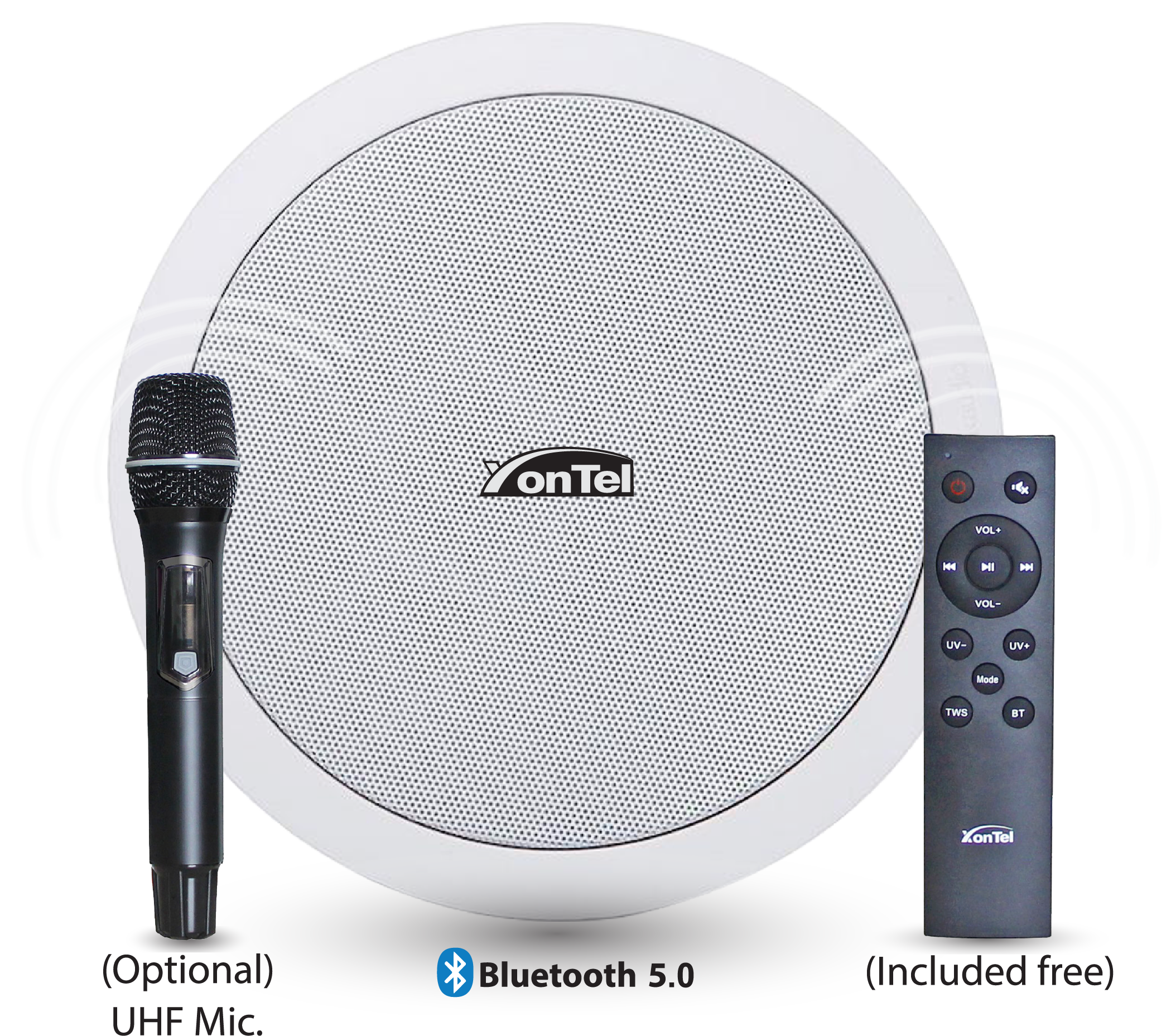
1- There are two options available when it comes to powering and controlling speakers. Active speakers have built-in amplifiers and only require a direct power connection. You can control these amplifiers directly via Bluetooth or WiFi from your device.

2- Passive ceiling speakers are ubiquitous and require an external amplifier to power them through speaker cables. This allows you to control the speakers’ amplifiers using WiFi through an app streaming from your device.

5- Do ceiling speakers require fire-resistant covers?

Although it is not a legal requirement, we strongly recommend using fire protection covers for the safety they provide.

6- Can I install ceiling speakers in high-moisture rooms like kitchens, bathrooms, and saunas?

Most ceiling speakers are suitable for humid environments, but we also have IP-protected (ingress protection) speakers that protect against dust and moisture. These are a great solution when installing sound in areas with high moisture levels, like bathrooms and saunas.

7- Can I paint my ceiling speakers to match my room?

The grilles that come with all ceiling speakers are usually white but can be spray painted in any color you desire.

8- Can I install ceiling speakers in outdoor roofs or balconies?

While outdoor ceiling speakers have been popular for some time, they are usually wall-mounted or camouflaged speakers hidden among potted plants or within landscape borders. However, with the emergence of specialized models designed to withstand the elements, you can now install ceiling speakers in outdoor areas.

9- Can I connect my TV to the ceiling speakers?

Yes, you can run the TV audio through the ceiling-mounted speakers. If the TV supports Bluetooth, and there are Bluetooth speakers, you can also connect them.

ceiling speakers

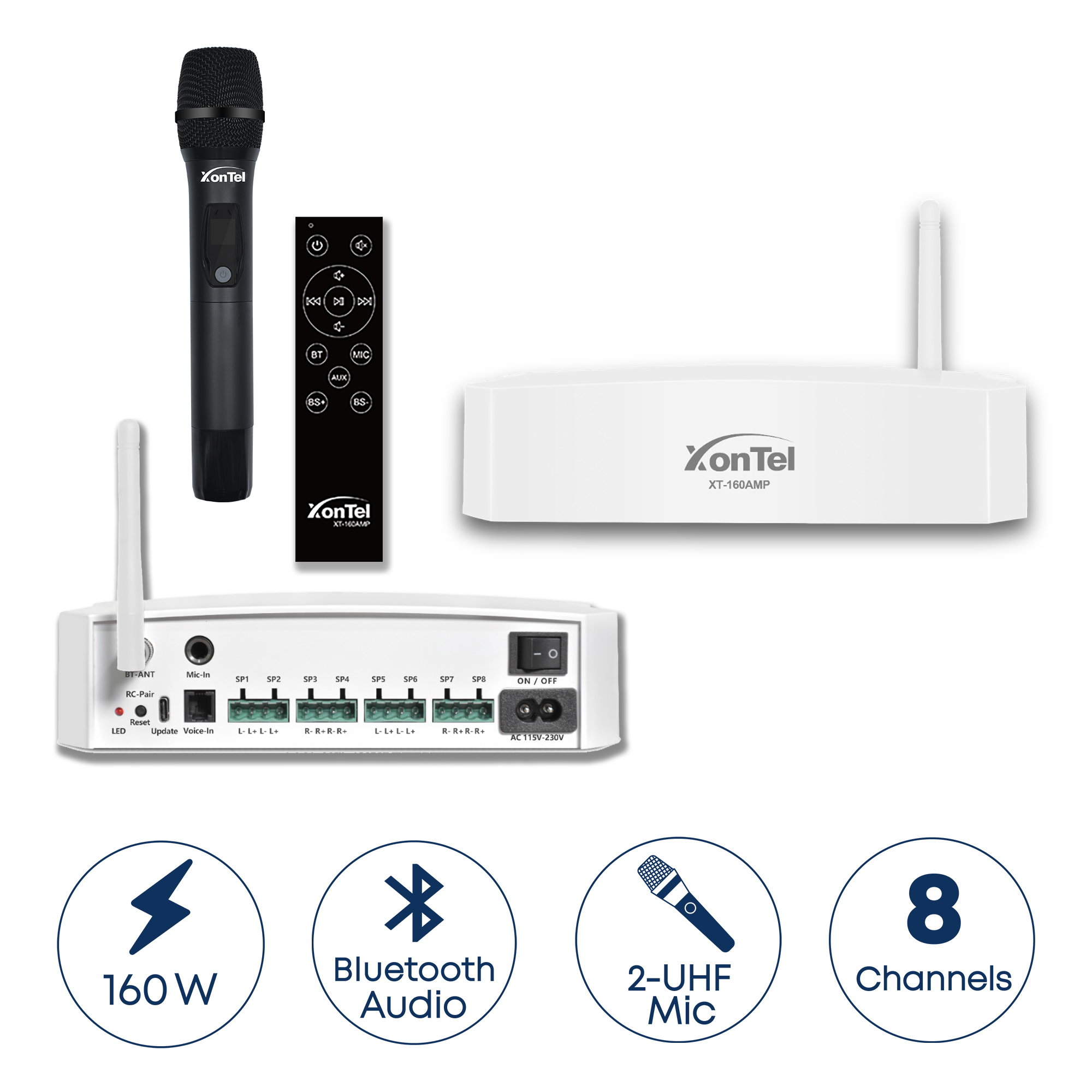
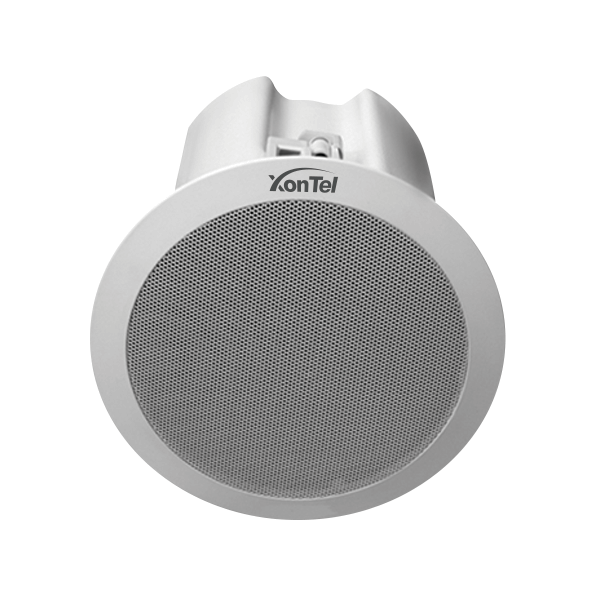
XonTel is a leading company in speakers and amplifiers. It offers a variety of wall-mounted speakers, ceiling speakers, Bluetooth speakers, and amplifiers.

Xontel speakers

sources

Related Products:

Frequently Asked Questions (FAQ)

How do you determine the right number of ceiling speakers and their proper placement in a room?

Determining the number of ceiling speakers depends on the size of the room, to ensure balanced sound distribution:

  • Small rooms (larger than 3 × 3 meters): one pair of speakers (left and right) is usually enough for full stereo sound.
  • Large rooms (larger than 5 × 5 meters): two pairs of speakers are recommended to achieve ideal sound distribution.
  • Placement: it’s best to place a single stereo pair in the middle of the ceiling, while multiple speakers should be spaced evenly from the walls, with at least two meters between each speaker.

What is the difference between active and passive ceiling speakers in terms of operation and control?

  • Active speakers: contain a built-in amplifier, require direct connection to power, and can be controlled wirelessly via Bluetooth or Wi-Fi from your smart devices.
  • Passive speakers: need an external amplifier they’re connected to via speaker cables, and audio playback can be controlled through dedicated apps on devices.

Can ceiling and wall speakers be used in humid or outdoor areas (such as bathrooms and rooftops)?

Yes, dedicated models are available with specific protection ratings (IP) resistant to dust and high humidity, making them ideal for installation in kitchens, bathrooms, and saunas. Weather-resistant models designed for balconies and outdoor areas are also available, with the option to paint the white speaker grilles any color to match the room’s decor.

How do I choose a suitable amplifier for ceiling speakers?

You should make sure the amplifier’s power output matches the speakers’ power rating, along with matching impedance, the number of channels, and the number of speakers to be run. You should also determine whether you need Bluetooth or Wi-Fi, or the ability to play multiple audio zones independently.

Can ceiling speakers be connected to a TV?

Yes, TV audio can be played through ceiling speakers using an amplifier or receiver connected to the TV’s audio output, such as HDMI ARC or the optical output. Bluetooth can be used with compatible systems, but a wired connection is generally more stable and has less audio delay.

Do ceiling speakers need fire-rated back boxes?

This depends on the type of ceiling and local building and safety requirements. Fire-rated back boxes can help protect the ceiling cavity and reduce sound and dust transfer, and may be required in some buildings, so local site requirements should be checked before installation.

What are the most important tips before buying ceiling speakers?

Before buying ceiling speakers, you should determine the room’s size, the number of speakers, whether the system is active or passive, the amplifier’s location, the control method, moisture resistance, and access to ceiling wiring. You should also make sure the speakers are compatible with the amplifier and that there’s enough installation space.

What are the common mistakes when buying ceiling speakers?

Common mistakes include purchasing an insufficient number of speakers, distributing them unevenly, failing to match the speakers with the amplifier, using indoor speakers in humid and outdoor areas, or ignoring ceiling depth, electrical wiring, and HVAC routing.

call2action-En

For more information about XonTel products and services, leave your data and one of our specialists will contact you